Bed Length: Matching Size to Your Hauling Reality
Truck beds in the US market generally fall into three categories by nominal floor length: short beds (~5.5-5.8 ft), standard beds (~6.5 ft), and long beds (~8 ft). Each exists because buyers have genuinely different hauling requirements.
Short beds dominate crew-cab configurations because the larger cab consumes wheelbase. They work well for lifestyle buyers who primarily transport recreational gear, groceries, or the occasional piece of furniture. The trade-off is clear: a short bed cannot swallow 4x8 plywood flat, and payload volume is noticeably limited.
Standard beds strike a practical balance. Most contractors, tradespeople, and active outdoor users find that 6.5 feet handles the majority of everyday hauling without making the truck unwieldy in parking lots. Long beds - closer to 8 feet - serve commercial, agricultural, and heavy-duty users who move lumber, pipe, or large equipment regularly. They also pair best with full-size camper shells and slide-in truck campers.
It's worth noting that cab choice constrains bed choice. Cab configuration determines how the remaining wheelbase is allocated to the bed, so buyers should weigh seating needs and cargo needs together - not in isolation. For a broader look at how size class intersects with these decisions, see our comparison of full-size and mid-size trucks.
~65%
Crew-cab trucks sold with short beds
Industry sales data consistently shows the majority of crew-cab pickups in the US are configured with the shorter bed option, reflecting the popularity of rear-seat space over cargo length.
8 ft
Maximum standard long bed length
The 8-foot bed remains the longest commonly available factory option across full-size truck platforms from major domestic manufacturers.
2x
Spray-in liner cost vs. drop-in
Spray-applied polyurethane liners typically cost roughly twice as much as comparable molded drop-in units, according to general aftermarket pricing ranges cited by automotive consumer resources.
Liner Types: Protecting the Bed and Your Cargo
Bare steel beds corrode, scratch, and provide poor grip for cargo. That's why virtually every truck buyer evaluates liner options - either from the factory or the aftermarket.
Drop-In Liners
Molded from high-density polyethylene, drop-in liners conform to the specific bed dimensions of a given truck model. They install without tools and can be removed if you sell the truck or want access to the bare bed. The downside: moisture and debris can collect in the gap between the liner and the bed floor, accelerating rust on the metal beneath. They can also shift under load if not properly secured.
Spray-In Liners
Applied by a technician using a spray gun, polyurethane or polyurea coatings bond chemically to the bed's metal surface. They seal seams, prevent moisture intrusion, and tend to provide better long-term rust protection. Because they're permanent, there's no shifting or gap. The cost is higher than drop-in units, and any future damage requires professional repair rather than simple replacement.
Rubber Mats and Carpet Liners
Roll-out rubber mats protect the bed floor against scratches and provide cargo grip at the lowest cost. They offer no side protection. Carpet liners - less common and favored mainly in lifestyle configurations - reduce noise and protect fragile cargo surfaces but absorb moisture and are difficult to clean thoroughly.
Inspect the Bed Before You Commit
If you're considering a drop-in liner on a used truck, pull it out before purchase. Moisture trapped between the liner and the bed floor is a common source of hidden rust. Even minor surface corrosion can indicate long-term structural concerns worth factoring into your decision.
Tie-Down Systems: Keeping Cargo Secure
A truck bed without reliable tie-down points is just an open box. The way a bed anchors cargo affects both safety and versatility.
Integrated Cleats and D-Rings
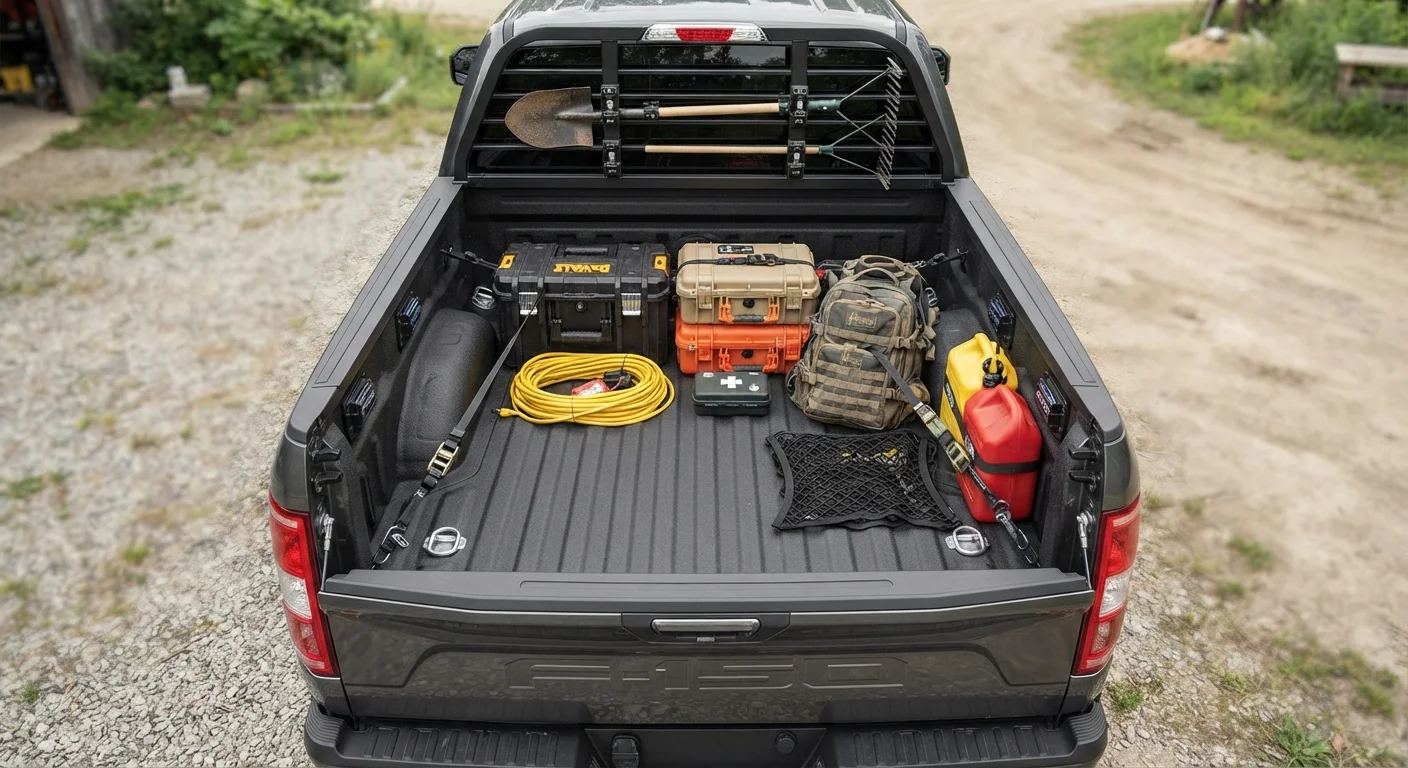
Most trucks ship with four fixed anchor points - typically D-rings or looped cleats - positioned at the corners of the bed floor. These handle the majority of strap-and-ratchet tie-down scenarios. However, they only secure cargo from fixed positions, which limits flexibility when you're carrying loads of irregular shape or multiple items that need independent anchoring.
Anchor Rail Systems
Some manufacturers offer sliding anchor rails mounted along the bed floor or sides. Individual tie-down hooks can be repositioned along the rail to match any load configuration. This system adds meaningful versatility for users who regularly carry varied cargo types, and it's increasingly available as a factory option on work-focused trim levels.
Stake Pockets
The rectangular slots along the top rail of nearly every truck bed are stake pockets - originally designed for upright stakes when hauling livestock or fencing. Today they're the mount point for aftermarket racks, lumber extenders, and top-rail tie-down clamps. Their universal presence makes them a practical anchor option even when the bed's built-in system falls short.
For buyers who use their trucks for recreation, anchor placement and bed length interact in important ways. Recreational truck use - from overlanding to hauling watercraft - often demands more tie-down flexibility than a stock configuration provides.
Putting It All Together: Bed Decisions Aren't Afterthoughts
The truck bed deserves the same deliberate consideration as the powertrain or cab configuration. A buyer who selects a crew cab for rear-seat space and then discovers the short bed can't handle their most common hauling tasks has made an expensive compromise.
Think through your typical load: its dimensions, weight, and how often you carry it. Then match bed length to that reality. Layer in the liner type that fits your use pattern - spray-in if you want permanent, low-maintenance protection; drop-in if you value flexibility. Finally, evaluate whether factory tie-down points are sufficient or whether you'll need an anchor rail or stake-pocket accessories for your specific cargo.
First-time truck buyers especially benefit from mapping these decisions early. Our comprehensive guide for first-time truck buyers covers how bed configuration fits within the broader set of choices that define daily ownership. Approached systematically, bed specs stop being fine print and become one of the clearest indicators of whether a given truck will actually work for your life.
Bed Specs and Camper Compatibility
If you plan to use a slide-in truck camper, bed length and payload rating both become critical constraints. Most residential-style truck campers require a long bed and a heavy-duty suspension package. Verify camper weight against the truck's published payload rating - not just gross vehicle weight rating - before purchasing either the truck or the camper.