The Three Core Suspension Designs Found in Trucks
Most light-duty and heavy-duty trucks rely on one of three primary suspension architectures: leaf springs, coil springs, or independent suspension. Each design reflects a deliberate engineering priority - whether that's maximum payload, ride refinement, or terrain adaptability.
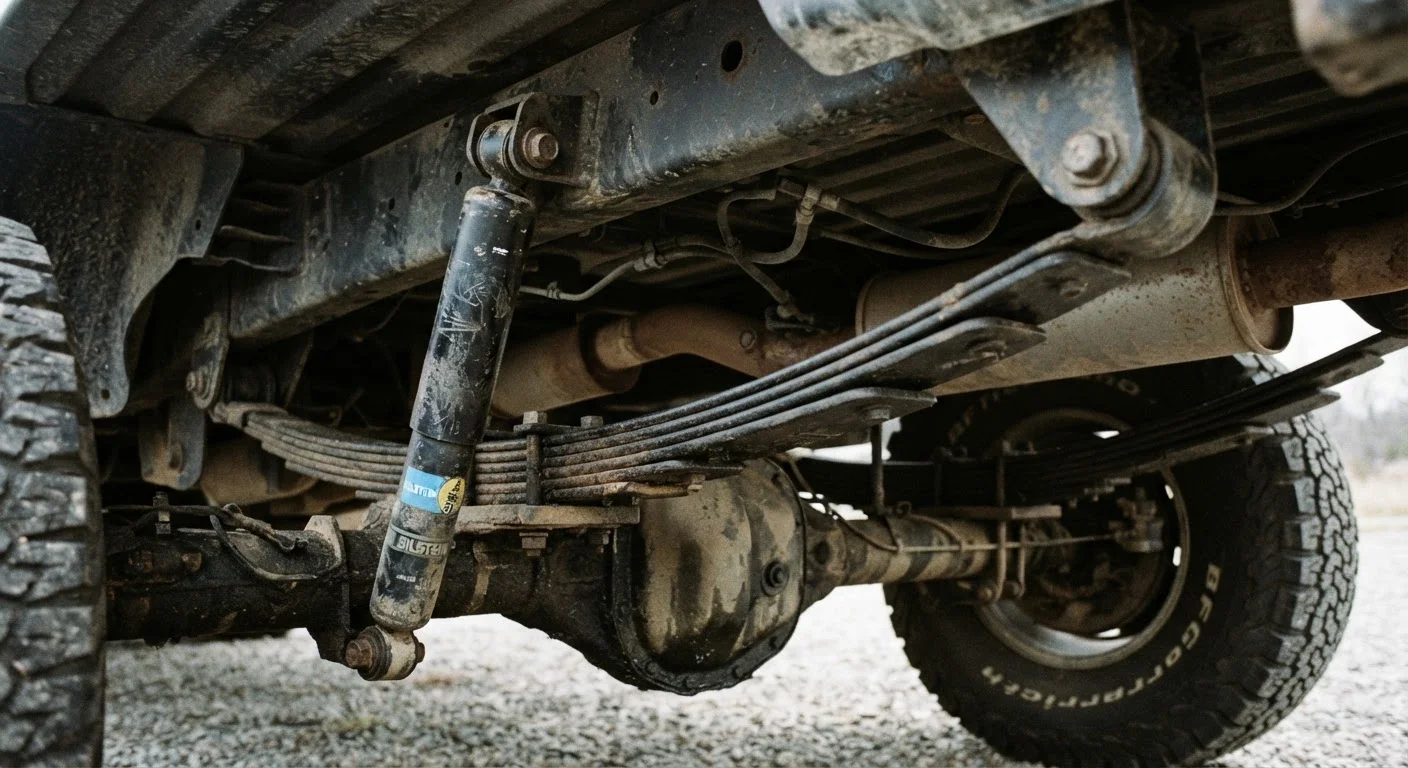
Leaf springs are the oldest and most common setup for truck rear axles. They consist of stacked metal strips (leaves) that flex under load and return to position. Their high spring rate makes them effective for hauling, and their simplicity reduces maintenance complexity. The trade-off is ride harshness, particularly when the truck is empty.
Coil springs provide a more progressive, controlled response to road inputs. Found on both front and rear axles depending on the platform, coil springs generally produce a softer, more car-like ride. Many mid-size trucks and off-road-oriented full-size trucks use coil rear suspensions to improve wheel articulation on uneven terrain.
Independent suspension - most commonly seen on front axles - allows each wheel to move independently of the other. This reduces the transmission of bumps from one side of the truck to the other, improving on-road comfort and steering precision. For more on how suspension geometry interacts with drivetrain choices, see our comparison of 4WD and AWD systems.
~60%
Full-size trucks with leaf spring rear suspension
Industry surveys of light-duty and heavy-duty full-size truck platforms consistently show that a majority of work-oriented configurations retain leaf spring rear axles for payload and durability reasons.
2-4 in.
Typical suspension travel gain from a coil conversion
Aftermarket coilover or coil-spring conversions on solid-axle trucks commonly add between two and four inches of usable wheel travel compared to stock leaf spring configurations, according to off-road performance data from suspension manufacturers.
Load Handling: Where Leaf Springs Still Lead
When a truck needs to carry heavy payloads consistently - whether on a job site or hauling equipment to a campsite - leaf spring rear suspensions remain the dominant choice. Their stacked-steel design resists sagging under load and maintains axle alignment without complex geometry adjustments.
Heavy-duty trucks rated at one-ton or greater almost universally use multi-leaf or progressive-rate leaf packs at the rear. Some include auxiliary leaves that only engage beyond a certain load threshold, preserving a softer ride when the bed is empty.
Consider Load Frequency Before Choosing a Suspension Setup
If a truck carries heavy loads only occasionally, a coil or air-assisted suspension may offer better everyday comfort without meaningful payload compromise. For trucks that haul near-maximum payload regularly, a purpose-built leaf spring setup will prove more durable and consistent over time. Match the suspension to the actual workload, not just the maximum rating on paper.
Coil-sprung rear setups, while more comfortable, typically require additional hardware - such as air bags or helper springs - to match the raw payload capacity of leaf springs. This is why pickup trucks oriented toward work tend to retain leaf springs even as the rest of the industry moves toward independent architectures for comfort-focused trims.
Off-Road Performance and Suspension Articulation
Off-road capability hinges on a suspension's ability to keep all four tires in contact with irregular terrain - a property called articulation. More axle travel means wheels can drop into ruts or climb over obstacles without losing traction.
Solid rear axles, typically paired with leaf or coil springs, generally allow more articulation than independent rear suspensions because there are fewer geometric constraints. However, coil-sprung solid axles - common on off-road-focused trucks - offer the best combination of articulation and ride quality.
Independent front suspension limits travel compared to a solid front axle, but modern IFS designs have narrowed that gap significantly, particularly in rock-crawling scenarios at moderate speeds. For recreational use - overlanding, forest roads, beach driving - a well-tuned IFS system with adequate lift performs capably. See how recreational truck demands shape suspension priorities for a deeper look at real-world off-road use cases.
Ride Quality on Pavement and the Comfort Trade-Off
Ride quality on paved roads is where suspension design most visibly separates work trucks from lifestyle trucks. A stiff leaf spring pack that handles a full payload with ease will transmit every expansion joint and pothole to the cabin when the bed is empty.
Manufacturers address this through several means: variable-rate springs that soften under light loads, electronically controlled dampers that adjust in real time, and rear air suspension systems that adapt to load conditions automatically. These technologies meaningfully close the gap between work-rated capability and passenger-car comfort, though they add cost and mechanical complexity.
For readers considering suspension modifications - whether for improved on-road refinement or enhanced off-road performance - understanding how geometry, damping, and spring rate interact is essential. Suspension tuning fundamentals covers these interactions in practical detail. Any aftermarket suspension work should be evaluated carefully against the truck's intended use and performed by a qualified mechanic when structural or safety-critical components are involved.
Suspension Modifications Affect Safety Ratings
Aftermarket lift kits, spring replacements, and shock upgrades can alter a truck's center of gravity, payload rating, and handling characteristics. Some modifications may also affect compliance with state vehicle inspection requirements. Always consult the truck manufacturer's guidelines and a qualified suspension specialist before making changes that affect load-bearing or steering components.