Why Cab Configuration Is a Foundational Decision
Before you weigh powertrain options or tow ratings, cab configuration shapes nearly everything else about a truck's livability and practicality. It determines how many passengers ride comfortably, how long your cargo bed can be, and how the truck handles in tight environments. Changing your mind after purchase means starting over - so it pays to understand the trade-offs clearly.
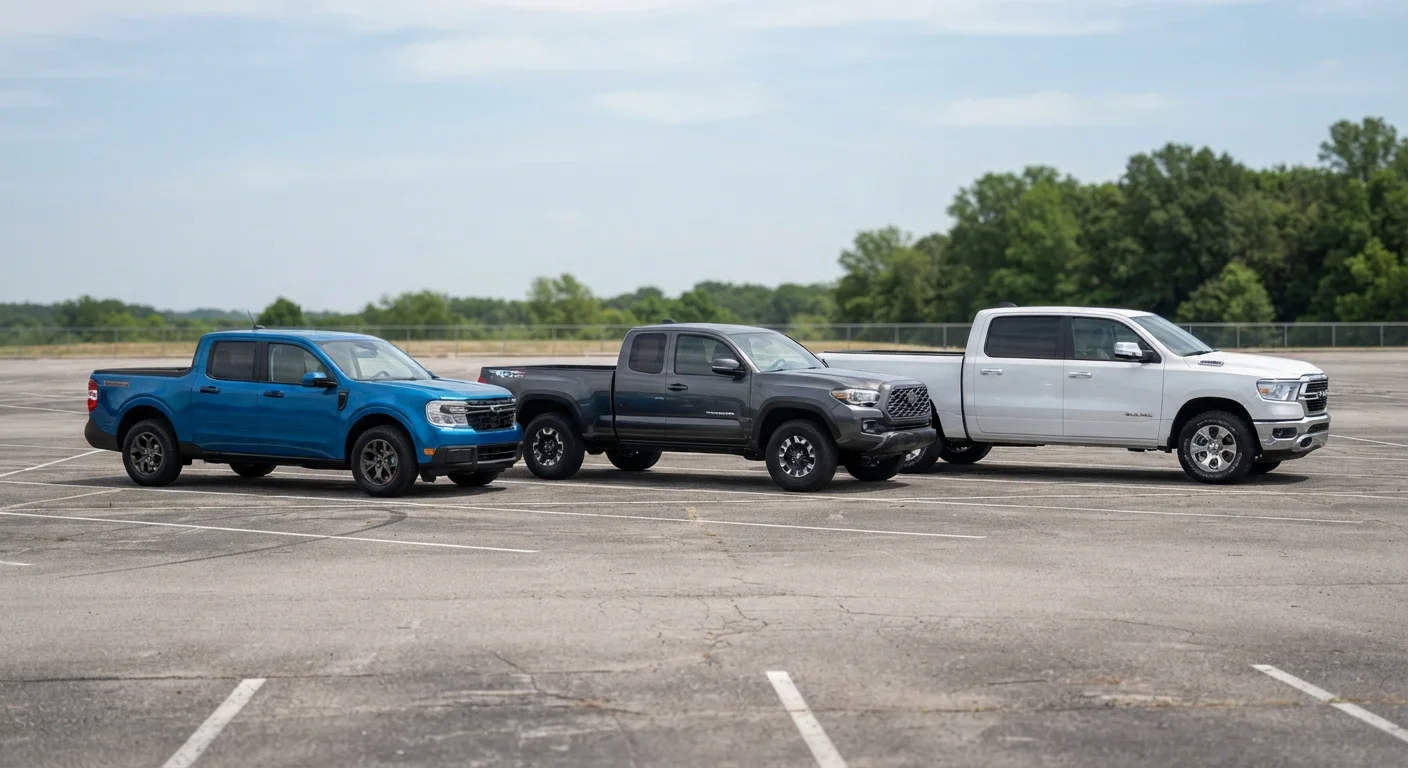
Truck cabs fall into three broad categories recognized across virtually all domestic and import manufacturers: regular cab, extended cab (sold under names like SuperCab, Club Cab, or Access Cab depending on the brand), and crew cab (also called Double Cab or Quad Cab). Each represents a deliberate engineering compromise between occupant space and cargo capacity.
| Regular Cab Seating | 2-3 occupants, single row |
| Extended Cab Seating | Up to 5-6 occupants, limited rear room |
| Crew Cab Seating | 5-6 occupants, full rear legroom |
| Typical Regular Cab Bed | 6.5-8 ft |
| Typical Crew Cab Bed | 5.5-6.5 ft (short/standard) |
| Cab Style Impact | Directly affects bed length, GVW packaging, and turning radius |
Regular, Extended, and Crew Cab: What Each Delivers
Regular Cab
The regular cab - sometimes called a standard cab - seats two to three people in a single row with no rear seating whatsoever. It is the most work-focused configuration, pairing naturally with the longest available bed lengths. Contractors, farmers, and fleet operators who rarely carry rear passengers often prefer it for its straightforward utility and tighter turning radius relative to longer-wheelbase alternatives.
Extended Cab
Extended cabs add a compact rear seating area, typically accessed through rear-hinged half-doors or fold-open panels. Rear legroom is noticeably limited - adequate for shorter trips but not ideal for adults on long drives. The extended cab sits between the two extremes: it can accommodate occasional rear passengers while retaining access to a longer bed than most crew cab configurations allow. See the truck bed length and liner guide for how those bed choices play out in practice.
Crew Cab
The crew cab provides four full-size doors and a rear seat with adult-appropriate legroom. It is the most family- and commuter-friendly option and accounts for the majority of retail truck sales in the U.S. market. The trade-off is a shorter cargo bed on any given wheelbase - usually a 5.5-foot or 6.5-foot box rather than the 8-foot bed often available with a regular cab. If you plan to carry a full-size camper shell or frequently haul 8-foot sheet goods flat in the bed, this matters significantly. Outdoor and recreation-focused buyers should also consult the recreational truck use guide to understand how cab choice intersects with gear-hauling needs.
~60%
U.S. truck buyers choosing crew cab
Industry sales mix data consistently shows crew cabs dominate retail truck sales in the U.S. market.
~30 in
Typical rear legroom gain, crew vs. extended
Rear legroom in crew cabs often exceeds extended cabs by roughly two feet, depending on the model.
18-24 in
Bed length lost switching regular to crew cab
On a fixed wheelbase, moving from a regular cab to a crew cab typically shortens the available bed by 1.5-2 feet.
Choosing the Right Configuration for Your Needs
The right cab style depends on how you split usage between passengers and cargo - and how often those priorities conflict.
- Frequent rear passengers + moderate cargo: Crew cab is the clearest fit. Its full rear doors and legroom make it genuinely livable for families or work crews on daily commutes.
- Occasional rear passengers + frequent heavy hauling: An extended cab offers a practical middle ground, preserving access to a longer bed while giving you fold-down rear seating for irregular passenger needs.
- Work-only or solo use: A regular cab eliminates compromise entirely. You get maximum bed length, a lighter overall weight in some configurations, and a smaller footprint that improves maneuverability in urban job sites or tight rural roads.
Maneuverability is worth taking seriously. A crew cab paired with a long bed on a full-size truck can stretch to 22 feet or more overall - a consideration for parking structures, campgrounds, and narrow worksites. If you're evaluating how interior dimensions shape livability in other vehicle categories, the approach mirrors decisions covered in RV interior layout planning.
Cab and Bed Combinations Vary by Manufacturer
Not every automaker offers every cab-and-bed combination. Some crew cab models are only available with a short bed, while certain regular cabs lock in to a long bed. Always confirm specific packaging options with the manufacturer's configuration tool before narrowing your choice. Mid-size and full-size trucks also differ in which combinations they offer - see the full-size vs. mid-size truck comparison for context.
Regular Cab
A cab configuration with a single row of seating for up to three occupants and no rear doors. It typically pairs with the longest available bed options and the smallest overall footprint.
Extended Cab
A cab that adds a smaller rear seating area behind the main row, accessed through rear-hinged doors or fold-open panels. It provides limited rear passenger space without the full depth of a crew cab.
Crew Cab
The largest cab configuration, featuring a full-size rear seat and four full-size doors. It prioritizes passenger comfort but typically shortens the available bed length on a given wheelbase.
Wheelbase
The distance between the center of the front axle and the center of the rear axle. A longer wheelbase generally allows more cab and bed room but reduces maneuverability.
Bed Length
The usable interior length of the cargo area measured inside the bed walls. Common lengths range from roughly 5.5 feet to 8 feet, and cab choice directly affects which bed lengths are available.
Rear-Hinged Door
A door on an extended cab that is hinged at the rear rather than the front. It opens only when the front door is open first, limiting independent rear access.