What a Car Club Actually Is
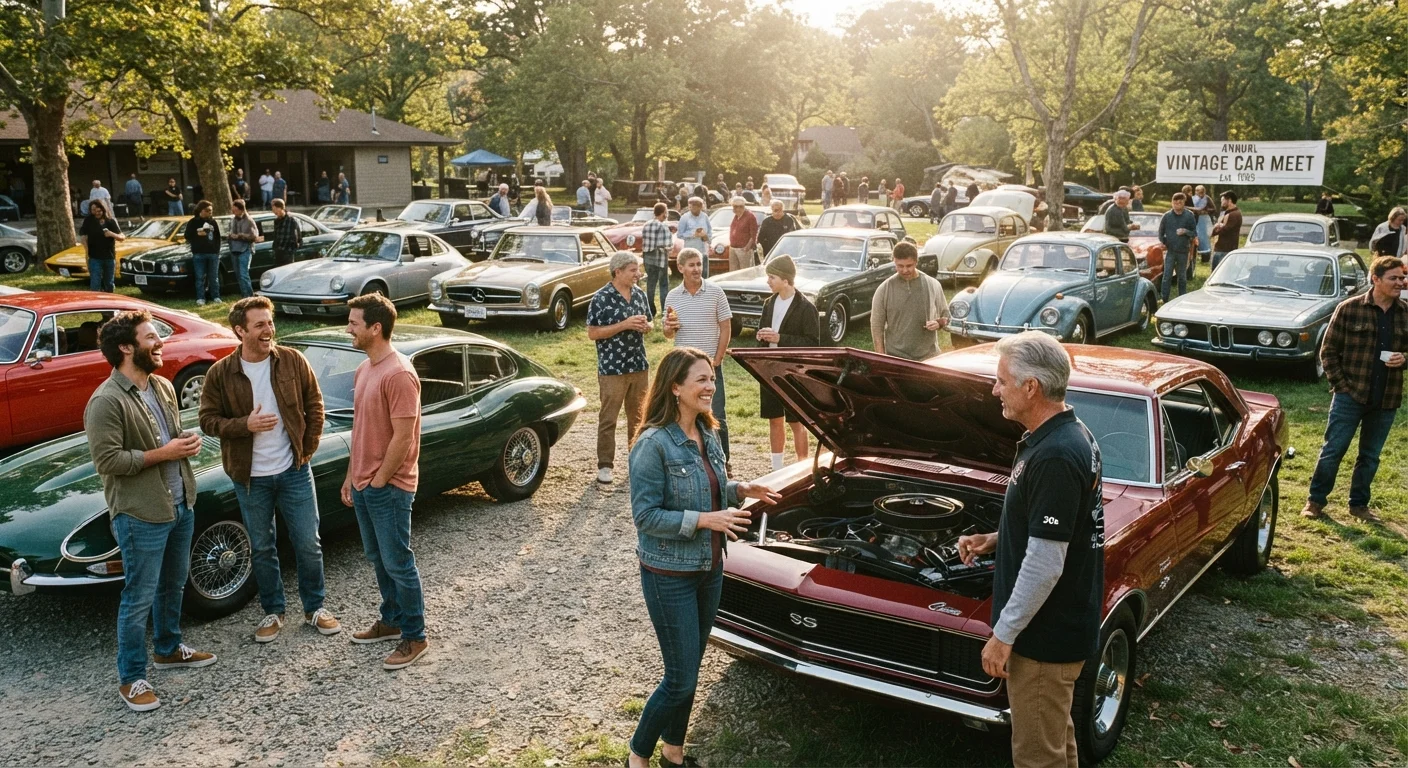
Car clubs occupy a unique space in enthusiast culture - somewhere between a social organization, a technical resource network, and a shared hobby collective. Some are marque-specific, built entirely around a single manufacturer or model range. Others gather broadly around an era, a discipline (autocross, concours, touring), or a regional identity. A few operate nationally with local chapters; many exist only at the county or city level.
What they share is a structure that informal meets like Cars and Coffee gatherings deliberately avoid: elected officers, dues, bylaws, organized calendars, and an expectation that members show up consistently. That structure is both the chief benefit and the primary source of friction for newcomers.
If you're still building your foundation in this hobby, a complete introduction to classic car culture is worth reading before evaluating specific clubs - terminology and era knowledge help you gauge whether a club's focus aligns with your interests.
The Real Advantages of Membership
Beyond the social appeal, clubs deliver practical value that is genuinely difficult to replicate on your own.
Deep, structured access to specialist knowledge
Long-standing members often carry decades of model-specific expertise that isn't documented anywhere online. That institutional knowledge - on sourcing, common failure points, and restoration priorities - is frequently the most valuable thing a club offers.
Organized events you can't easily access independently
Clubs negotiate group entries to shows, organize tours and rallies, and hold private track days or judged events that are only available through membership. This calendar of activity provides consistent motivation and structure.
Trusted network for parts, vendors, and specialists
Member recommendations carry weight in a way that anonymous online reviews don't. A club with longevity has vetted relationships with restorers, machinists, and suppliers over time.
Mentorship and hands-on learning opportunities
Many clubs run tech sessions - informal workshop gatherings where members work on vehicles together. These are particularly valuable for enthusiasts early in their ownership experience.
Sense of shared identity and lasting friendships
The social bonds formed around a shared obsession tend to be durable. Members frequently describe club relationships as among their closest friendships, built incrementally through shared events and problem-solving.
1,000+
Marque-specific clubs active in the US
The Classic Car Club of America and dozens of independent registries collectively represent hundreds of distinct marque and model organizations across the country.
~60%
Members who cite community as primary benefit
Surveys conducted by enthusiast publications consistently find that social connection and knowledge-sharing outrank event access as the leading reason members renew annual dues.
Access to organized car shows and concours events is one concrete benefit - clubs often hold reserved participant spots, judging credentials, and inside knowledge about regional events that casual attendees simply don't have. Technical knowledge-sharing is another underrated asset: a well-connected club can point you toward specialists, sourcing channels for obscure parts, and members who have solved exactly the restoration or maintenance problem you're facing now.
The Drawbacks Worth Knowing
Club membership is not uniformly positive, and honest self-assessment matters before you commit.
Participation expectations can be demanding
Many clubs depend on volunteer labor - setting up events, managing communications, stewarding shows. Joining without intending to contribute can create friction with established members who carry a disproportionate workload.
Dues and event fees add up across a year
Annual membership dues are usually modest, but regional rallies, show entry fees, and club dinners accumulate. Budget-conscious members may feel pressure to participate in activities they can't comfortably afford.
Cliques and insider hierarchies exist in many clubs
Long-established clubs can develop informal power structures where newer members are kept at arm's length. This is less a character flaw than an organizational tendency, but it affects the experience meaningfully.
Vehicle or standard requirements may not fit your situation
Some marque clubs have implicit or explicit standards about vehicle condition, originality, or modification level. Members with project cars or modified vehicles can find themselves sidelined at events.
Club politics can distract from the actual hobby
Disputes over leadership decisions, event planning, or bylaw interpretation occasionally consume energy that members would rather direct toward their vehicles. It is a feature of any volunteer organization.
The ownership experience itself carries its own weight independent of club involvement - the realities of classic car ownership are worth understanding alongside the social dimension. A club cannot substitute for sound mechanical judgment or realistic budgeting.
Club Culture Varies More Than You'd Expect
Two clubs focused on the same marque or era can have dramatically different cultures - one relaxed and inclusive, another formal and hierarchical. Online reputation and member testimonials only go so far. Attending in person, even once, tells you more than any forum thread. If a guest visit feels unwelcoming, that impression is usually accurate.
How to Evaluate a Club Before Joining
Most reputable clubs welcome prospective members to attend one or two meetings as guests before committing. Take that option seriously. Observe how established members engage with newcomers - whether knowledge flows freely or tends to stay within an inner circle. Ask directly about event frequency, volunteer expectations, and what participation typically looks like across a calendar year.
Check whether the club's vehicle focus matches where you actually are, not just where you aspire to be. A club centered on fully restored show cars may be a poor fit if your vehicle is mid-project. Conversely, a touring or rallying club is unlikely to satisfy if your interest is static display and detailed preservation.
Some enthusiasts find the club format too structured and prefer the looser social fabric of recurring informal meets. Others - particularly those new to a vehicle type or coming in without an existing network - find clubs genuinely transformative. Neither preference is wrong; the fit just needs to be honest.