What Cars and Coffee Actually Is
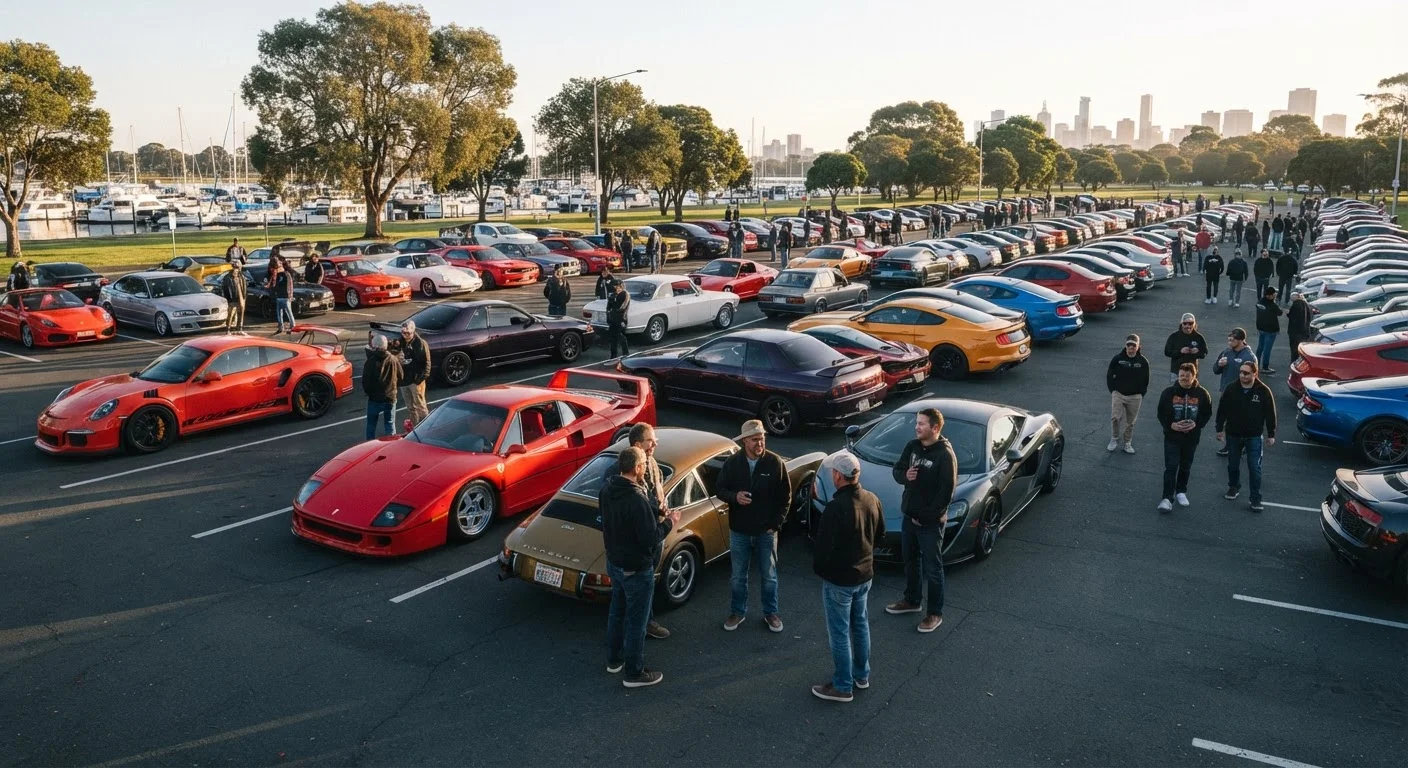
Cars and Coffee is one of the most democratic institutions in automotive culture. Unlike the formal judging and white-gloved presentation of a classic car show, or the curated prestige of a Concours d'Élégance, Cars and Coffee is deliberately informal. You drive in, park among like-minded enthusiasts, and talk about cars over a cup of coffee. No entry fee, no trophies, no judges with clipboards.
That informality is exactly what makes these gatherings special - and exactly why a shared code of conduct matters. When no single organization enforces rules, community norms carry all the weight. Violate them, and you risk getting the event shut down, driving away newcomers, or damaging the culture itself.
Whether you're a seasoned collector or just finding your footing as described in our introduction to classic car culture, understanding these unwritten rules is essential before you show up.
The Core Practices Every Attendee Should Follow
The norms below aren't posted on any sign. They're transmitted through experience, observation, and the occasional firm word from a long-time regular. Learn them before you need to be corrected.
Arrive early, but never perform on the way out.
The early-morning window is when the best cars show and the atmosphere is most relaxed. However, the exit is where reputations - and venues - are made or broken. Burnouts, revving for crowds, and aggressive acceleration near public roads are the single most common reason events lose their locations permanently.
Always ask before you touch or lean on someone's vehicle.
A car on display is still someone's personal property, often representing years of work and significant financial investment. Touching without asking - even leaning for a photo - is an immediate breach of trust that puts owners on the defensive.
Engage every car with genuine curiosity, not a hierarchy of worth.
Cars and Coffee draws everything from six-figure exotics to well-maintained daily drivers. Dismissive attitudes toward 'lesser' vehicles create a gatekeeping culture that shrinks the community and discourages the newcomers who will eventually become its most dedicated members.
Clean up after yourself and your group - completely.
Venues tolerate these events partly because attendees leave the property in good condition. Cups, wrappers, and fluid drips left behind are immediate justification for a property owner to revoke access. The community's continued presence depends on being invisible as a liability.
Park with others in mind, not just your own car's safety.
Parking diagonally across two spaces, blocking lanes, or reserving spots for friends who haven't arrived yet creates friction and congestion. Space is often limited, and inconsiderate parking forces early closures when access lanes become blocked.
Introduce newcomers to the culture actively.
The informal structure of Cars and Coffee can feel impenetrable to first-timers who don't know anyone. Experienced attendees who take thirty seconds to welcome unfamiliar faces are doing essential community maintenance that no organizer can replicate.
Quick Actions You Can Take Right Now
Preparation matters. A little advance thought separates the attendees who elevate an event from those who inadvertently disrupt it.
First Time? Observe Before You Park
If it's your first visit to a particular Cars and Coffee location, do one slow loop of the lot before choosing a spot. Note how cars are arranged, where the high-traffic areas are, and what the general mood looks like. Each event has its own micro-culture, and a few minutes of observation will tell you more than any written guide. See also our advice on attending your first heritage event for similar first-timer strategies.
Why These Norms Matter for the Whole Community
Cars and Coffee events exist at the pleasure of private property owners - shopping centers, dealerships, and business parks that voluntarily open their parking lots on weekend mornings. One reckless exit, one noise complaint, one piece of viral footage showing dangerous behavior, and that venue is gone. Dozens of similar events have been permanently canceled across the country for exactly this reason.
100+
Cars and Coffee events canceled due to reckless driving incidents
Automotive media and community forums have documented well over a hundred individual Cars and Coffee locations across the U.S. that permanently closed following dangerous exit incidents.
~5 min
Average time it takes to make a newcomer feel welcome
Community organizers consistently report that a brief, genuine introduction - under five minutes - is sufficient to convert a first-time visitor into a returning regular.
The culture also depends on psychological safety for newcomers. If a first-timer driving a stock daily driver feels unwelcome among exotics and classics, the community shrinks and stagnates. The deeper world of car clubs and heritage motorsport events grows from exactly these casual, accessible entry points. Protect them.
“The car show is a mirror of the community that creates it. Keep it generous, keep it inclusive, and it reflects something worth being proud of.”
— Dave Kinney, Automotive appraiser and longtime car culture commentator