More Than a Race: Why Rivalries Shape Car Culture
A championship battle is statistics. A true motorsport rivalry is mythology. The greatest head-to-head contests in racing history carried weight far beyond lap times - they embodied competing visions of what a racing machine should be, what a driver should risk, and what winning ultimately means. They pulled fans to circuits, drove engineers to work through the night, and left impressions on the broader automotive world that still echo in how we understand high-performance vehicles today.
These rivalries weren't manufactured for television. They emerged organically from the intersection of personality, machinery, national ambition, and the relentless pressure of elite competition. Each one told a larger story about the era it inhabited - and understanding them means understanding car culture itself.
A Note on Sources and Contested History
Motorsport history is often filtered through team perspectives, national media, and the memories of participants with understandable biases. Where incident details or motivations remain disputed - as with several championship-deciding collisions - this article presents the documented facts and notes the ongoing debate rather than asserting a definitive interpretation. Readers seeking primary sources will find official FIA records, team technical publications, and period race reports valuable complements to popular accounts.
The Rivalries That Left Their Mark
Ferrari vs. Ford at Le Mans (1964-1967)
Few rivalries in motorsport carry the cultural weight of Ferrari versus Ford at Le Mans. Enzo Ferrari's rejection of a Ford acquisition offer in 1963 became the inciting incident for one of the most expensive and dramatic factory-versus-factory campaigns in racing history. Ford's subsequent development of the GT40 - an entirely new endurance racing program built largely to beat a single Italian manufacturer - represented a collision of national ego, corporate ambition, and engineering philosophy.
Ferrari had dominated endurance racing for years, blending elegant design with racing-refined powerplants. Ford's response was industrial-scale: massive budgets, multiple prototype iterations, and the recruitment of top American and British talent. The contrast between the two approaches mirrored broader cultural tensions between European precision and American brute force. When Ford achieved its 1-2-3 finish in 1966, it was a watershed moment for American motorsport prestige on the world stage.
Ford built an entire racing program for the sole purpose of defeating one Italian manufacturer.
Senna vs. Prost: The Psychological Championship (1988-1989)
Ayrton Senna and Alain Prost shared a McLaren garage and, briefly, a mutual respect - before the relationship collapsed under the pressure of competing for the same World Championship. Their rivalry defined Formula 1's late 1980s and early 1990s, not merely because of the on-track incidents, but because of what it revealed about two fundamentally different driving philosophies.
Prost was a calculating strategist, nicknamed "The Professor" for his clinical approach to race management and tire conservation. Senna operated in a different register - emotionally driven, spiritually committed to the act of driving, and willing to occupy psychological territory that made rivals uncomfortable. Their 1989 Japanese Grand Prix collision, and the subsequent controversy over the stewards' decision, fractured the sport's governing relationships and prompted lasting debates about racing ethics. The intensity of their competition accelerated McLaren's technical development and remains a reference point for understanding what elite-level mental pressure looks like in motorsport.
Senna and Prost represented two irreconcilable theories of what made a great racing driver.
Lotus vs. Ferrari: The Constructor's Cold War (1960s)
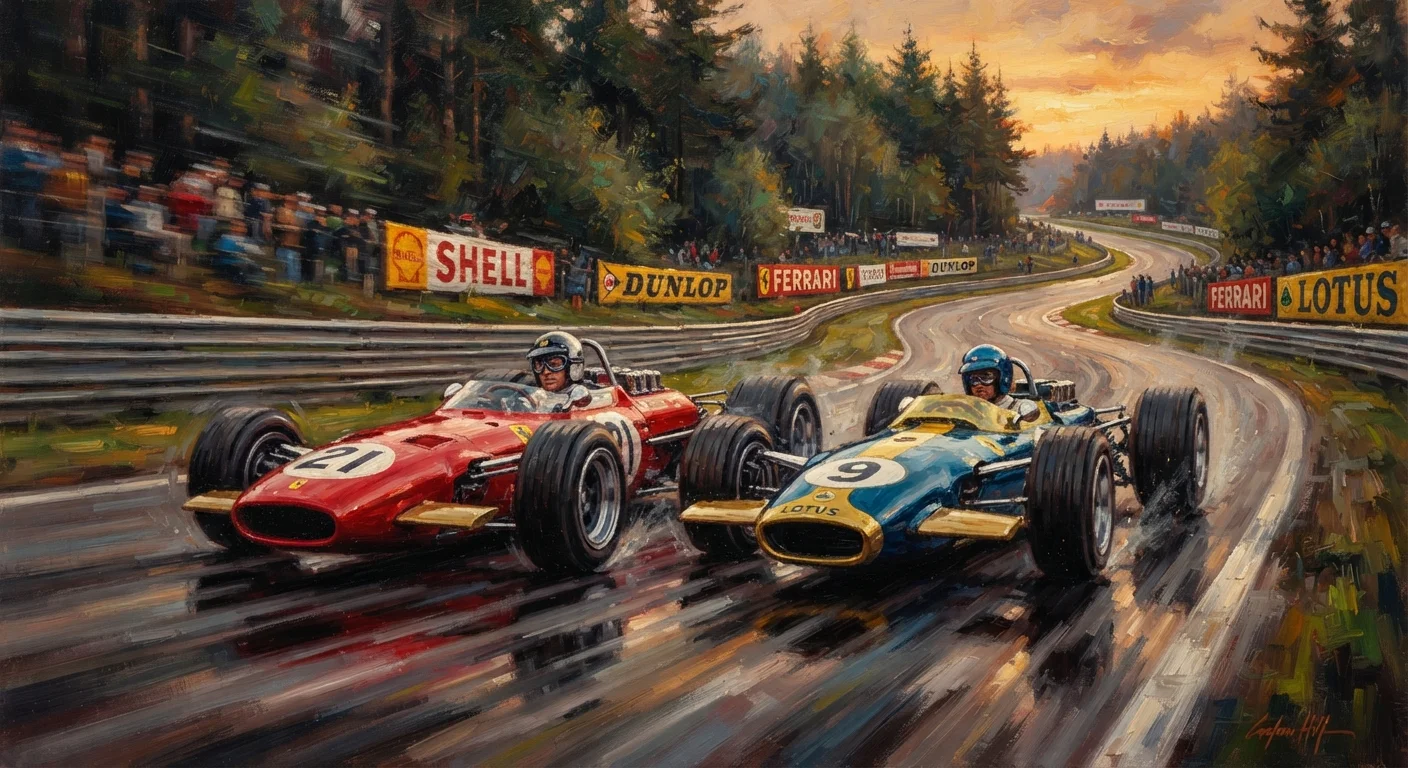
While driver rivalries dominate popular memory, the sustained constructor battle between Lotus and Ferrari throughout the 1960s may have done more to advance chassis engineering than any single head-to-head season. Colin Chapman's Lotus operation was a laboratory for radical ideas - monocoque construction, ground-effect aerodynamics in embryonic form, and relentless weight reduction. Ferrari, by contrast, drew on deep-rooted Italian craftsmanship traditions and a more conservative interpretation of what a racing car should be.
The tension between these approaches produced rapid innovation on both sides. Chapman's willingness to sacrifice robustness for performance was controversial - Lotus cars were fast but fragile - while Ferrari's approach prioritized a different kind of reliability. Engineers on both sides studied each other's solutions and adapted accordingly. The downstream effect on performance vehicle development broadly is difficult to overstate: principles refined in this period filtered into sports car and production performance design for decades.
Lotus's radical experimentation forced Ferrari to accelerate its own engineering evolution.
Nicholson vs. Don Garlits: Shaping American Drag Racing
On the American quarter-mile, the evolution of drag racing was driven substantially by fierce competition between innovators who treated the strip as an engineering test bed. Don Garlits, in particular, became a transformative figure whose competitive drive produced lasting safety and technical breakthroughs. After a severe accident involving a front-engine dragster, Garlits pioneered the rear-engine Top Fuel configuration - a redesign born of necessity that became the standard layout for the entire class.
This kind of rivalry-driven innovation is the engine of drag racing's technical history. The pressure to post faster elapsed times and terminal speeds pushed builders to experiment with supercharger design, fuel chemistry, and chassis rigidity in ways that simultaneously advanced and occasionally endangered the sport. Understanding this tradition is essential context for anyone exploring how drag racing built its community around speed - the safety culture that now defines the sport was forged in competitive fire.
Garlits's rear-engine redesign - born from a catastrophic accident - permanently changed drag racing's safety standards.
The Muscle Car Wars: GM vs. Ford vs. Chrysler (1964-1971)
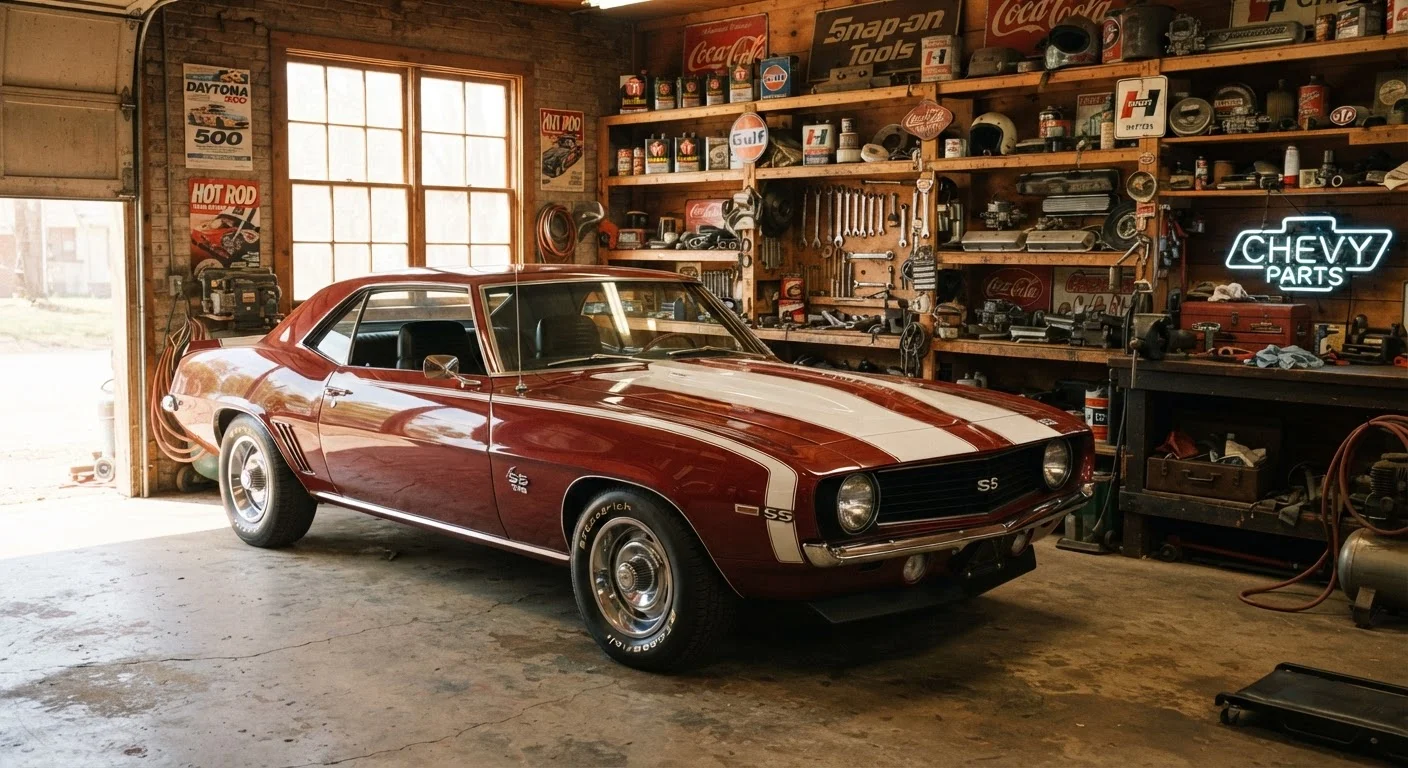
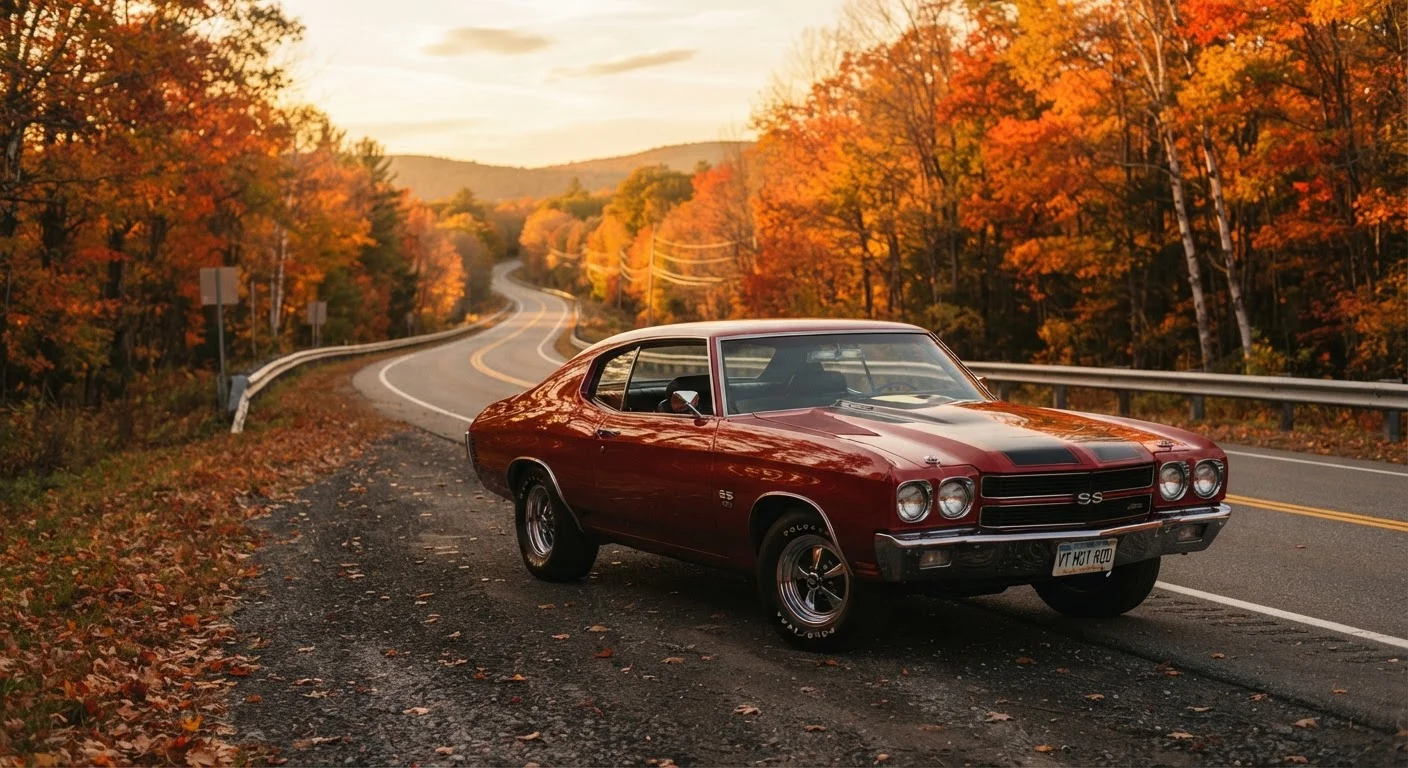
No rivalry in American automotive history was more commercially significant - or more culturally resonant - than the factory-backed horsepower war between Detroit's major manufacturers. Beginning roughly with the introduction of the Pontiac GTO in 1964 and accelerating through the decade, each manufacturer responded to competitor moves with escalating displacement, revised induction systems, and aggressive marketing aimed at a youth demographic hungry for performance identity.
Ford's 390 and later 429 cubic-inch big-blocks faced down Chrysler's 440 and legendary 426 Hemi, while General Motors navigated internal displacement restrictions that its own divisions sometimes creatively circumvented. The engineering competition was genuine and consequential: the muscle car era produced real innovation in high-displacement engine design and helped define what performance meant to a generation of American drivers. The rivalry eventually wound down under emissions regulations and insurance pressures - but its legacy persists in how enthusiasts understand post-war American automotive identity.
Detroit's horsepower war produced genuine engineering breakthroughs before regulations ended the era.
Schumacher vs. Hill, Then Villeneuve: Formula 1's Disputed Titles
Michael Schumacher's early championship campaigns generated some of Formula 1's most contested finishes. His 1994 collision with Damon Hill at Adelaide - contact that eliminated both drivers and handed Schumacher the title - sparked immediate and unresolved debate about intent, racing incident, and the ethics of championship-deciding moments. Three years later, a nearly identical scenario played out when Schumacher and Jacques Villeneuve made contact at Jerez; this time, Villeneuve continued and won the championship, while Schumacher was disqualified from the entire season's constructors' points.
These incidents illustrate how rivalries extend beyond engineering and into the governance of the sport itself. Each controversy reshaped FIA stewardship procedures and prompted broader discussion about how racing rules should handle ambiguous collisions. Schumacher's subsequent dominance with Ferrari - five consecutive championships from 2000 to 2004 - produced a different kind of rivalry: one where the competition struggled to find answers to a technically and operationally superior package, pushing rival constructors to innovate their own approaches to aerodynamic and tyre management strategy.
Schumacher's contested title finishes reshaped how the FIA approached stewardship of ambiguous racing incidents.
Go Deeper Than the Headlines
The most rewarding way to appreciate these rivalries is to study the technical context alongside the on-track drama. Period engineering documents, race team biographies, and official FIA archives often reveal how much more was at stake beneath the surface. Understanding what each team was attempting technically transforms a dramatic race result into a genuinely instructive story about problem-solving under pressure.
What These Battles Reveal About the Sport
Across every era, the most gripping rivalries shared a common thread: they forced both sides to evolve. Engineers reverse-engineered competitor breakthroughs. Drivers adapted styles under pressure. Manufacturers poured resources into solutions that later appeared in production vehicles. The forced induction and high-compression developments that now define performance road cars owe a measurable debt to lessons learned under competitive fire on the circuit.
These contests also shaped how fans relate to racing. The tribal loyalty sparked by Senna vs. Prost or Ford vs. Ferrari extended beyond the garage - it became part of how enthusiasts identified themselves. For a deeper look at how competing philosophies on either side of the Atlantic translated into road car culture, see our piece on European icons versus American muscle. And for those drawn to how speed culture grew from grassroots origins, drag racing's own community story offers a compelling parallel narrative.
The rivalries catalogued here weren't endpoints. They were catalysts - moments where the sport's direction was genuinely undecided, and the outcome shaped everything that followed.