Where the Obsession Comes From
The numbers matching standard didn't emerge from a formal rulebook - it grew organically from the collector community's deeply rooted instinct to separate the authentic from the approximate. In the postwar American muscle car era, factories stamped identification codes on engines, transmissions, and other drivetrain components that could be cross-referenced against a vehicle's Vehicle Identification Number (VIN) and internal build documentation. Those codes were never meant for collectors; they were production-line quality control tools. But enthusiasts recognised that those stampings were impossible to replicate at scale, making them the most reliable fingerprint of a car's identity.
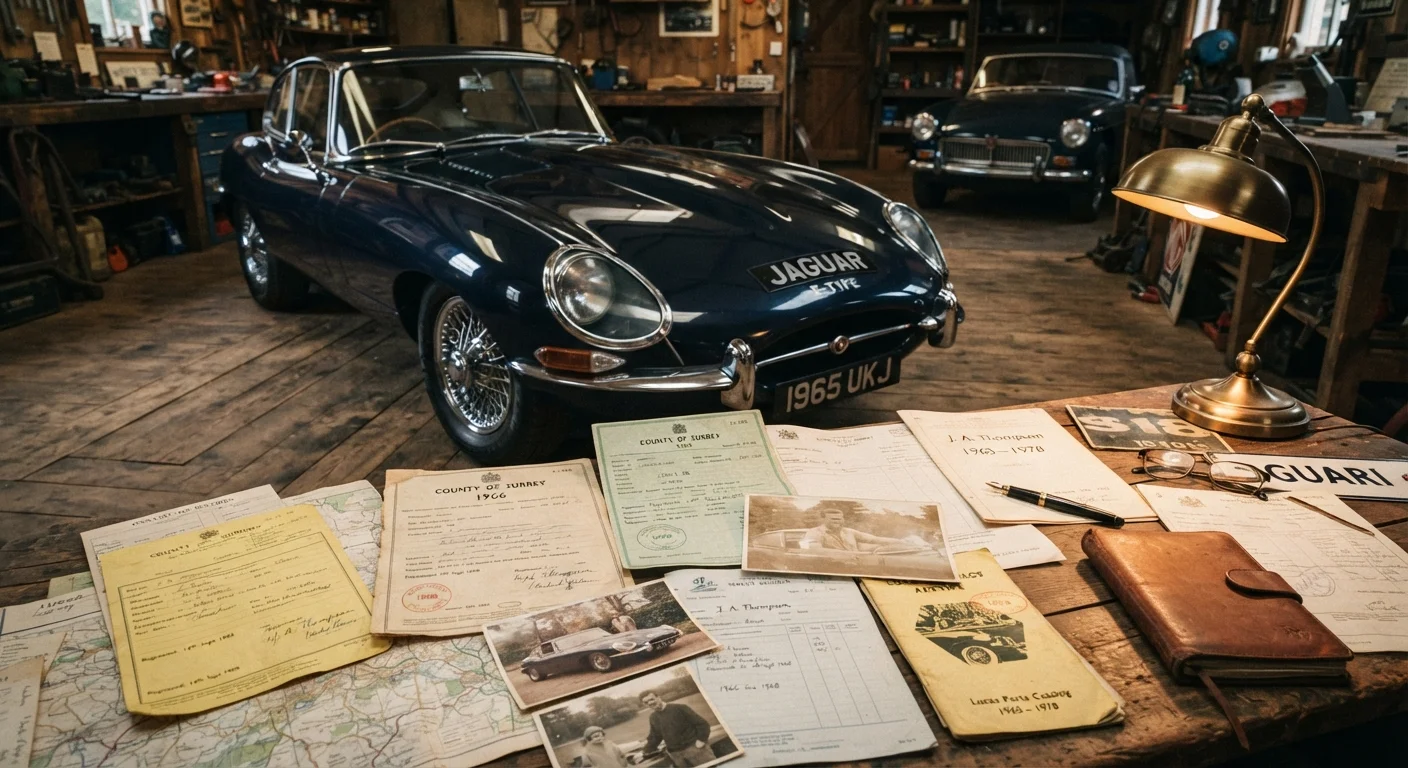
The cultural weight behind numbers matching is tied to the idea of provenance - the documented chain of custody that connects an object to its origins. Barn finds captivate collectors for the same underlying reason: the possibility that something untouched and original has survived. Numbers matching is that same romance, verified by steel.
“Originality is the ultimate restoration. Once you've replaced a numbers matching engine, that authenticity is gone forever - no amount of money or craftsmanship brings it back.”
— Hemmings Editorial Staff, Long-running American classic car publication
What the Numbers Actually Are
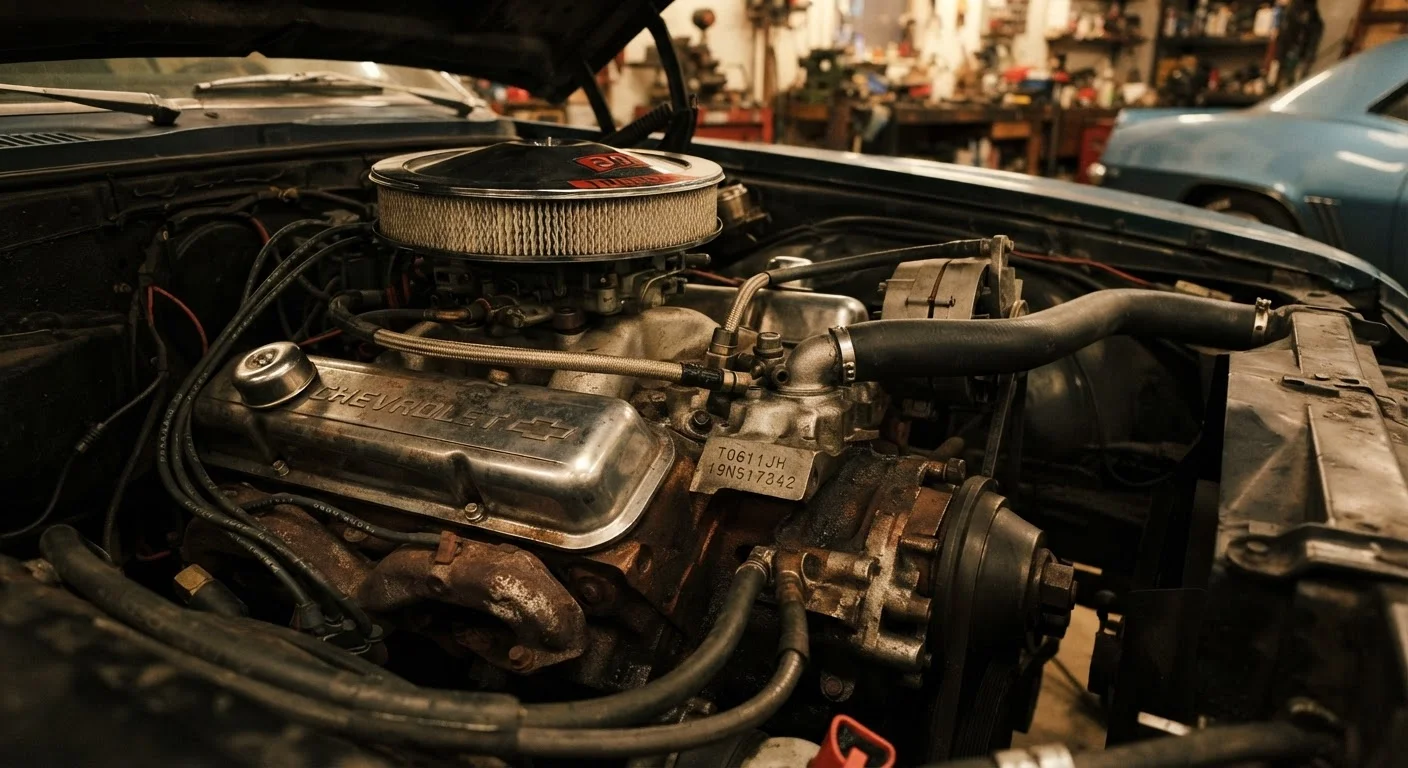
For most American muscle and classic cars, the critical stamps are found in specific, documented locations. On a General Motors V8, the engine's partial VIN - called a "VIN derivative" - is stamped on a pad at the front of the block. Ford and Chrysler vehicles follow similar conventions with their own alphanumeric coding systems. A knowledgeable appraiser knows precisely where to look and what each character in the code signifies: the plant, the production date, the engine displacement, and sometimes the vehicle it was originally destined for.
Transmissions carry their own casting numbers and date codes. The transmission's build date must precede the car's assembly date - a transmission stamped weeks after the car was built is an immediate red flag. The same logic applies to carburetors, whose date codes are cast into the body, and to rear axles. When every major component's timeline aligns coherently, the matching claim holds up. When they don't, questions follow.
20-50%
Typical auction premium for matching cars
Industry observers and major auction houses consistently report numbers matching examples command substantially higher bids than non-matching counterparts of the same model.
~700
1970 Hemi 'Cuda convertibles built
Original factory production records confirm the extreme rarity of certain high-option configurations, making matching documentation exponentially more significant.
Decades
Time needed to diminish matching supply
Collector car historians note that the pool of genuinely numbers matching muscle cars shrinks continuously as restorations, accidents, and time erode original components.
Why the Market Pays a Premium
The financial logic behind numbers matching premiums is straightforward: scarcity and verifiability. Over decades, original engines get swapped for rebuilt units, blown transmissions get replaced with modern alternatives, and well-meaning restorations inadvertently erase the factory record. True, fully documented matching cars become rarer with every passing year.
At major collector car auctions, matching status is declared in the lot description and materially affects bidding. A 1969 Camaro Z/28 with a matching Cowl Tag, trim tag, engine stamp, and supporting documentation exists in a different category than an otherwise identical-looking car with a replacement engine - even if the replacement is the correct displacement. Authenticity commands a premium because it cannot be fabricated from scratch; it can only be preserved or lost.
It is worth noting, however, that numbers matching status does not equal investment certainty. Classic car investment carries real myths that even experienced collectors accept uncritically. Matching status is one meaningful variable among many.
The Limits of the Standard
Numbers matching has genuine limitations that even devoted purists acknowledge. First, authentication is only as reliable as the expertise behind it. New collectors are particularly vulnerable to misrepresented cars, and fraudulent stampings do exist. Second, the standard applies most cleanly to American muscle cars from roughly 1960-1974, where factory documentation practices were consistent. European and Japanese classics operate under different factory coding conventions, and applying the American muscle standard directly can mislead buyers.
Third - and perhaps most importantly - numbers matching tells you nothing about how the car drives. An original, unrestored engine may need a full rebuild. Understanding what matching status truly signals means separating originality from reliability in your thinking. For collectors who intend to drive their cars, a well-maintained, correctly rebuilt non-matching example may be the more practical choice, even if it sits at a lower price tier.
Verify Before You Commit
If you are seriously considering a numbers matching car, always engage an independent, marque-specific appraiser or recognised club authenticator before finalising any decision. Ask the seller for all original documentation - build sheets, window stickers, title history - and treat verbal assurances as a starting point, not a conclusion. A qualified mechanic should also inspect the car's mechanical condition separately from its authenticity status.