What the Coverage Difference Actually Means
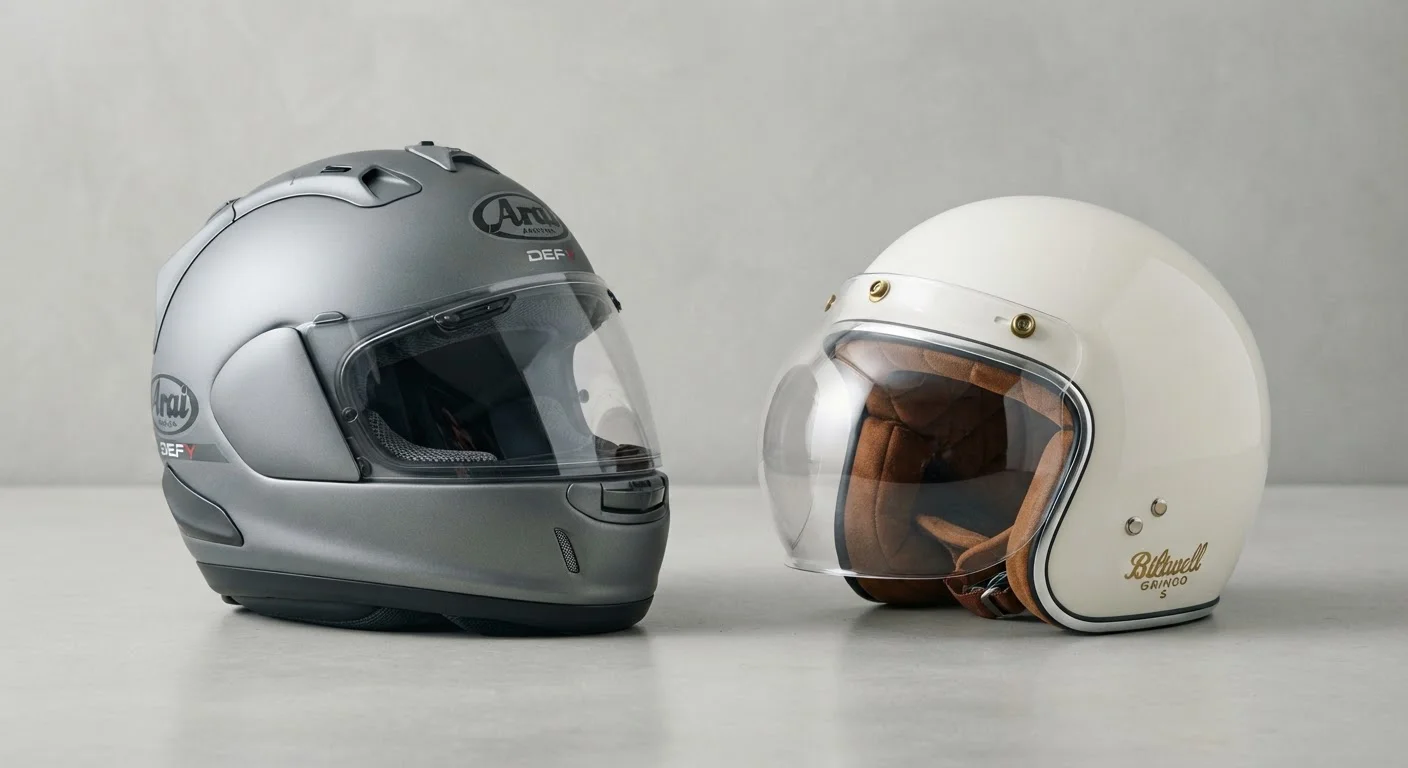
The defining structural difference between full-face and open-face helmets is the chin bar. Full-face helmets extend a rigid shell around the lower jaw and chin, while open-face (also called three-quarter) helmets stop at or above the cheekbones, leaving the face forward of the ears unprotected.
This matters because research into motorcycle crash injuries consistently identifies the chin and jaw area as a high-frequency impact zone. Studies published in peer-reviewed trauma journals have found that a substantial proportion of helmet contact points in real-world crashes involve the lower face - an area open-face designs do not cover. That said, injury outcomes depend on many variables beyond helmet style, including speed, crash type, and rider body position.
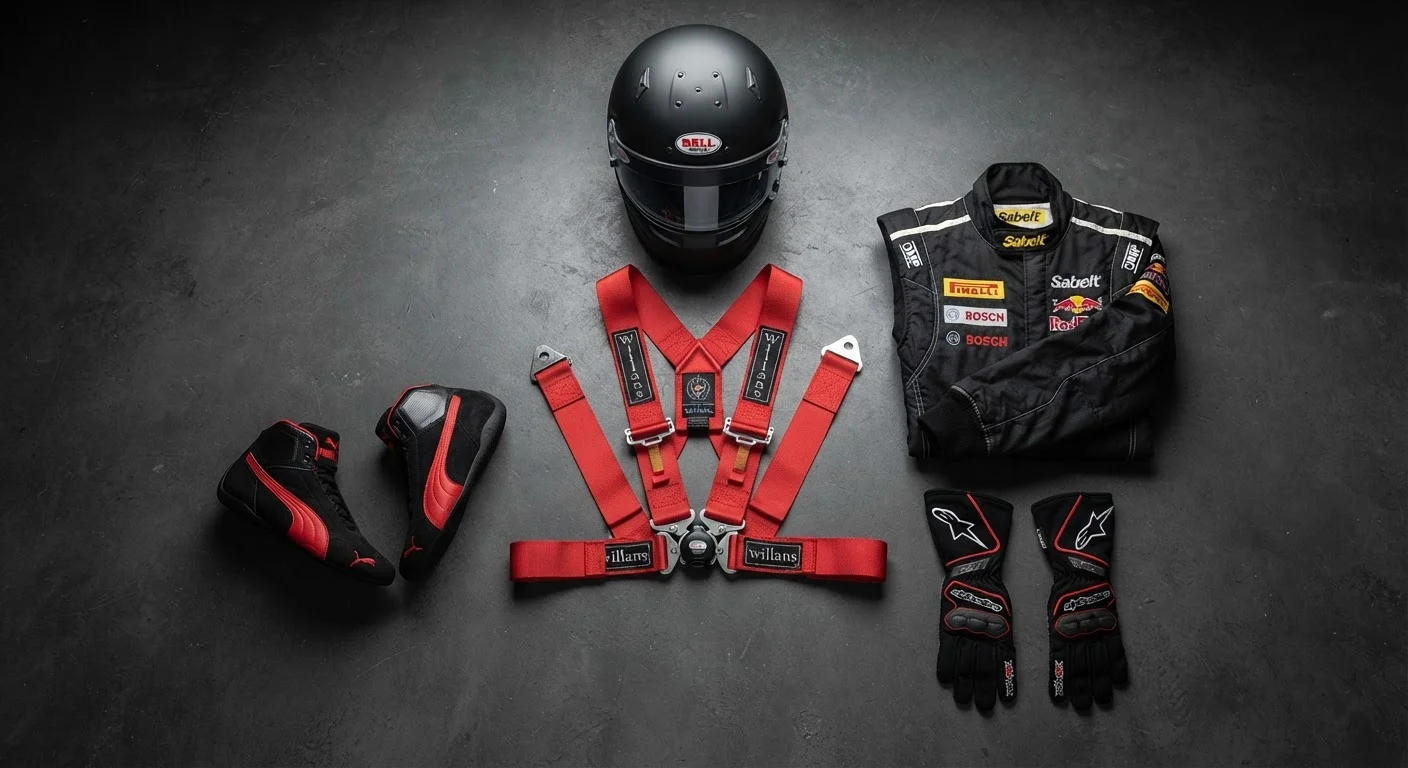
For a broader look at how helmets fit into overall rider safety systems, see our overview of driver safety gear.
| Criterion | Full-Face Helmet | Open-Face Helmet |
|---|---|---|
| Chin/jaw coverage | Full rigid chin bar | None |
| Peripheral vision | Slightly restricted | Wide, near-natural |
| Airflow / heat management | Vented but enclosed | Open, highly breathable |
| Wind noise at speed | Significantly reduced | Moderate to high |
| Communication ease | Muffled; requires intercom | Natural verbal communication |
| Certification scope | Includes chin-bar impact tests | No chin-bar testing required |
| Common use contexts | Highway, track, sport riding | Urban, cruiser, scooter |
Certification Standards and What They Test
Both helmet styles can carry DOT (FMVSS No. 218), ECE 22.06, or Snell certification, but the standards treat chin-bar performance differently. Full-face helmets must demonstrate that the chin bar absorbs and deflects impact energy within defined thresholds - a test that simply doesn't apply to open-face models, which have no chin bar to evaluate.
This isn't a flaw in the certification system; it's a recognition that different helmet architectures serve different protection profiles. What it does mean is that you can't directly compare a DOT-rated open-face helmet to a DOT-rated full-face helmet and assume equivalent protection - the tested surface area differs fundamentally.
Understanding which standard your helmet carries, and what it actually measures, is worth the research time. Our article comparing DOT, ECE, and Snell certification walks through the specific test protocols and what they mean in practice.
Modular Helmets: A Middle Ground with Caveats
Modular or flip-up helmets are frequently marketed as combining full-face protection with open-face convenience. In practice, most are certified and tested in the closed position only, meaning the hinge mechanism and chin bar may not meet the same impact-absorption thresholds as a fixed full-face shell. Always check the specific certification documentation for a modular helmet rather than assuming parity with traditional full-face designs.
Practical Trade-Offs: Vision, Ventilation, and Wearability
Open-face helmets offer a noticeably wider horizontal field of view, which some urban riders find valuable for reading traffic at intersections. They also run cooler in warm weather - a genuine comfort consideration during summer commuting - and make verbal communication with passengers or pedestrians far easier.
Full-face helmets, by contrast, provide better wind noise reduction at higher speeds, which can reduce rider fatigue on longer journeys. Many modern full-face designs incorporate sophisticated ventilation systems that partially address the heat concern, though they rarely match the natural airflow of an open-face shell. Fogging of the internal visor is a recurring wearability complaint, addressed through anti-fog inserts and pinlock systems.
Neither helmet style performs well when it doesn't fit correctly. A loose full-face helmet can rotate on impact rather than absorbing energy as designed, negating much of the chin-bar advantage. Our guide on fitting safety gear correctly explains how proper sizing affects real-world protection levels across helmet styles.
~35-45%
Crash impacts involving the chin/jaw area
Multiple trauma studies, including research published in journals such as Accident Analysis & Prevention, have found that a significant proportion of helmet contact points in motorcycle crashes occur in the chin and jaw region.
5 years
General recommended helmet service life
Helmet manufacturers and safety organizations commonly recommend replacing helmets within five years of manufacture due to material degradation, though actual lifespan varies by use and storage conditions.
Making the Call for Your Riding Context
The honest answer is that riding environment and speed profile should drive this decision more than aesthetic preference. If your typical ride involves sustained highway speeds, the additional coverage of a full-face helmet addresses a documented risk area in a way an open-face design structurally cannot. If you're navigating city blocks at 25-30 mph, the ventilation, visibility, and communication advantages of an open-face helmet may offer a practical trade-off worth considering - particularly if it means you'll wear it consistently rather than leaving it behind on hot days.
Hybrid designs such as modular (flip-up) helmets attempt to bridge both categories, offering chin-bar protection that can be raised when stationary. However, modular helmets typically carry different structural ratings than fixed full-face designs, and their hinge mechanisms introduce variables not present in single-shell construction - worth investigating before assuming equivalence.
Whatever style you select, helmet condition and age matter more than many riders realize. Fit, age, and certification misunderstandings can silently reduce the protection a helmet actually delivers - even on a model that looks fine externally.
This article is for informational and educational purposes only. Helmet selection should take into account your specific riding conditions, local regulations, and guidance from qualified safety professionals. No helmet eliminates injury risk.