The Gap Between Owning a Helmet and Being Protected by One
Most riders and drivers know they should wear a helmet. Far fewer understand how easy it is to undermine that protection through common, well-intentioned habits - wearing the same helmet for a decade, buying a size that feels close enough, or trusting a certification label to do all the evaluative work. The result is a widespread gap between perceived safety and actual protection.
This article addresses the most persistent misconceptions about helmet safety, corrected with what the evidence and engineering actually show. For a broader look at how each piece of safety equipment functions, see our Driver Safety Gear Explained guide.
Myth
If my helmet looks fine after a crash, it's still safe to use.
Fact
A single significant impact can permanently compress the EPS (expanded polystyrene) liner, destroying its energy-absorbing capacity - with no visible sign on the shell.
Helmet shells are typically made from polycarbonate, fiberglass, or carbon fiber composites - materials engineered to look intact after impact. The actual energy management happens in the EPS foam liner beneath, which works by crushing and deforming. Once that foam has deformed, it cannot recover or repeat the performance. Because the shell hides the liner, external inspection alone is unreliable. If a helmet has sustained a meaningful impact - any fall from head height or above, or a collision - it should be treated as compromised and replaced, even if it appears undamaged.
Myth
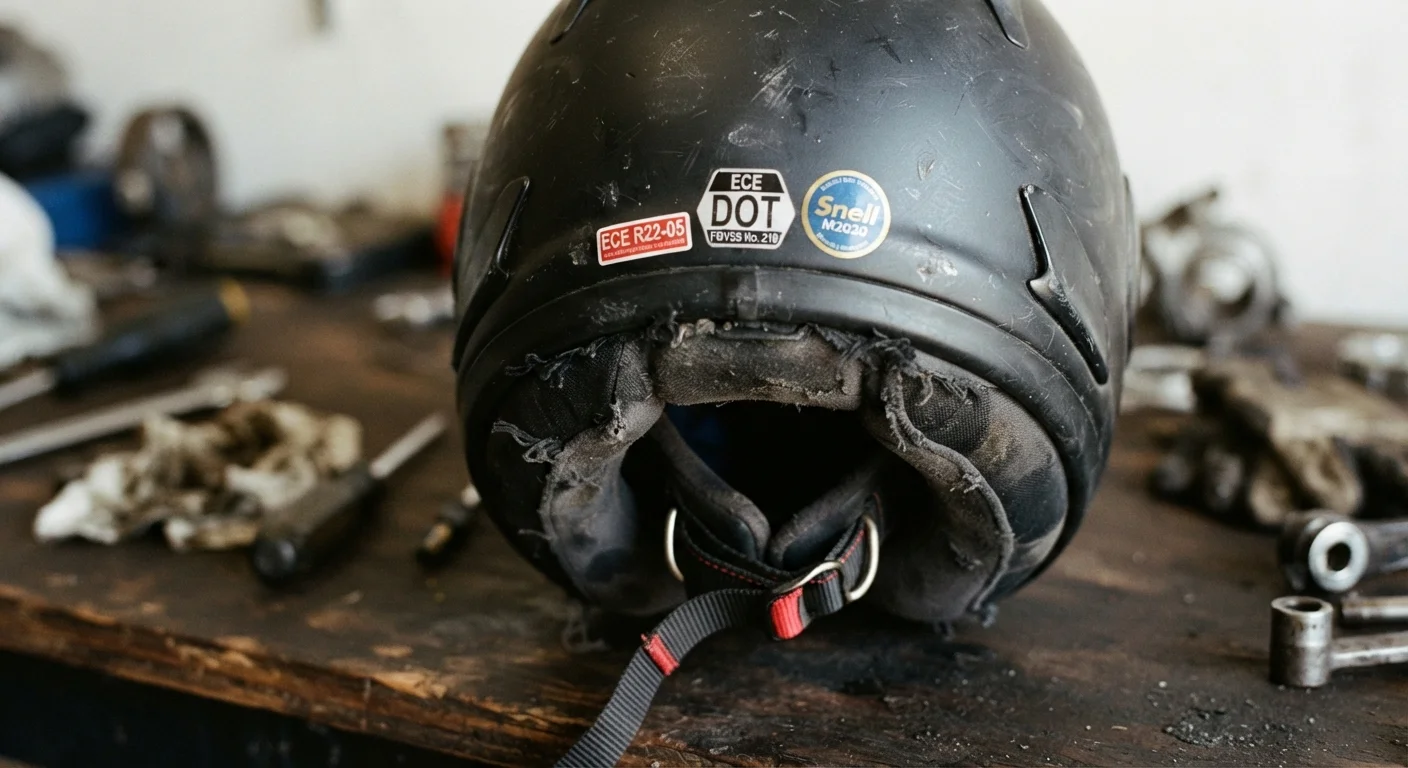
A helmet is a helmet - as long as it has a DOT sticker, I'm covered.
Fact
DOT certification represents a minimum federal threshold. The self-certification system means not all DOT-labeled helmets have been independently verified, and protection levels vary widely above that floor.
In the US, DOT (Department of Transportation) compliance is technically self-certified by manufacturers, meaning not every DOT-labeled helmet has been independently tested before reaching consumers. The National Highway Traffic Safety Administration (NHTSA) conducts spot-check testing and has periodically found non-compliant helmets bearing DOT labels in the market. Independent certification programs such as Snell and ECE 22 involve third-party laboratory testing. None of these systems guarantees a specific outcome in any individual incident, but the testing methodology behind the certification matters significantly when evaluating what the label actually represents.
Myth
Helmet age only matters if the foam is visibly deteriorating.
Fact
Helmet materials degrade chemically over time from UV exposure, sweat, cleaning products, and ambient conditions - degradation that isn't visible but does reduce performance.
Most major helmet manufacturers and safety organizations, including the Snell Memorial Foundation, recommend replacing helmets approximately every five years under normal use. This isn't a sales-driven guideline; it reflects measurable changes in EPS foam density and shell material properties over time. Sweat and skin oils penetrate the liner and can soften foam. UV radiation weakens outer shells. Cleaning solvents - even mild ones - can degrade adhesive bonds and liner integrity. The five-year window is a general guideline, not a guarantee; a helmet stored in extreme heat or used daily by a heavy sweater may degrade faster.
Myth
A snug helmet is uncomfortable - I should size up for a better fit.
Fact
A correctly fitted helmet should feel firmly snug with no pressure points. Sizing up creates movement during impact, which reduces energy management efficiency.
Helmet fit is one of the most under-appreciated factors in real-world protection. During an impact, a helmet that shifts position - even slightly - means the EPS liner isn't aligned where the force is concentrated. Properly fitted helmets feel snug initially and often loosen slightly as the interior liner breaks in over the first several uses. Head shapes also vary (round oval, intermediate oval, long oval), and a helmet sized correctly for volume but mismatched in shape can create both discomfort and uneven fit. Trying helmets on in person and understanding your head shape is more reliable than ordering by hat size alone.
Myth
Adding aftermarket accessories - tinted visors, communication systems, decorative overlays - doesn't affect certification.
Fact
Modifications made after purchase can void the helmet's certification, alter aerodynamics, or compromise the structural integrity of the shell.
Certification testing is conducted on helmets in their as-manufactured configuration. Drilling into a shell to mount a camera, applying adhesive wraps to the outer surface, or substituting a non-OEM visor can each introduce variables that weren't part of the certified design. Some communication systems are designed with specific mounting methods to avoid shell penetration; others are not. Decorative vinyl wraps that use aggressive adhesives can react with composite shells over time. This doesn't mean all accessories are unsafe - but riders should verify compatibility with the helmet manufacturer and understand that modifications shift responsibility away from the original certification.
Certifications, Fit, and the Details That Actually Determine Outcome
Understanding what certification labels mean - and what they don't - is foundational. DOT, ECE 22, and Snell each apply different test protocols, impact velocities, and pass thresholds. A helmet meeting one standard is not automatically superior to one meeting another; they measure overlapping but distinct criteria. Our detailed breakdown of DOT, ECE, and Snell standards covers those differences in depth.
Fit is equally consequential. A helmet that moves on your head during an impact isn't positioned correctly to absorb energy as engineered. The principles behind proper helmet fit - including how head shape affects sizing - are covered thoroughly in our guide on fitting safety gear correctly.
Never Buy a Used Helmet Without Full History
A used helmet may have sustained an impact that is completely invisible externally but has compromised its EPS liner. Without documented history from the original owner, there is no reliable way to verify the helmet's structural integrity. This risk applies equally to helmets received as gifts or inherited from other riders. When helmet provenance is unknown, the protective value is also unknown.
If you're also evaluating which helmet style best matches your riding context, our comparison of full-face vs open-face helmets walks through the protection trade-offs in practical terms.