
The Core Principle: Why Intake Air Temperature Matters
An internal combustion engine is fundamentally an air pump. The more oxygen it can move through each combustion cycle, the more fuel it can burn - and the more power it can produce. Air density is the key variable: cooler air is denser and contains more oxygen molecules per unit of volume than warm air at the same pressure.
Both cold air intakes and short ram intakes replace the restrictive factory airbox and its associated ducting with a wider-diameter tube and an exposed conical or cylindrical filter. That shared design eliminates the flow restrictions of the stock system. Where they diverge is in where they position the filter - and that positioning determines how much underhood heat contaminates the incoming air charge. Understanding this distinction is essential before evaluating any intake system, and it connects directly to broader performance concepts covered in our guide to high-performance engine anatomy.
Cold Air Intake: Chasing Density at Distance
A cold air intake (CAI) routes its tubing and filter away from the hot engine core - typically down toward the front bumper area, into a fender well, or into a dedicated sealed airbox positioned near a factory fresh-air duct. The goal is to keep the filter in a zone where ambient outside air, rather than radiated engine heat, governs intake temperature.
The potential advantages are meaningful. Intake air temperatures in a well-positioned CAI can run 20-40°F cooler than the underhood air temperature at idle or low speed. On turbocharged applications - explored in depth in our explainer on turbocharger mechanics - a cooler pre-turbo charge means the compressor starts with denser air, compounding the density benefit downstream.
The trade-offs are equally real. Longer tubing runs increase installation complexity. In some vehicles, the filter sits low enough to risk hydrolocking - ingesting a slug of water - during heavy rain or deep puddles. Many CAI kits include a bypass valve or recommend a raised filter position to mitigate this, but it requires attention during installation.
Hydrolock Risk With CAI Systems
Positioning a CAI filter near the wheel well or bumper area can expose it to standing water during heavy rain or flooding. If a large volume of water is ingested, the engine can hydrolock - a non-compressible fluid enters the cylinder and causes severe internal damage. Many CAI kits include a bypass valve that opens if the filter is submerged, but this protection is not universal. Assess your local climate and typical driving conditions when evaluating filter placement.
Short Ram Intake: Simplicity and Its Limits
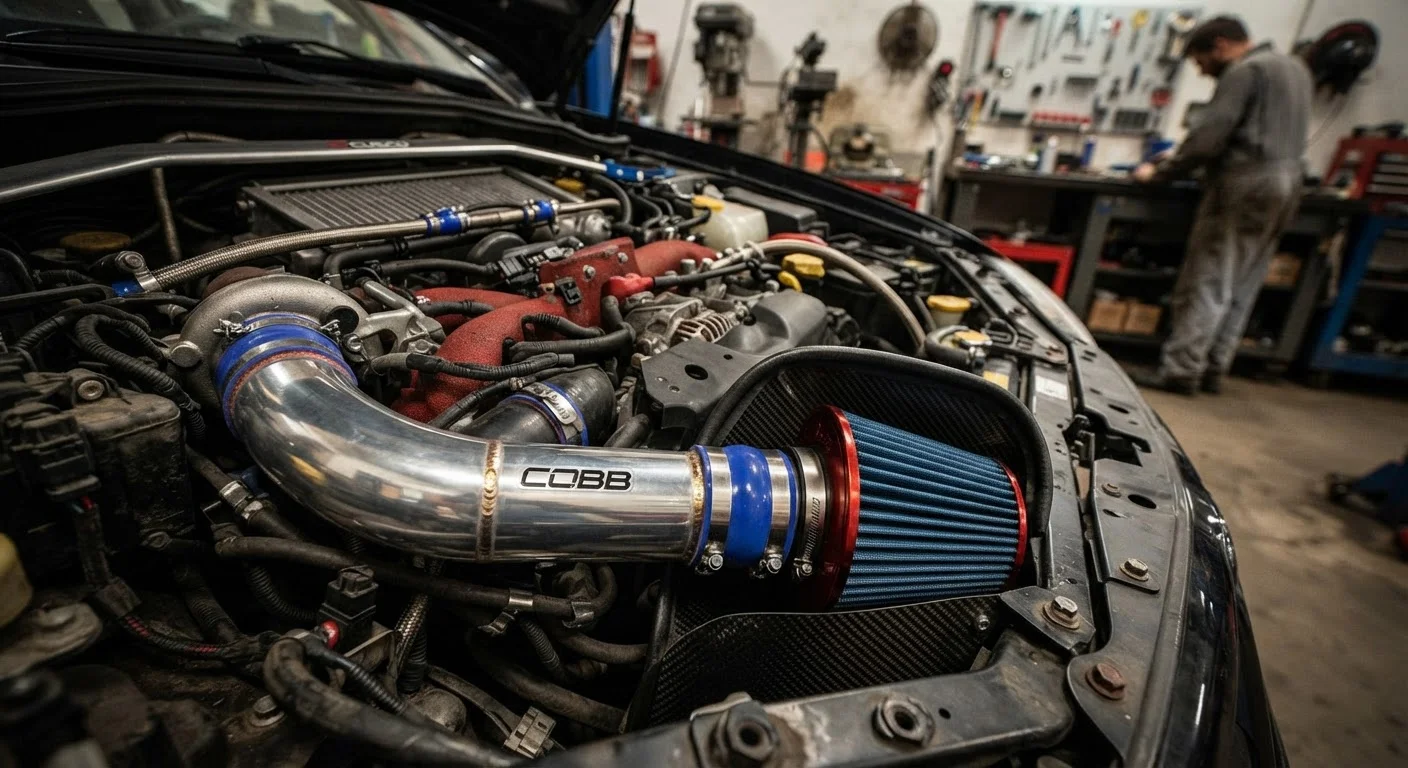
A short ram intake (SRI) mounts the filter directly in the engine bay, close to the throttle body, using a single short tube section. Installation is typically straightforward - often a 30-to-60-minute job requiring basic hand tools - and the filter is easily accessible for cleaning or inspection.
The trade-off is thermal exposure. With the filter sitting inside a hot engine bay, intake air temperature rises significantly once the engine is warm. This effect is most pronounced during heat soak: after sustained low-speed driving, the underhood temperature can spike well above ambient, and the SRI filter pulls that heated air directly into the intake tract. On naturally aspirated engines - a performance philosophy compared directly in our naturally aspirated vs. turbocharged breakdown - this heat penalty can partially negate the flow gains from the open filter design.
Some SRI designs incorporate heat shields around the filter to partially isolate it from radiated engine heat. These improve the thermal picture but rarely match a properly routed CAI for sustained temperature management.
| Criterion | Cold Air Intake | Short Ram Intake |
|---|---|---|
| Filter Location | Away from engine heat (fender, bumper area) | Inside engine bay, near throttle body |
| Intake Air Temperature | Significantly cooler at speed | Elevated by underhood heat |
| Installation Complexity | Moderate to high | Low to moderate |
| Water Ingestion Risk | Higher (filter position near road level) | Lower (filter elevated in bay) |
| Heat Soak Sensitivity | Lower - filter isolated from engine heat | Higher - filter exposed to hot bay air |
| Best Driving Scenario | Highway, track, sustained high RPM | City driving, short trips |
| Typical Tubing Length | Longer, multi-section routing | Short single section |
Fitment, Regulations, and Making the Right Call
Engine bay geometry varies enormously by vehicle platform. Some compact cars and front-wheel-drive layouts leave no practical routing path for full CAI tubing, making an SRI the only viable option. Trucks and rear-wheel-drive performance cars with roomier engine bays tend to accommodate CAI systems more readily.
Emissions compliance is a non-negotiable consideration in the United States. In California and other states that follow CARB (California Air Resources Board) standards, intake systems must carry a CARB Executive Order (EO) number to be street-legal. Check your state's requirements before purchasing any aftermarket intake, as non-compliant systems can result in failed inspections. Federal EPA regulations also apply in non-CARB states - verify that any system you consider is compliant for your jurisdiction and model year.
Finally, consider whether your vehicle's ECU will require recalibration. Most modern engines use a mass airflow (MAF) sensor that the ECU uses to calculate fuel delivery. Significant changes to intake airflow can push fueling out of the factory calibration range, potentially requiring a tune to realize any performance benefit and avoid running lean conditions.
This article is for informational and educational purposes only. Aftermarket modifications may affect vehicle warranty coverage, emissions compliance, and insurance terms. Consult a qualified mechanic or performance specialist before modifying your vehicle's intake system.