
Why Your Starting Point Matters More Than the Mod Itself
Enthusiasm is not a strategy. Most first-time modifiers focus almost entirely on what to install and almost nothing on whether their vehicle is ready to receive it. The result is often wasted money, underwhelming results, or - in the worst cases - a vehicle that performs worse than it did stock.
Performance modification is a systems problem. Your engine, drivetrain, suspension, brakes, and tires all interact. Improving one element without considering the others can shift a bottleneck rather than eliminate it. Before you buy anything, understand what your vehicle actually needs versus what looks appealing in a product listing.
For a broader grounding in what separates a genuinely capable performance vehicle from a spec-sheet exercise, see our article on assessing a performance vehicle's true capability.
Bolt-on modification
An aftermarket part that replaces or adds to a factory component without requiring engine machining or major fabrication. These are the most accessible entry point for first-time modifiers.
Cat-back exhaust
An exhaust system that replaces components from the catalytic converter rearward to the tailpipe. It preserves emissions-critical hardware while reducing backpressure.
ECU (Engine Control Unit)
The onboard computer that manages fuel delivery, ignition timing, and other engine parameters. Remapping it can adjust these settings to suit hardware modifications.
Coilover
A combined coil spring and shock absorber unit that replaces the factory suspension. Most coilovers allow ride height and damping to be adjusted.
Backpressure
Resistance to exhaust gas flow created by the exhaust system. Excessive backpressure limits engine breathing efficiency; however, some minimum backpressure is beneficial at lower RPM ranges.
Dyno (dynamometer)
A machine that measures an engine's or drivetrain's power output. Dyno testing provides objective, platform-specific data on whether a modification produces measurable gains.
Assess Before You Spend
A performance modification layered on top of a mechanically compromised vehicle is not an upgrade - it is an accelerant for existing problems. Worn suspension bushings, aging brake pads, degraded tires, or a cooling system running at its limit will all respond poorly to increased mechanical stress.
The practical first step is a pre-modification condition review. Check fluids, inspect rubber components for cracking or deformation, confirm brake pad and rotor condition, and verify tire age and tread depth. If your vehicle is overdue for scheduled maintenance, complete that work first. A healthy baseline is not optional - it is the prerequisite.
Our pre-upgrade vehicle condition checklist walks through this assessment systematically and is a useful tool before committing to any modification budget.
Document Your Baseline First
Before installing any modification, record your vehicle's current condition: mileage, recent service history, and ideally a baseline dyno pull if power is your goal. This gives you a credible reference point to evaluate whether a modification actually delivered a measurable change. Without a documented baseline, you are estimating rather than measuring.
Modifications That Make Logical First Steps
Once you have confirmed your vehicle's baseline health, certain categories of modification offer a sensible entry point for most enthusiasts.
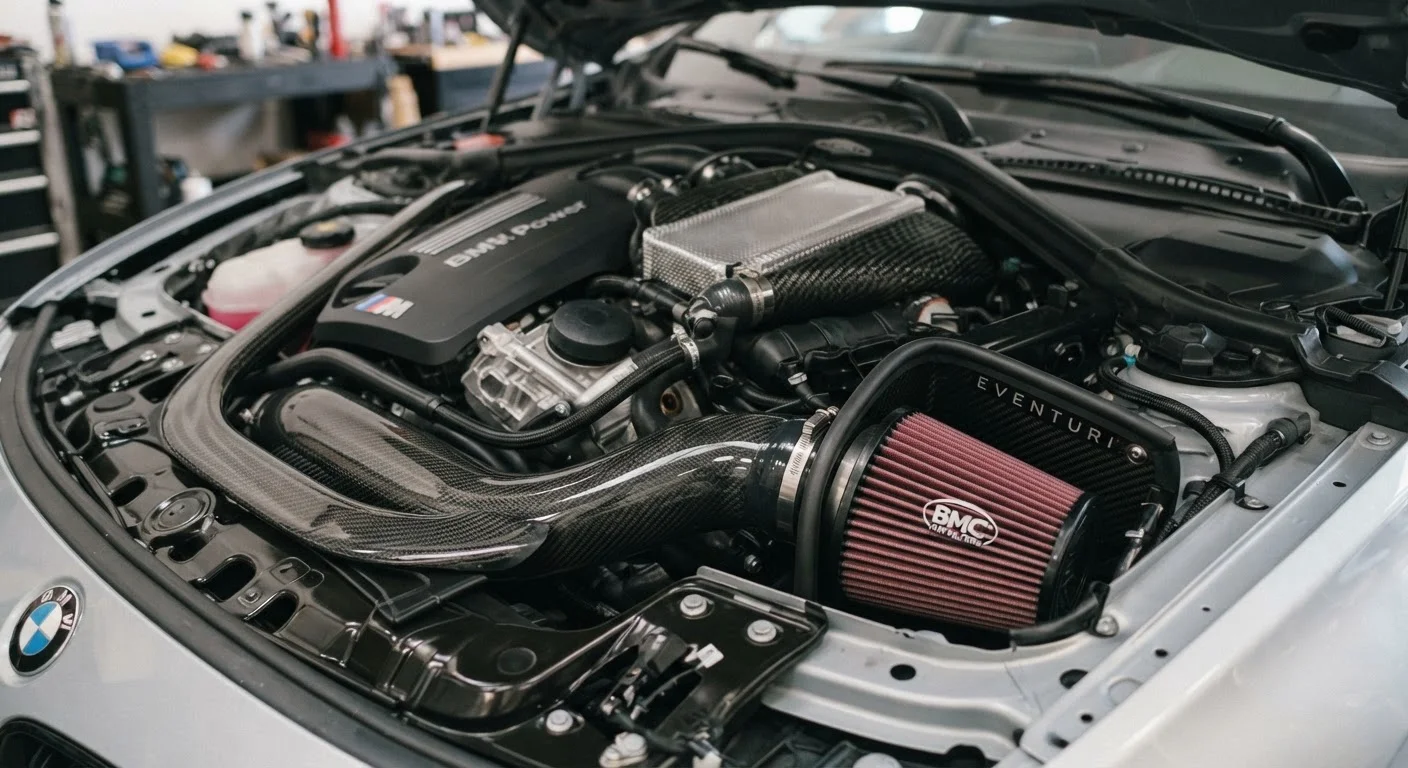
- Intake improvements: Replacing the factory airbox with a performance intake increases airflow volume and can reduce intake temperatures. Effects are platform-dependent, and gains on already-efficient factory setups may be modest.
- Exhaust upgrades: A cat-back exhaust system (replacing components from the catalytic converter rearward) reduces backpressure and changes exhaust note. This is generally emissions-compliant because the catalytic converter remains intact. Removing or bypassing the catalytic converter is illegal for street use under federal law.
- Suspension tuning: Upgrading to performance-oriented shocks and springs, or installing a coilover system, can meaningfully improve handling balance and body control. This category often delivers noticeable real-world benefits that outpace modest power gains.
- Brake upgrades: Higher-friction brake pads and slotted or drilled rotors improve heat management and stopping confidence - an especially relevant upgrade if power modifications are also planned.
- Wheel and tire fitment: Moving to wider, stickier tires on appropriate wheels is one of the most impactful changes available on a stock vehicle. Grip improvements translate directly into both acceleration and cornering capability.
These categories share an important characteristic: they are well-documented on most popular platforms, have predictable outcomes, and integrate without requiring extensive supporting modifications.
Setting Realistic Expectations
Performance modifications rarely deliver the gains suggested by marketing claims. Individual bolt-ons produce incremental improvements, and those improvements are most meaningful when the rest of the vehicle is properly sorted. A cold air intake on a stock vehicle in good condition might produce measurable gains on a dyno; the same intake on a vehicle with a clogged fuel injector or worn spark plugs may show nothing.
The compounding principle matters here: a series of well-chosen, compatible modifications that work together will outperform an equal dollar amount spent on a single dramatic upgrade that the rest of the drivetrain cannot support. Think in terms of systems, not parts.
If ECU tuning is part of your longer-term plan, it is worth understanding how engine management interacts with physical modifications before committing to either. Our overview of ECU remapping explains what a remap actually does and where its limits lie.
Gains Are Platform-Specific - Verify Independently
Horsepower and torque claims from parts manufacturers are often measured under ideal conditions on specific test vehicles that may not match your configuration. Seek out dyno data from owners of your exact platform and model year before assuming a particular gain. Forum communities and enthusiast data aggregators are more reliable sources than product listings for realistic outcome data.
Avoiding the Most Common First-Timer Mistakes
The patterns behind failed or disappointing first builds tend to repeat themselves. Recognizing them in advance is the clearest advantage an informed enthusiast has.
- Skipping the baseline: Installing performance parts on a vehicle with deferred maintenance is the single most common and costly error. Address mechanical health first.
- Chasing power before handling: More power without proportionally improved braking and grip creates a harder-to-manage vehicle, not a faster one. Suspend and stop before you accelerate.
- Buying incompatible components: Parts must be matched to each other and to your vehicle's existing specifications. Mismatches - a camshaft profile unsuited to your cylinder heads, for example - can reduce output below stock levels.
- Ignoring emissions and legal compliance: Several popular modifications are illegal for street use in the US, particularly those affecting the emissions control system. Research compliance before purchasing.
- Underestimating supporting systems: Fuel delivery, cooling, and electrical capacity all have limits. Significant power additions often require parallel upgrades to these systems that add cost and complexity.
For a deeper look at how these mistakes unfold in practice and how to avoid them, see our article on rushed performance builds and where they go wrong.