Why Diagnostic Errors Are So Common
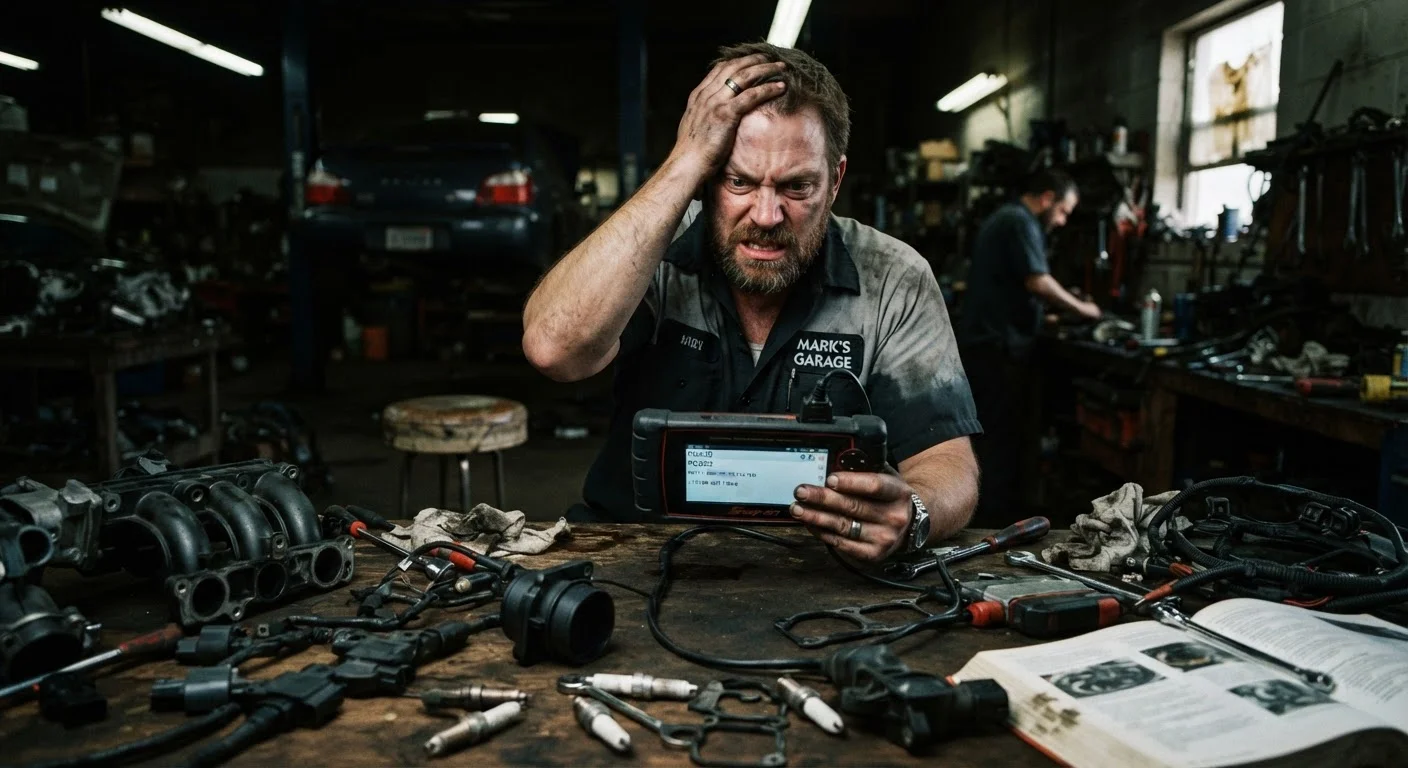
Vehicle diagnosis is a discipline that demands both structured thinking and patience - two things that time pressure and parts-store culture actively work against. Many owners and even some technicians approach a fault symptom looking for the quickest plausible answer, rather than following evidence to a confirmed conclusion. The result is unnecessary parts spending, unresolved problems, and growing frustration.
Understanding why these errors happen is the first step toward avoiding them. Most diagnostic mistakes share a common root: jumping ahead of the evidence. Whether it's trusting a fault code too literally or skipping a basic electrical check, each error reflects a shortcut taken where a measured step was needed.
For owners who want to understand what's realistic to tackle themselves, a clear-eyed look at self-diagnosis helps set appropriate expectations before picking up a scan tool.
Parts Replacement Is Not Diagnosis
Swapping components without confirming a fault is the single most expensive habit in DIY vehicle repair. Each unnecessary part replaced adds cost and can introduce new variables - such as disturbed wiring or improperly seated sensors - that complicate the actual problem. Always verify a component has failed before replacing it.
The Most Costly Diagnostic Mistakes - and How to Avoid Them
The following errors appear repeatedly across repair forums, professional workshops, and owner accounts. Each one is avoidable with the right approach.
Replacing parts based on a fault code alone, without testing the component first.
Why it happens: OBD-II fault codes are often misread as a direct diagnosis. When a code points to, say, an oxygen sensor, the instinct is to replace that sensor immediately.
Ignoring secondary or related fault codes and focusing only on the most prominent one.
Why it happens: Multiple codes can feel overwhelming, so technicians - especially inexperienced ones - zero in on the first or most obvious code and clear the rest.
Skipping fundamental checks - fuses, grounds, connectors, and power supply - before pursuing complex faults.
Why it happens: Basic electrical checks feel too simple to cause major symptoms, so they get bypassed in favor of more sophisticated diagnostic steps.
Assuming a symptom that cleared itself means the problem is resolved.
Why it happens: When a warning light goes out or a rough idle smooths over on its own, it's tempting to assume the vehicle self-corrected. This is especially common with intermittent faults.
Diagnosing without reproducing the fault condition first.
Why it happens: Technicians often begin testing a vehicle cold or at idle when the reported symptom only occurs under load, at temperature, or in specific driving conditions.
~40%
Of returned parts found to be non-defective
Industry estimates from automotive parts distributors suggest roughly 40% of warranty-returned parts show no confirmed defect - a direct consequence of parts-replacement-as-diagnosis.
P0420
Most misdiagnosed OBD-II code
The catalytic converter efficiency code P0420 is frequently blamed on the converter itself, when oxygen sensor failure, exhaust leaks, or engine misfires are often the actual root cause.
A structured, systematic method is the antidote to all of these errors. The step-by-step approach used for no-start diagnosis illustrates how methodical thinking works in practice - the same logic applies across virtually every fault type.
Many of these mistakes are also reinforced by widely repeated misconceptions. Common DIY diagnosis myths explores how these false assumptions take hold and how to recognize them before they send your diagnosis in the wrong direction.
Vehicle diagnosis involves working with electrical systems, fuel components, and mechanical parts that can cause injury if mishandled. If you are unsure about any step in a diagnostic process, consult a qualified mechanic before proceeding.