The Color-Code System: Understanding Urgency at a Glance
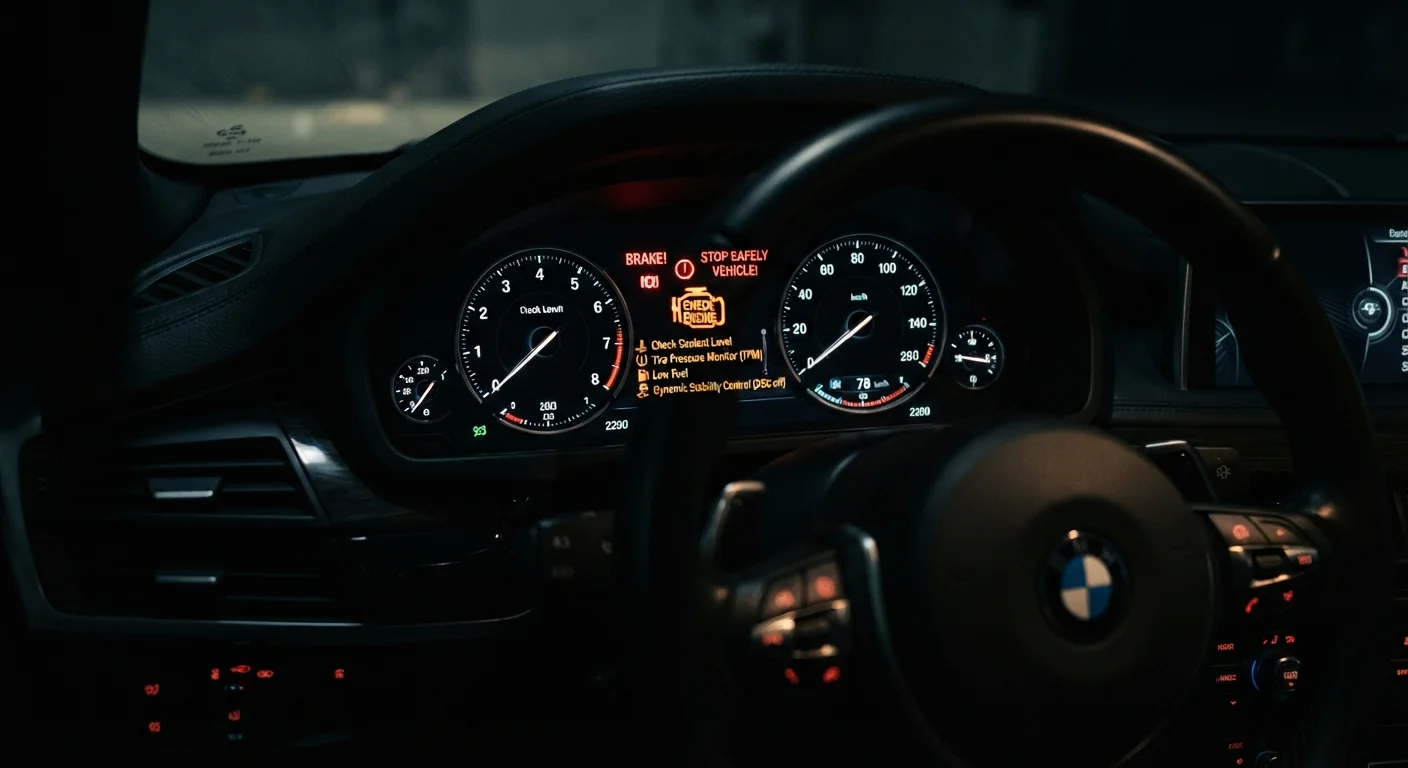
Your dashboard warning lights operate on a traffic-light logic: red means stop, amber means caution, and blue or green is informational. This color hierarchy is consistent across most modern vehicles sold in the United States, though the exact symbols vary by manufacturer and model year.
Warning Lights Are Not All Equal
Vehicle manufacturers use a broadly consistent color system: red indicates a condition requiring an immediate stop, amber signals a non-emergency issue that still needs prompt attention, and blue or green lights are purely informational. Always treat an unfamiliar red light as urgent until you can confirm otherwise. Consult your owner's manual for the exact symbols used by your specific vehicle - symbol shapes can vary between manufacturers.
Understanding the color before you identify the symbol gives you an immediate read on how urgently you need to act. A red oil pressure light demands you pull over now. An amber tire pressure light means you should address the issue within the day - not necessarily within the next five minutes.
For a deeper look at decoding one of the most common and confusing indicators, see what your Check Engine Light is actually telling you.
| Warning light colors | Red (stop immediately), Amber (attention needed), Blue/Green (informational) |
| Standardized since | 1996 (OBD-II mandate for US vehicles) (U.S. EPA and CARB regulations) |
| Most misunderstood light | Check Engine Light - can indicate over 1,000 distinct fault codes |
| Immediate stop required | Oil pressure, engine temperature, brake system failure lights |
| Safe to continue (briefly) | Low fuel, tire pressure warning, service due indicator |
| Scan tool types | Basic code readers, professional scan tools, smartphone OBD-II adapters |
Red Lights: Stop, Do Not Drive
Red warning lights indicate conditions that can cause immediate, severe damage or create a safety hazard. If one illuminates while driving, find a safe place to pull over as soon as possible.
- Oil Pressure Warning (oil can icon): Low or lost oil pressure means engine internals are running without lubrication. Continuing to drive can destroy an engine within minutes. Pull over, shut off the engine, and check the oil level only after the engine has cooled slightly.
- Engine Temperature Warning (thermometer in liquid): The coolant is above safe operating temperature. Overheating causes warped cylinder heads and blown head gaskets. Stop driving, allow the engine to cool, and never open the radiator cap on a hot engine.
- Battery / Charging System (battery icon): The charging system is not maintaining voltage. The vehicle may be running on battery reserve only. Turn off non-essential electrical loads and get to a shop before the battery is depleted.
- Brake System Warning (exclamation mark in circle or "BRAKE"): If the parking brake is off and this light is on, it may indicate low brake fluid or a hydraulic failure. Do not drive - have the vehicle inspected immediately.
See also: strange engine noises and what each one signals, which often accompany serious mechanical faults flagged by red lights.
Amber Lights: Attend to These Promptly
Amber lights indicate systems that are outside normal parameters but not yet causing immediate danger. These should be addressed within a short timeframe - typically within a day or two, or before your next long drive.
1 in 3
Drivers ignore a warning light for over a week
Industry surveys consistently find a significant share of drivers delay acting on dashboard warnings, increasing the risk of preventable mechanical failures.
1,000+
Distinct fault codes triggering the Check Engine Light
The OBD-II system covers engine, emissions, and drivetrain faults across hundreds of monitored parameters.
- Check Engine Light (engine outline): This single light can represent over a thousand distinct fault codes covering the engine, emissions system, and drivetrain. A flashing check engine light is more urgent than a steady one - a steady flash typically indicates a misfire severe enough to damage the catalytic converter. Read fault codes with an OBD-II scanner to narrow down the source.
- Tire Pressure Monitoring System - TPMS (flat tire icon): One or more tires is significantly underinflated. Underinflated tires affect handling, braking distance, and fuel economy, and can fail under load at highway speeds.
- Transmission Temperature (gear with thermometer): The transmission fluid is overheating, often from towing, steep grades, or low fluid levels. Ease the load and check fluid levels when safe. For broader context, recognizing early transmission trouble signs covers what to watch for before a warning light even appears.
- Electronic Stability Control / Traction Control (car with wavy lines): If this light stays on rather than flashing during a slip event, the system has been disabled or has faulted. Handling may be compromised in adverse conditions.
Avoid the common mistake of assuming a warning light that clears itself means the problem resolved. DIY diagnosis myths covers why intermittent lights still store fault codes worth investigating.
After the Light: What to Do Next
When a warning light appears, your first action should always be to consult your vehicle's owner's manual to confirm the specific symbol's meaning for your make and model. From there, the decision tree is straightforward:
- Red light: Pull over safely. Shut off the engine if the condition warrants it. Do not restart and drive without understanding the cause.
- Amber light: Note the light and any accompanying symptoms - unusual sounds, smells, or handling changes. Schedule a diagnostic inspection within a day or two. An OBD-II scan tool can retrieve stored fault codes and help narrow the fault before you visit a shop.
- Light clears on its own: The fault code is likely still stored in the vehicle's computer. Have it scanned to confirm. Ignoring intermittent lights is one of the most common ways minor issues become major repairs.
If you are ever stranded as a result of a warning-light event, knowing what to keep in your vehicle for emergencies can make a significant difference in your safety while waiting for assistance.
OBD-II
On-Board Diagnostics II - a standardized vehicle self-diagnostic system required on all US cars and light trucks built after 1996. It monitors emissions, engine, and drivetrain systems and stores fault codes readable with a scan tool.
Fault code (DTC)
A Diagnostic Trouble Code generated by the vehicle's computer when a sensor or system falls outside acceptable parameters. Codes are read using an OBD-II scanner and help pinpoint the source of a warning light.
Limp mode
A protective operating state the vehicle enters when a critical fault is detected. The engine management system restricts power and speed to prevent further damage while allowing the driver to reach a safe stopping point.
Oil pressure
The force at which engine oil circulates through lubrication passages. Critically low oil pressure means moving metal parts are no longer protected from contact, leading to rapid and severe engine damage.