How Each System Works
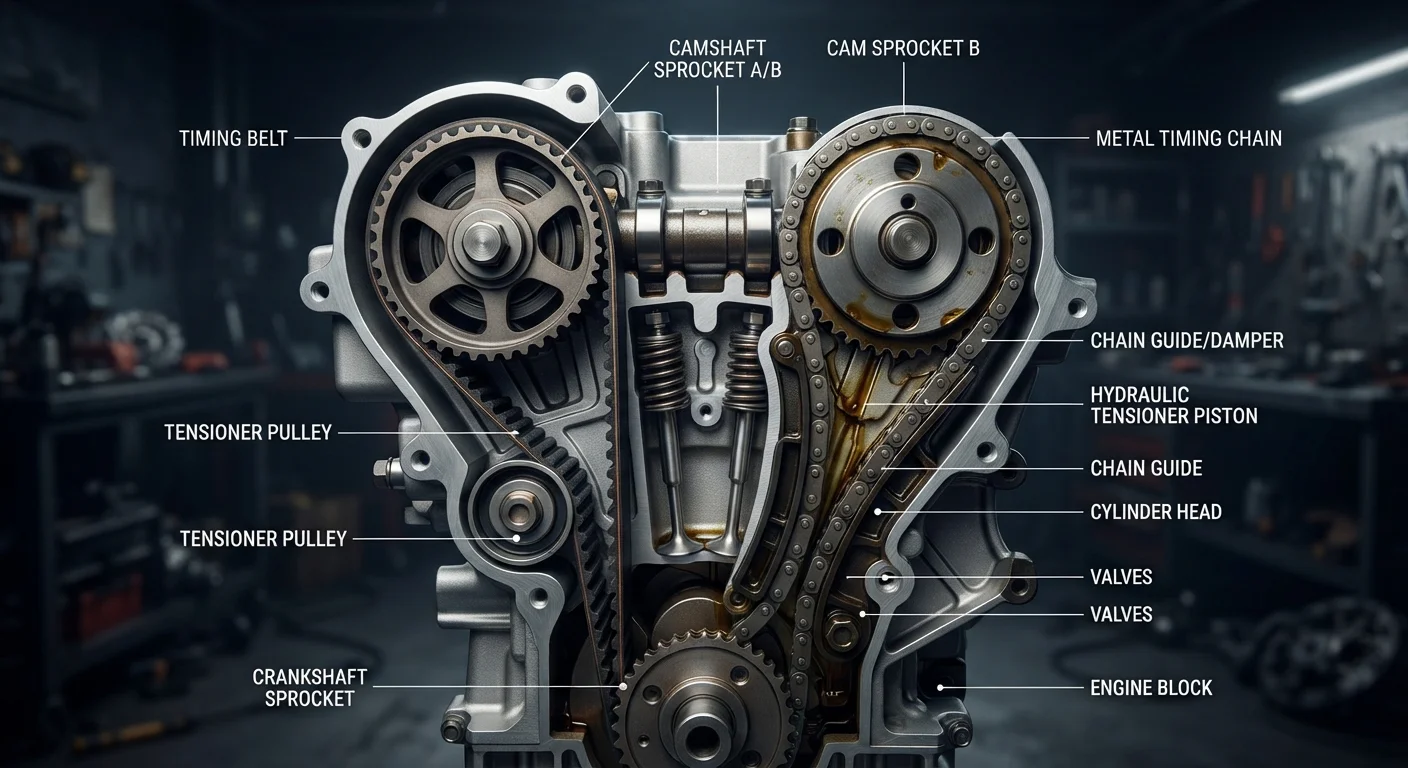
Both the timing belt and timing chain serve the same fundamental purpose: they synchronise the rotation of the crankshaft and camshaft(s) so that the engine's intake and exhaust valves open and close at precisely the right moment relative to piston movement. Without this synchronisation, combustion cannot occur efficiently - or at all.
A timing belt is a toothed rubber strap, typically reinforced with fiberglass or Kevlar cords. It runs on toothed pulleys and operates quietly. Because rubber degrades over time - through heat cycling, oil contamination, and flexing - manufacturers assign firm replacement intervals, usually between 60,000 and 100,000 miles depending on the engine design.
A timing chain resembles a motorcycle drive chain: a series of linked metal plates and pins running on sprockets. It sits inside the engine and is continuously bathed in pressurised engine oil. This lubrication is central to its longevity. Under consistent oil-change schedules, a timing chain can last the engine's full service life without scheduled replacement.
For a deeper look at the mechanical differences between these two designs, see Timing Belt vs Timing Chain: Two Designs, Different Demands.
| Criterion | Timing Belt | Timing Chain |
|---|---|---|
| Material | Reinforced rubber | Metal links and pins |
| Lubrication | None (dry operation) | Engine oil (internal) |
| Noise level | Very quiet | Slightly louder |
| Typical service life | 60,000-100,000 miles | Designed to last engine life |
| Scheduled replacement | Yes - mandatory interval | Generally not required |
| Failure risk | Sudden snap possible | Gradual stretch or tensioner wear |
| Engine damage on failure | High risk in interference engines | Lower, but timing damage possible |
| Key maintenance dependency | Mileage/time interval | Consistent oil change schedule |
Failure Modes and Warning Signs
Understanding how each component fails helps you catch problems before they escalate.
Timing Belt Failure
Rubber belts rarely give obvious warning before they break. The most reliable indicator of a belt nearing end-of-life is mileage - not appearance. In interference engines (where pistons and valves occupy the same cylinder space at different points in the cycle), a snapped belt can cause pistons to strike open valves, bending or destroying them instantly. This makes on-schedule replacement critical. Occasionally, a worn belt may produce a high-pitched squealing or ticking noise, but do not rely on audible cues alone.
Timing Chain Failure
Chains degrade more gradually. Common warning signs include:
- Rattling at startup - a loose or stretched chain slaps against the timing cover before oil pressure builds; the rattle often disappears once the engine warms
- Check Engine light - camshaft position sensor codes (such as P0016 or P0017) can indicate chain stretch causing timing misalignment
- Rough idle or misfires - advanced chain wear can throw valve timing off enough to affect combustion
Chain tensioners - spring-loaded or hydraulic devices that keep the chain taut - can also fail independently. A failed tensioner produces similar symptoms to a worn chain and should be inspected at the same time.
60K-100K
Miles: typical timing belt replacement interval
Manufacturer-specified intervals vary by engine; always confirm the exact figure in your vehicle's owner's manual.
~150K+
Miles a well-maintained timing chain can last
Chain longevity is closely tied to adherence to oil change intervals; neglected oil maintenance significantly shortens chain life.
Maintenance Intervals and What Drives Them
The most practical takeaway for vehicle owners is this: timing belts operate on scheduled replacement; timing chains operate on condition-based monitoring supported by oil change discipline.
For belt-equipped engines, your owner's manual will specify a replacement interval in miles and often in time (e.g., every 7 years), whichever comes first. This interval accounts for rubber degradation even in low-mileage vehicles. When replacing the timing belt, it's standard practice to also replace the water pump (often driven by the same belt), idler pulleys, and the tensioner - since labour costs overlap significantly.
For chain-equipped engines, the primary maintenance lever is regular oil changes using the manufacturer-specified oil viscosity and grade. Sludge-contaminated oil starves the chain and tensioner of lubrication, accelerating wear. If you've acquired a used vehicle with an unknown oil change history, a professional inspection and a fresh oil change are prudent first steps.
Your Vehicle's Maintenance Schedule, Explained walks through how to interpret manufacturer service intervals and why adhering to them protects long-term reliability. For broader context on managing wear parts before they fail, see Keeping Wear Parts in Good Shape.
Not Sure Which System Your Engine Has?
Many modern vehicles use timing chains, but belt-equipped engines remain common across a wide range of makes and model years. The quickest way to confirm is to check your owner's manual under the engine specifications or maintenance schedule section. Your dealership's service department or an independent mechanic can also identify your system during a routine inspection.
Always confirm which timing system your specific engine uses by consulting the owner's manual or a qualified mechanic - some engine families use both belt and chain in different model years or trim configurations.