The Core Distinction: Self-Propelled vs. Towed
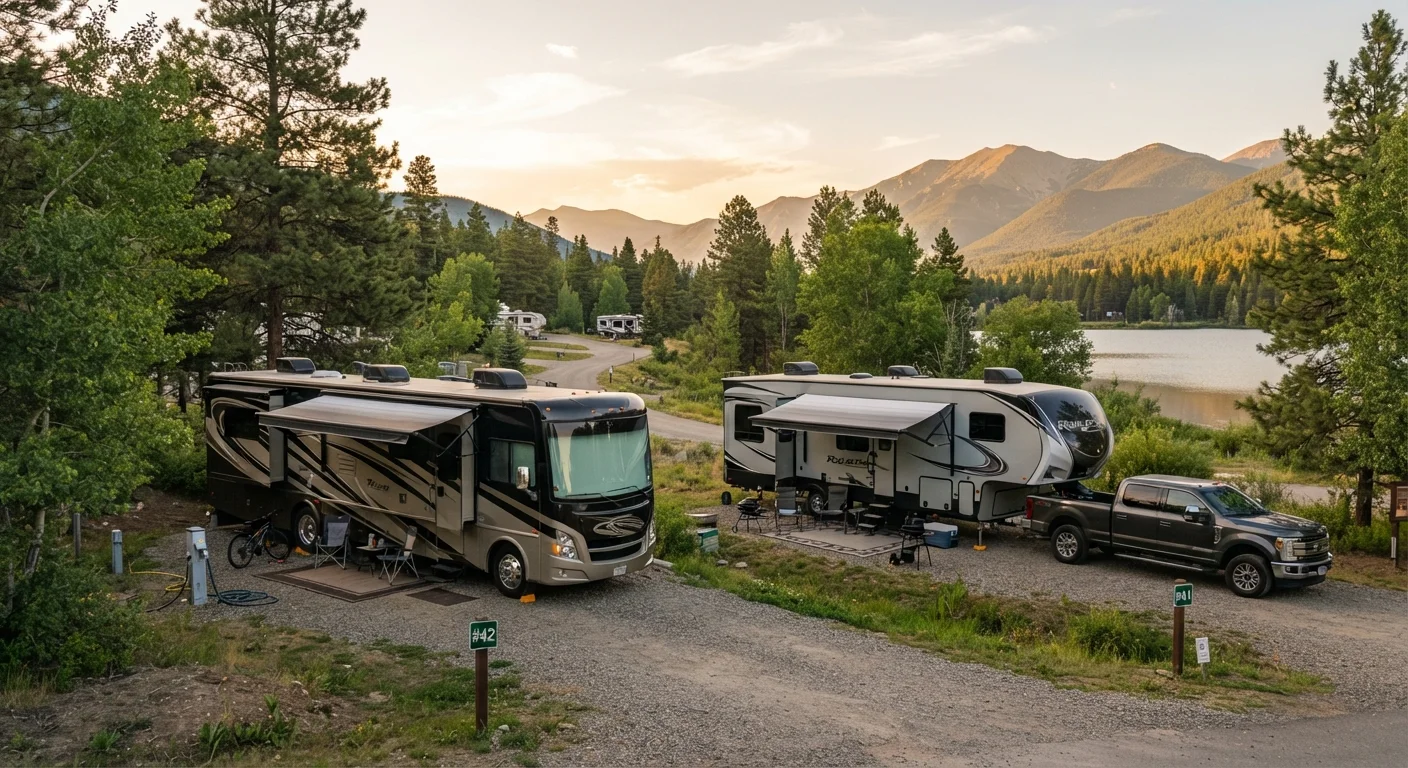
Every RV falls into one of two ownership models: a motorhome, which integrates the engine and living space into a single chassis, or a towable RV, which is a non-powered unit hauled by a separate vehicle. This fundamental split affects not just how you travel, but how you budget, maintain, and use your rig on a daily basis.
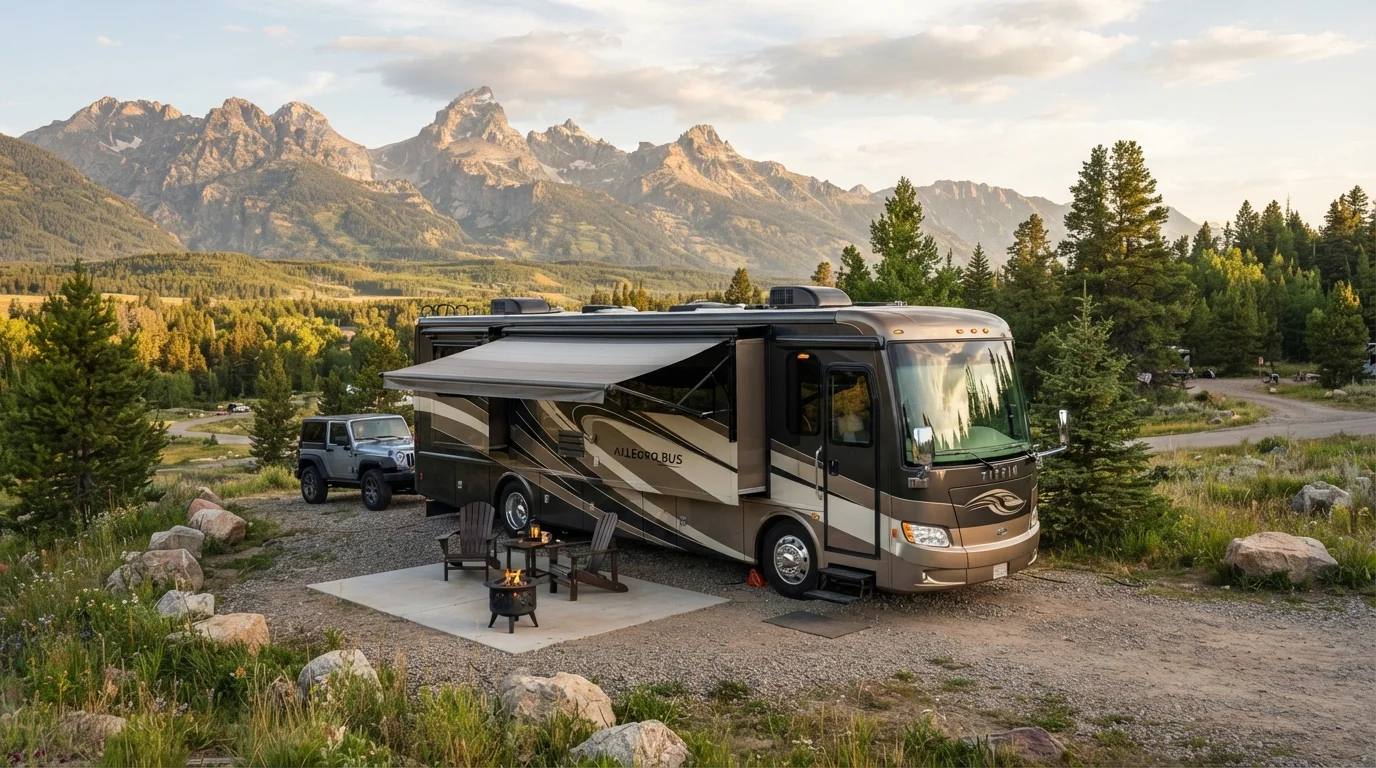
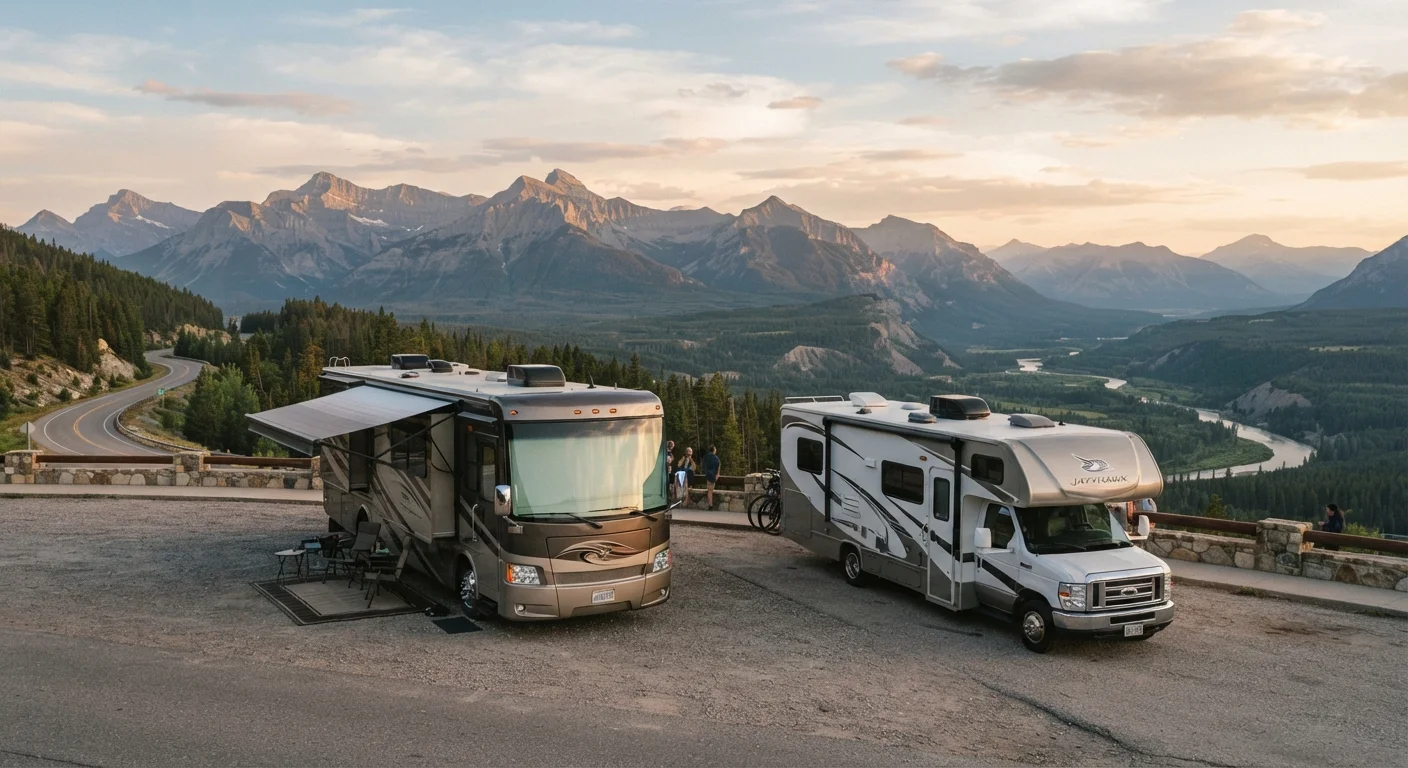
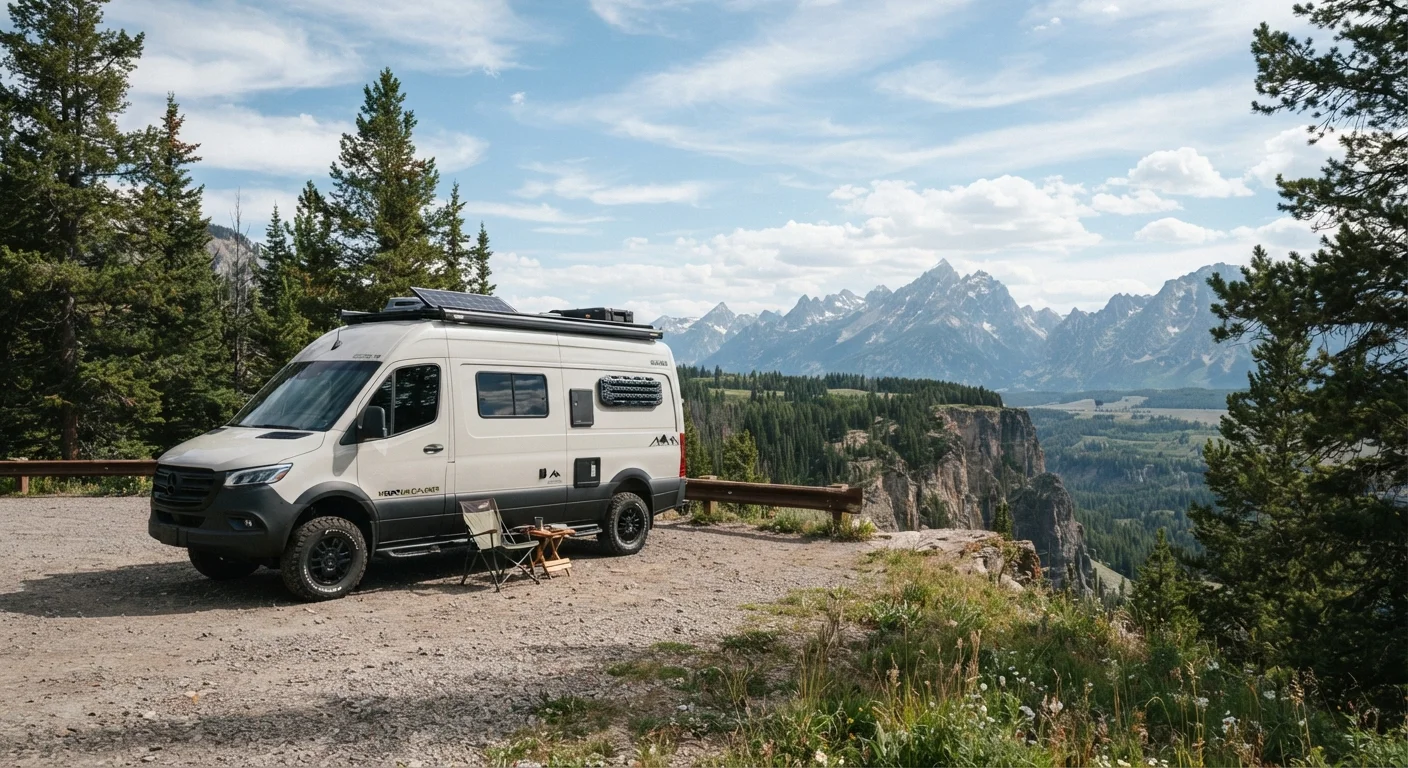
Motorhomes are classified as Class A (large coach-style), Class B (camper van conversions), or Class C (cab-over design on a cutaway chassis). Towables encompass travel trailers, fifth-wheel trailers, toy haulers, and pop-up campers - each with distinct towing requirements. For a thorough breakdown of how these sub-categories are defined, see The RV Class System Explained.
| Criterion | Motorhome | Towable RV |
|---|---|---|
| Separate tow vehicle required | No | Yes |
| Access to living space while driving | Yes (passengers only) | No |
| Campsite independence (day trips) | Only with a dinghy car | Yes - unhitch and go |
| Typical unit cost vs. equivalent space | Higher | Lower |
| Drivetrains to maintain | One (coach engine) | One (tow vehicle engine) |
| Floor plan variety | Moderate | Extensive |
| Depreciation rate | Generally faster | Generally slower |
| Setup time at camp | Minimal | Moderate (hitching/leveling) |
Cost and Ownership Economics
Comparing price tags between motorhomes and towables requires careful framing. A travel trailer or fifth-wheel generally carries a lower purchase price than a motorhome with equivalent living space - but that comparison only holds if you already own a suitable tow vehicle. If a new truck is part of the equation, the total cost picture shifts considerably.
Motorhomes also have two drivetrains to maintain: the coach engine and chassis, plus any supplemental systems (generators, slide mechanisms). Towable owners only maintain one engine - in the tow vehicle - while RV mechanical systems remain simpler. On the depreciation side, motorhomes tend to depreciate faster than towables, partly because engine technology ages faster than a static trailer frame.
~40%
Share of RV owners who own towable units
Industry data from the RV Industry Association consistently shows towable RVs account for the large majority of annual RV shipments in the US.
2-3x
Cost difference between comparable motorhome and travel trailer
Entry-level travel trailers can cost significantly less than entry-level Class A motorhomes with similar sleeping capacity, though configurations vary widely.
Insurance is another variable. Motorhomes are insured as a single motorized unit; towable RVs are typically covered under a separate trailer policy or as an endorsement on the tow vehicle policy - often at lower premiums. Campsite fees are generally consistent across both categories, though larger motorhomes may be limited to full-hookup sites at some campgrounds.
Daily Usability and Campsite Flexibility
One of the clearest practical differences emerges at the campsite. Motorhome owners who want to explore the surrounding area face a choice: drive the entire coach, or tow a smaller secondary vehicle (commonly called a dinghy or toad) behind the motorhome. Without a dinghy, the motorhome itself is the only vehicle - committing you to packing up fully every time you leave camp.
Towable owners avoid this entirely. Once unhitched, the tow vehicle is completely free for day trips, grocery runs, or exploring trails. This flexibility is a meaningful quality-of-life advantage for extended or stationary camping stays.
On the road, motorhomes offer a different kind of convenience: the living space is accessible during the drive. Passengers can move around, use the restroom, or prepare food without a rest stop. Towable travel requires stopping to access anything in the trailer. For families with children or long travel days, this distinction can be significant. For further guidance on matching these practical differences to your specific travel habits, see Matching an RV Class to Your Travel Style.
Parking and Storage Between Trips
Motorhomes occupy a fixed, large footprint year-round - typically requiring dedicated RV storage or a large driveway. Towable RVs can sometimes be stored at a different facility while the tow vehicle remains in the driveway. Before committing to either ownership model, confirm local zoning rules around RV storage on residential property, as restrictions vary significantly by municipality.
Towing Requirements and the Vehicle Equation
Choosing a towable RV without first confirming your tow vehicle's capacity is one of the most common - and costly - mistakes new buyers make. Every towable has a Gross Vehicle Weight Rating (GVWR) and a tongue weight figure that must fall within the tow vehicle's rated limits. Fifth-wheel trailers, which attach to a hitch mounted in the truck bed, generally support heavier loads and offer improved stability compared to conventional travel trailers hitched to a receiver. For a detailed look at what each towable class demands from the vehicle pulling it, see RV Classes and the Tow Vehicles They Actually Require.
Motorhome buyers sidestep the tow vehicle compatibility question entirely, but they take on a different responsibility: operating a large commercial-adjacent vehicle that may require additional driving practice and, in some states, a non-standard license endorsement for the heaviest units. Handling, braking distances, and low-clearance awareness all demand attention regardless of which ownership model you choose.