How Lifestyle Intensity Shapes Rig Requirements
The single biggest mistake prospective RVers make is choosing a rig before defining how they'll actually use it. Part-time and full-time use place entirely different demands on the same vehicle, and a rig optimized for one rarely excels at the other.
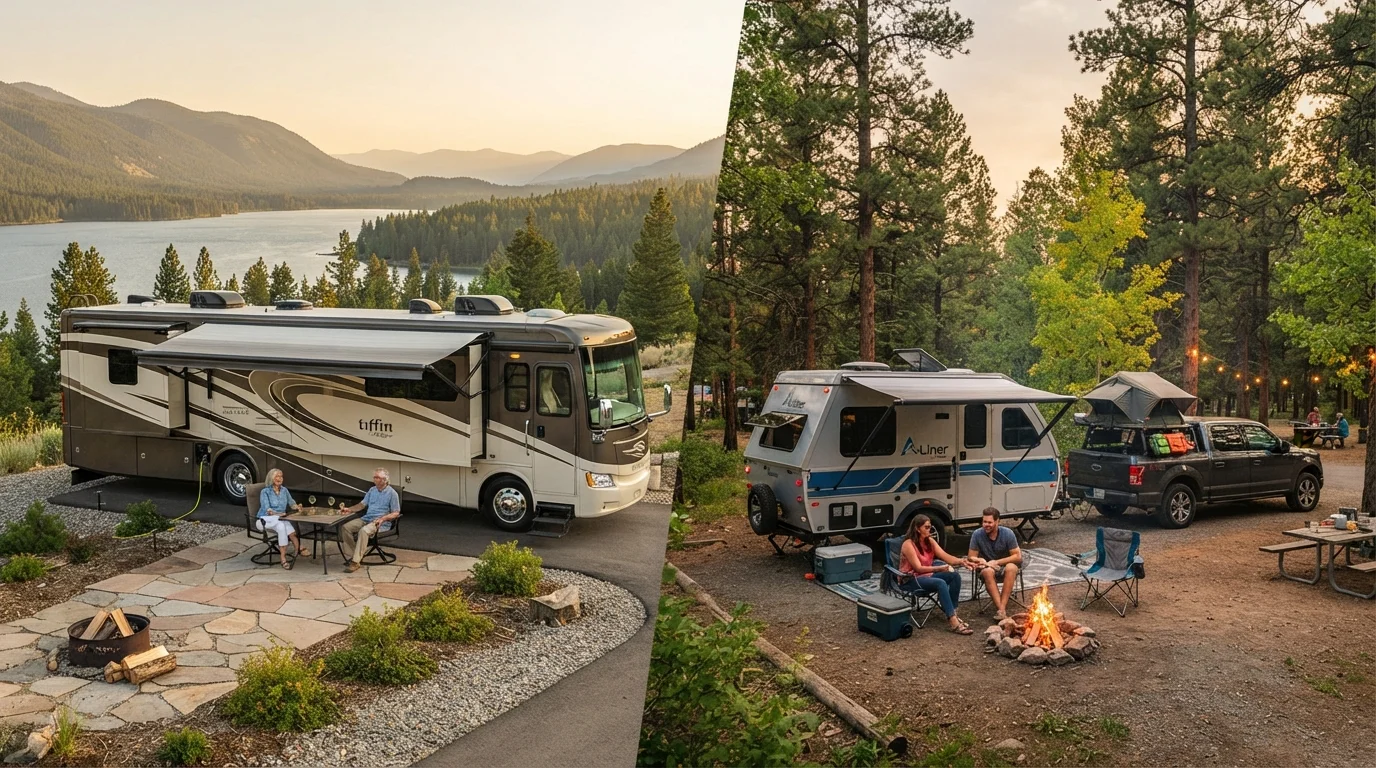
Part-timers - those spending roughly 30 or fewer nights per year in their RV - can afford to prioritize ease of setup, tow weight, and storage simplicity. A travel trailer or Class C motorhome may cover every need. Systems like composting toilets, solar arrays, and residential refrigerators are nice-to-haves rather than essentials. See our guide to matching RV class to travel style for a deeper breakdown of how usage frequency should drive class selection.
Full-timers face a different calculus. When the RV is your only home, its HVAC system must handle genuine winter cold and summer heat. Water heater recovery time matters daily. Mattress quality affects every night's sleep. Storage must accommodate a full wardrobe, home office equipment, and a functional kitchen - not just weekend gear. The RV layouts hub covers how floor plan configurations translate into livability at different commitment levels.
| Criterion | Part-Time RVing | Full-Time RVing |
|---|---|---|
| Typical rig class | Travel trailer, Class B, Class C | Class A motorhome, fifth wheel |
| Annual nights in rig | 10-90 nights | 300-365 nights |
| Housing cost structure | Dual costs (home + RV) | Single consolidated housing expense |
| System durability needs | Moderate - weekend resilience | High - residential-grade systems |
| Domicile complexity | None - existing address retained | Requires deliberate legal setup |
| Health insurance flexibility | Standard employer or marketplace plan | Multi-state PPO or travel-friendly plan needed |
| Campsite fee exposure | Low - occasional trip costs | High - monthly ongoing expense |
The Real Budget Differences Between Both Approaches
Cost structures for part-time and full-time RVing look radically different on paper - and in practice.
Part-timers typically carry dual housing costs: their primary mortgage or rent, plus RV loan payments, insurance, storage fees, and campground costs for trips taken. The RV functions as a discretionary expense layered on top of an existing household budget. Upfront rig costs are often lower because smaller, lighter units are adequate.
Full-timers consolidate into a single housing expense, but that doesn't automatically mean savings. Campsite fees for 30-amp or 50-amp full-hookup sites can run $800-$1,800 per month depending on location and season. Fuel costs for a Class A diesel pushing 8-10 mpg accumulate fast across thousands of annual miles. Maintenance on a vehicle that's both your transport and your home is more frequent and more consequential than on a recreational-use rig. Our article on the hidden costs of full-time RV living breaks down these ongoing expenses in granular detail.
~1M
Estimated full-time RVers in the US
Industry estimates from the RV Industry Association suggest approximately one million Americans live in RVs full-time, a figure that has grown alongside remote work adoption.
$1,500/mo
Median full-hookup campsite monthly cost
Monthly site fees vary widely by region and amenity level; long-term rates at established RV parks commonly range from roughly $500 to over $2,000 per month.
8-10 mpg
Typical Class A diesel fuel economy
Large motorhome fuel economy varies by vehicle weight, engine, and terrain, making annual fuel costs a significant line item for high-mileage full-timers.
One underappreciated cost advantage for full-timers: eliminating a fixed mortgage or high-rent payment in an expensive metro can generate meaningful monthly savings, particularly for retirees or remote workers. The net financial picture depends heavily on individual circumstances.
Logistics, Domicile, and Daily Life Realities
Part-timers rarely need to restructure their administrative lives. Their permanent address remains their domicile for tax, voting, vehicle registration, and insurance purposes. Healthcare coverage through an employer or state marketplace continues without interruption. The logistical lift is modest.
Full-time RVers must solve problems that most people never think about. Without a fixed address, establishing legal domicile - typically in a state like South Dakota, Texas, or Florida - becomes a deliberate legal and administrative process. Mail forwarding services replace a physical mailbox. Health insurance must work across multiple states, which rules out many HMO plans in favor of PPO or travel-friendly coverage. Vehicle registration and driver's licensing must align with the chosen domicile state.
Before committing, review the pre-departure checklist for aspiring full-time RV residents to ensure no critical administrative step is overlooked.
Domicile State Matters More Than You Think
Full-time RVers cannot simply claim any state as their legal home - they must establish genuine domicile, which typically requires obtaining a driver's license and vehicle registration in that state, and often maintaining a physical mail address there. South Dakota, Texas, and Florida are commonly chosen for their lack of state income tax and relatively straightforward domicile process. Consult a legal or tax professional familiar with full-time RV residency before making your selection, as requirements and implications differ meaningfully between states.
Daily rhythms also diverge sharply. Part-timers arrive Friday, set up camp, and dismantle Sunday - convenience and speed matter most. Full-timers develop routines around tank management, propane monitoring, and site selection that become second nature over months. Many follow weather-driven migration patterns, a practice explored in our piece on how full-timers follow the weather across regions. For an unfiltered look at the day-to-day realities of this lifestyle, full-time RV living day to day offers an honest account beyond the social media highlights.