The Frame: Foundation of Every Bike
The frame is the structural core from which every other component hangs, and its material and geometry determine a bicycle's character more than any single upgrade can change. Common frame materials include aluminum, steel, carbon fiber, and titanium, each offering a different balance of weight, compliance (ability to absorb vibration), stiffness, and cost.
Aluminum is lightweight and rigid, making it common in entry- to mid-range road and mountain bikes. Steel - particularly chromoly (chrome-molybdenum alloy) - is praised for its road feel and repairability. Carbon fiber allows engineers to tune stiffness in specific directions, yielding performance advantages at a weight penalty in cost rather than mass. Titanium combines steel's compliance with aluminum's corrosion resistance, but commands a significant price premium.
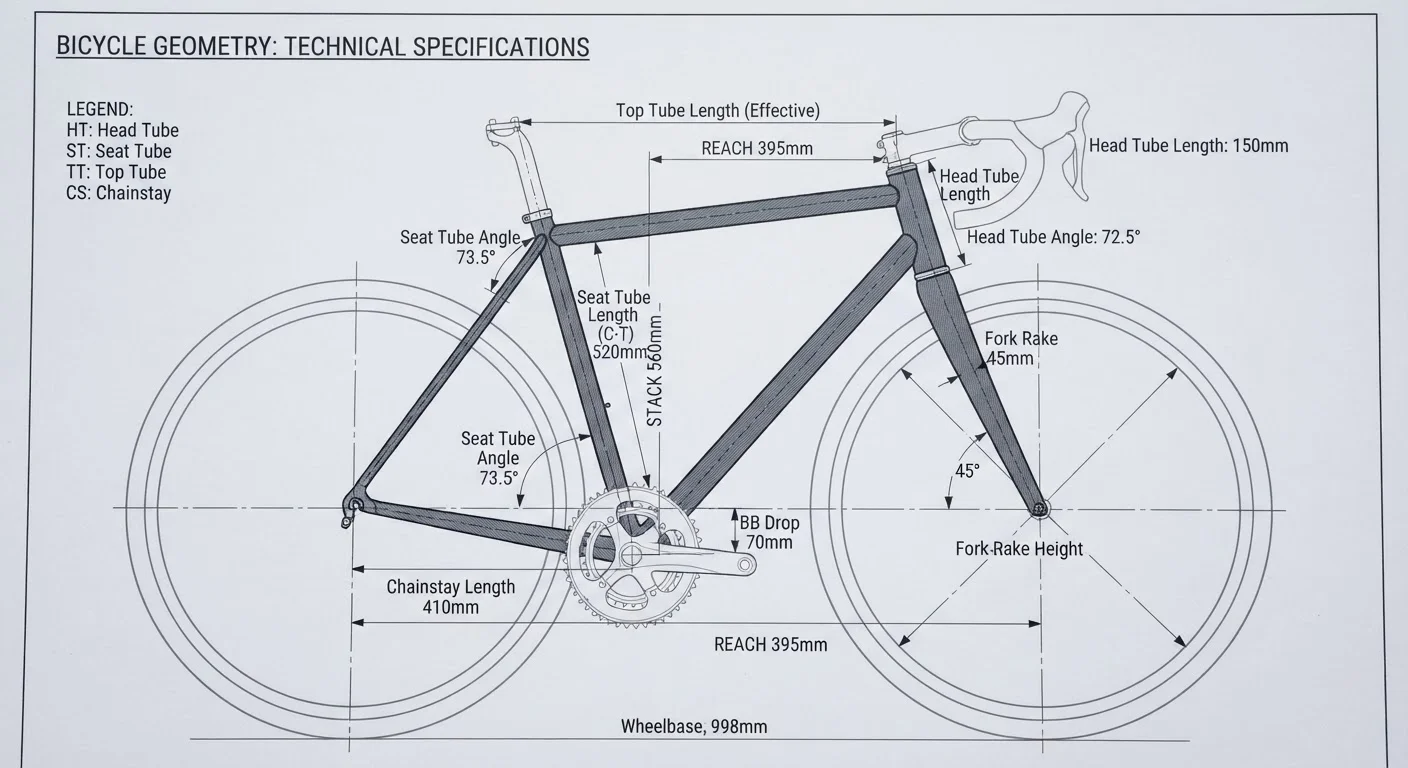
Frame geometry - the angles and lengths of the tubes - shapes handling. A slacker head-tube angle and longer wheelbase deliver stability; steeper angles and shorter wheelbases create responsiveness. Understanding how style and geometry interact is covered in our bicycle style spectrum guide.
When evaluating frame material, prioritize geometry for your riding style first - a well-designed aluminum frame will outperform a poorly specced carbon one for most riders.
Frame geometry has a greater effect on handling and fit than material alone, yet material tends to dominate marketing conversations and buyer attention.
Before purchasing any drivetrain upgrade, confirm the exact groupset generation and speed (e.g., 12-speed) of your existing components - compatibility charts exist for a reason, and mixing generations is a common and costly mistake.
Drivetrain incompatibility is one of the most frequent sources of poor shifting performance reported by riders who self-upgrade without verifying specifications first.
Wheels, Tires, and Rolling Resistance
A wheel consists of the hub, spokes, rim, and the tire-and-tube (or tubeless) assembly. Rim diameter is standardized - 700c for most road and gravel bikes, 29-inch or 27.5-inch for mountain bikes - but rim width varies and must match tire width for safe, optimal performance.
Hubs contain the bearings and, on the rear, the freehub body that accepts the cassette. Hub flange spacing and axle standards (quick-release, thru-axle) must match the frame's dropout specification. Spoke count and lacing pattern affect wheel stiffness and durability; higher spoke counts generally mean a more durable, repairable wheel.
Tire width and tread pattern govern grip and rolling resistance. Narrower, slick tires roll efficiently on pavement; wider, knobbed tires provide traction on loose terrain. Tubeless setups - where sealant inside the tire prevents punctures - have become increasingly common on gravel and mountain bikes, requiring tubeless-ready rims and tires.
~30%
Rolling resistance reduction from tubeless tires
Independent testing published in cycling engineering literature suggests tubeless setups at optimized pressures can reduce rolling resistance by approximately 30% compared to tubed equivalents at the same pressure.
700c
Standard road/gravel wheel diameter
The 700c (622mm bead seat diameter) standard is used across road, gravel, and most hybrid bicycles, making tire availability broad and consistent in the US market.
Drivetrain: Gears, Chain, and Crankset
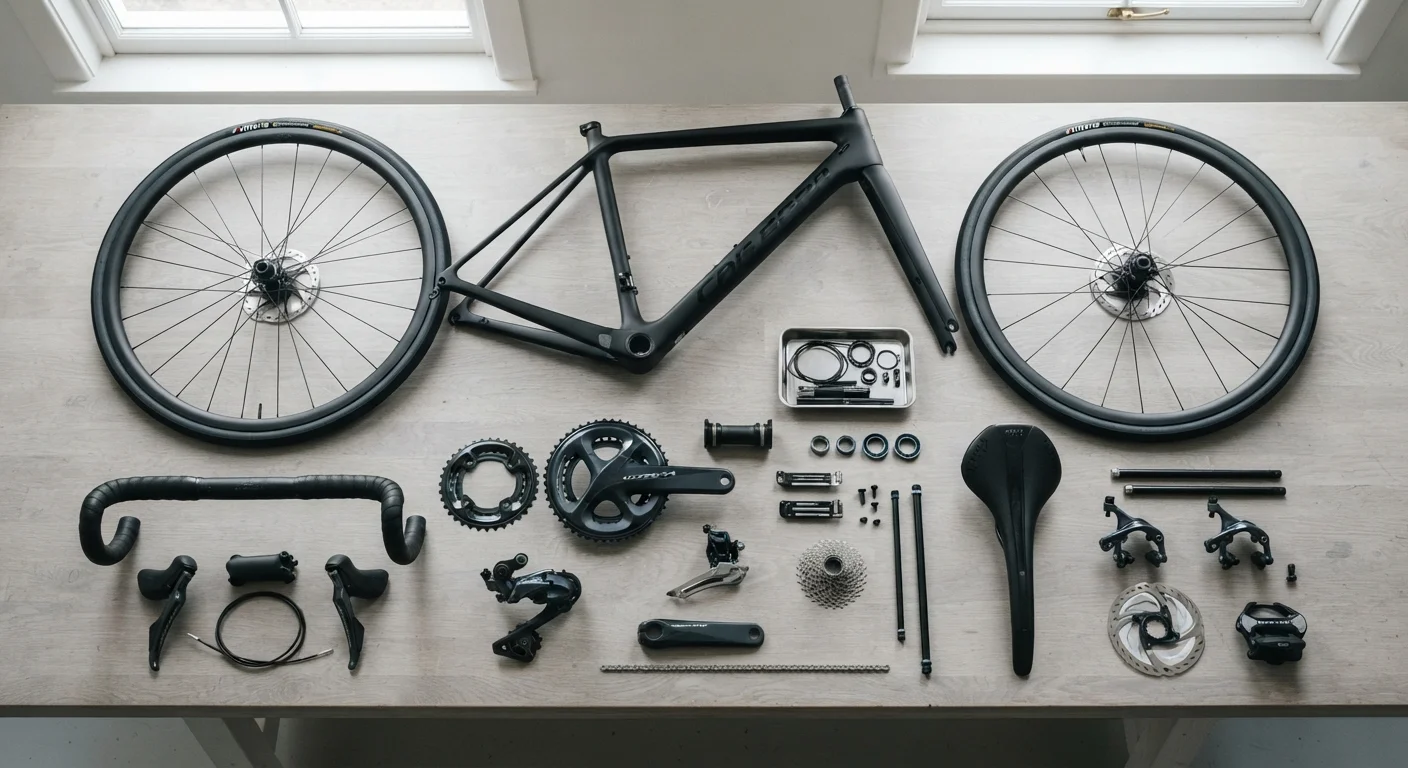
The drivetrain converts pedaling effort into forward motion. Its core parts are the crankset (chainrings and crank arms), bottom bracket (bearings at the frame's base), chain, cassette (rear gear cluster), and derailleurs (front and rear mechanisms that shift the chain between gears).
Drivetrain components are grouped into groupsets - matched families of parts designed to work together. Mixing components across groupset generations or brands can cause poor shifting and premature wear. Gear range is expressed as a ratio: a wide-range cassette (e.g., 11-51 teeth) suits climbing-heavy terrain; a closer-ratio cassette suits flat or rolling roads where fine cadence control matters more.
Modern drivetrains range from 1× (single chainring) to 3× setups. Single-ring drivetrains reduce weight and complexity but rely on a wide-range rear cassette for equivalent gear spread. For a detailed breakdown of every drivetrain element and how it connects, see our component anatomy guide.
Braking Systems
Brakes are a safety-critical system, and the choice between rim brakes and disc brakes has significant downstream effects on compatible components. Rim brakes grip the wheel rim using brake pads; they are lighter and simpler but lose effectiveness in wet or muddy conditions and wear the rim surface over time. Disc brakes use a rotor attached to the hub, providing consistent stopping power regardless of weather - hydraulic disc brakes offer superior modulation (gradual, controlled braking force).
Disc brakes require frames and forks with disc-specific mounts, thru-axle or disc-compatible dropouts, and wheels built with disc hubs. This means brake type is not easily changed after a frame is chosen. Rotor diameter (typically 140mm, 160mm, or 180mm+) affects heat dissipation and braking power; larger rotors offer greater leverage and cooling for steep descents.
Brake Maintenance Is Safety-Critical
Brake pads, rotors, and hydraulic fluid degrade with use and should be inspected regularly. Contaminated disc brake pads (from oil or chain lubricant) can fail suddenly and are not recoverable by cleaning alone - they must be replaced. If you are unfamiliar with hydraulic brake bleeding or rotor truing, have a qualified bicycle mechanic perform the work.
Cockpit: Handlebars, Stem, and Saddle
The cockpit - handlebars, stem, seatpost, and saddle - directly determines fit and comfort. Handlebar width should roughly match shoulder width; drop bars (road style), flat bars (mountain/hybrid), and riser bars each position the rider differently and suit different riding disciplines.
Stem length and angle influence reach and steering responsiveness. A longer stem stretches the rider out; a shorter stem creates a more upright, agile position. Seatpost height sets leg extension: too low causes knee strain, too high causes hip rocking.
Saddle selection is highly individual - width, padding density, and cutout design affect comfort over long distances. Neither the most expensive nor the most padded saddle is automatically the best choice; matching saddle width to sit-bone width is the most reliable starting point. Before finalizing component decisions, consider reviewing the key questions to ask before choosing a bike style to ensure the full build aligns with your riding needs.
How Components Interact as a System
A bicycle is not a collection of independent parts - it is a tightly integrated system. Changing one element frequently creates compatibility requirements elsewhere. Upgrading to a wider-range cassette may require a new rear derailleur with a longer cage. Switching from rim to disc brakes means replacing the frame, fork, and wheels. Installing a press-fit bottom bracket requires the right tool and precise frame tolerances.
For e-bikes, the system becomes more complex: the motor, battery, controller, and display must be matched, and drivetrain components need to tolerate higher torque loads. The e-bike component anatomy guide covers those additional considerations in depth.
When planning upgrades, map compatibility requirements before purchasing. Verify axle standards, bottom bracket shell type, cable routing style, and groupset generation. Resources such as manufacturer compatibility charts and community knowledge bases can prevent costly mismatches. Approaching the bicycle as a system - rather than a list of swappable parts - leads to better decisions and a more satisfying build.
Compatibility Resources Change Over Time
Drivetrain and component standards evolve frequently - bottom bracket standards, axle specifications, and groupset generations have all proliferated over the past decade. Always verify compatibility against the manufacturer's current documentation rather than relying on general rules of thumb. What held true for 10-speed systems may not apply to 12-speed.