Why These Three Styles Get Confused
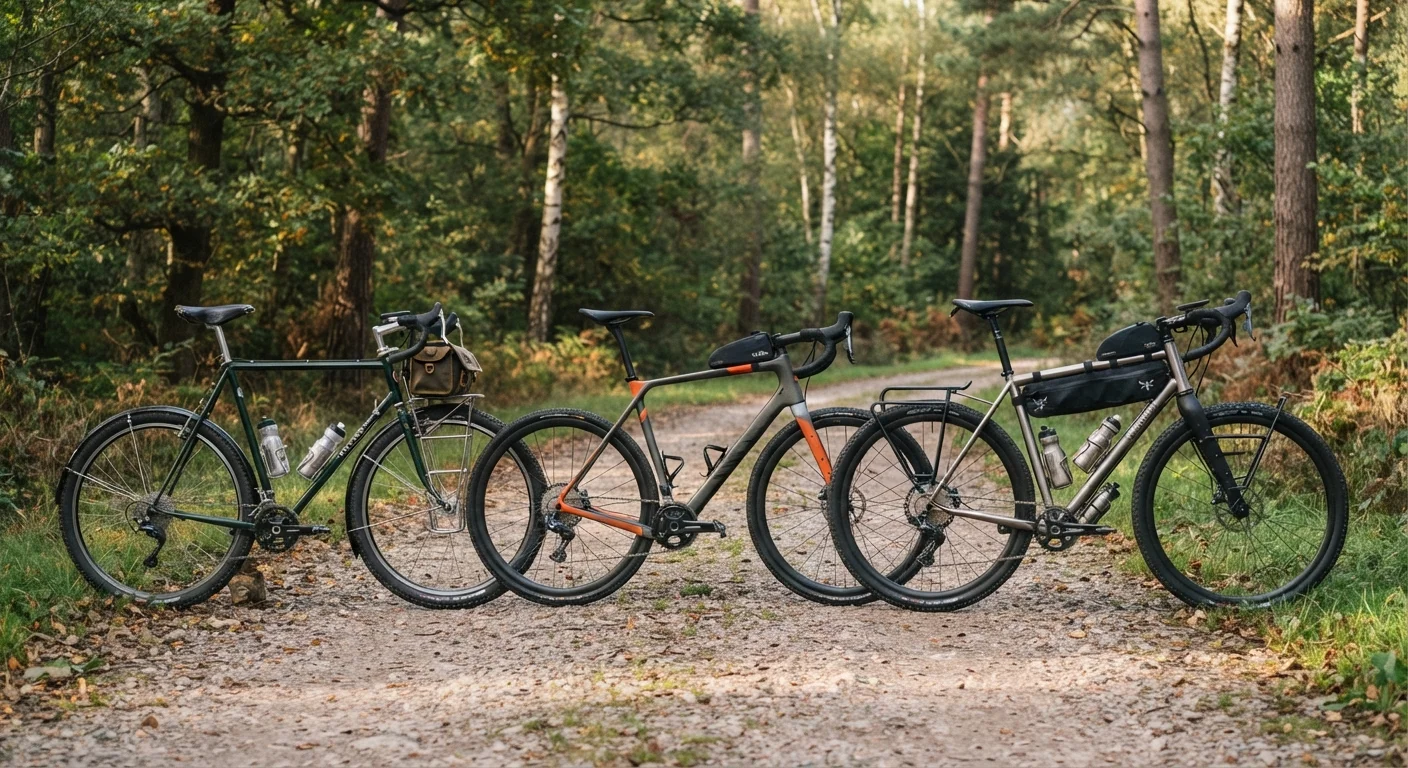
All three — cyclocross (CX), gravel, and adventure bikes — share a drop handlebar and a frame silhouette that differs only subtly from a traditional road bike. That visual similarity is enough to cause genuine confusion at the bike shop or when browsing listings online. Yet each category emerged from a distinct riding culture, and the engineering choices behind each reflect that origin.
Understanding the differences isn't just academic. The wrong category for your riding style can mean a bike that's too twitchy for comfort, too fragile for loaded touring, or too sluggish for the racing circuit. For a broader look at where these three fit within the full spectrum of bicycle styles, see The Bicycle Style Spectrum.
| Cyclocross | Gravel | Adventure | |
|---|---|---|---|
| Primary use | Off-season racing, technical courses | Mixed terrain, all-day riding | Loaded touring, bikepacking |
| Geometry | Aggressive, high BB | Relaxed, stable | Most relaxed, upright |
| Typical tire clearance | Up to ~40mm | 40–50mm | 45–55mm+ |
| Mounting points | Minimal | Moderate | Extensive |
| Gearing | 1x or race-specific 2x | Wide-range 1x or 2x | Wide-range, load-optimized |
| Rack/fender compatibility | Rarely | Sometimes | Standard |
| Handling feel | Quick and twitchy | Balanced | Stable under load |
Cyclocross Bikes: Built for the Racing Circuit
Cyclocross as a sport involves short, punchy laps on courses that mix mud, grass, barriers, and tight corners. Riders often dismount, carry their bikes, and remount — sometimes dozens of times per race. CX bikes are engineered around those demands.
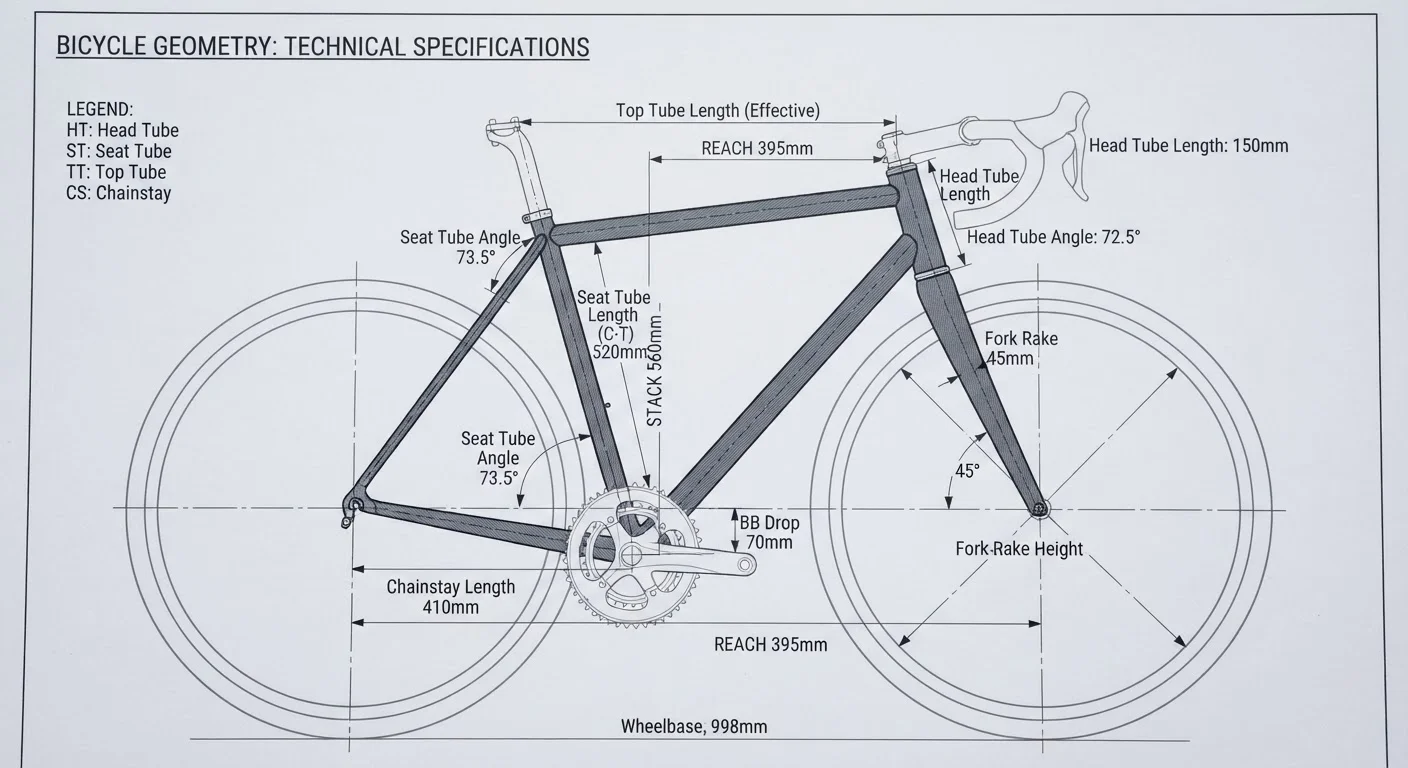
- Geometry: Aggressive and race-oriented, with a high bottom bracket (to clear obstacles), a short wheelbase, and steep head tube angle for quick, responsive steering.
- Tire clearance: UCI racing rules have historically limited tires to 33mm, though many modern CX frames now accommodate up to 40mm for training use.
- Gearing: Typically 1x drivetrains (single chainring) for simplicity and reliability in muddy conditions, or a double ring optimized for frequent surging efforts.
- Mounting points: Minimal — few or no provisions for racks, fenders, or frame bags.
If you're primarily road riding or touring, a CX bike's sharp handling and high bottom bracket will feel unnecessarily twitchy. These bikes shine on a race course, not a multi-day loaded route.
Racing vs. Training Setup
Many CX riders maintain two setups: a race-legal build with 33mm knobbies for competition, and a wider-tire training configuration for everyday riding. If you're eyeing a CX frame for general use, confirm the maximum tire clearance before purchasing, as frames vary considerably beyond the race minimum.
Gravel Bikes: The All-Road Compromise
Gravel bikes grew out of demand for a drop-bar bike capable of handling unpaved roads without the race-specific limitations of CX geometry. They've become one of the most popular categories in cycling precisely because they ride competently across pavement, gravel, dirt roads, and light singletrack.
- Geometry: More relaxed than CX — longer wheelbase, slacker head tube angle, lower bottom bracket — which translates to stability over long distances and on loose surfaces.
- Tire clearance: Typically 40mm to 50mm, and increasingly up to 700x50c or 650b with 47mm tires, giving meaningful traction and compliance on rough terrain.
- Gearing: Wide-range 1x or 2x drivetrains to handle both climbing and speed on varied gradients.
- Mounting points: More than CX — most include provisions for a frame bag, fork mounts, and sometimes a rear rack.
For riders navigating mixed pavement and gravel routes, see Picking a Bike Style When You Ride Mixed Terrain for a practical framework. Gravel bikes also overlap with road bikes in meaningful ways; Road Bikes vs. Gravel Bikes covers that distinction in depth.
Adventure Bikes: Drop-Bar Touring, Redefined
Adventure bikes — sometimes called all-road tourers or bikepacking bikes — prioritize capability over pace. The category is designed for riders who want to travel far, carry gear, and navigate rough roads without mechanical failure. Think loaded backroads, multi-day routes, or international bike travel.
- Geometry: The most relaxed of the three — long wheelbase, upright riding position, stable handling under load.
- Tire clearance: Often 45mm to 55mm or wider, supporting heavy tires that absorb road chatter during long days in the saddle.
- Gearing: Wide-range drivetrains designed for climbing while loaded, often including triple cranksets or very large cassettes.
- Mounting points: Extensive — rear rack eyelets, fork cargo mounts, multiple bottle cage mounts, and fender compatibility are standard expectations, not extras.
Adventure bikes sacrifice the snappiness of a CX or gravel bike for durability and load-carrying capacity. They're the right tool when the journey matters more than the pace. When evaluating component choices for any of these styles, the Components hub covers key decisions like pedals and handlebars in detail.
33mm
UCI cyclocross tire width limit (racing)
The UCI (Union Cycliste Internationale) has historically set a 33mm maximum tire width for sanctioned cyclocross racing, shaping CX frame design for decades.
650b
Alternative wheel size adopted by gravel bikes
Many gravel bike frames now support both 700c and 650b wheel sizes, allowing riders to run wider tires for additional traction on demanding terrain.
How to Tell Them Apart at a Glance
When you're looking at an unfamiliar drop-bar bike, a few quick visual checks narrow down the category quickly:
- Check the tire width: Narrow (under 35mm) and knobbly usually signals CX. Wide and file-tread (40–50mm) points to gravel. Wider still, with a more upright frame and rack mounts visible, suggests adventure.
- Look at the bottom bracket height: A noticeably high BB relative to the wheel axles is a CX hallmark.
- Count the mounting points: More bosses, eyelets, and mounts generally mean a more touring-oriented machine.
- Assess the head tube angle: Steeper angles feel quicker to turn; slacker angles feel more planted — though this is easier to assess riding than viewing.
For more context on how handlebar choice interacts with frame geometry in these categories, Drop Bars vs Flat Bars is a useful companion read. And if you're still narrowing down your ideal style, Questions to Ask Before Settling on a Bike Style offers a structured checklist to work through.