How Each System Works
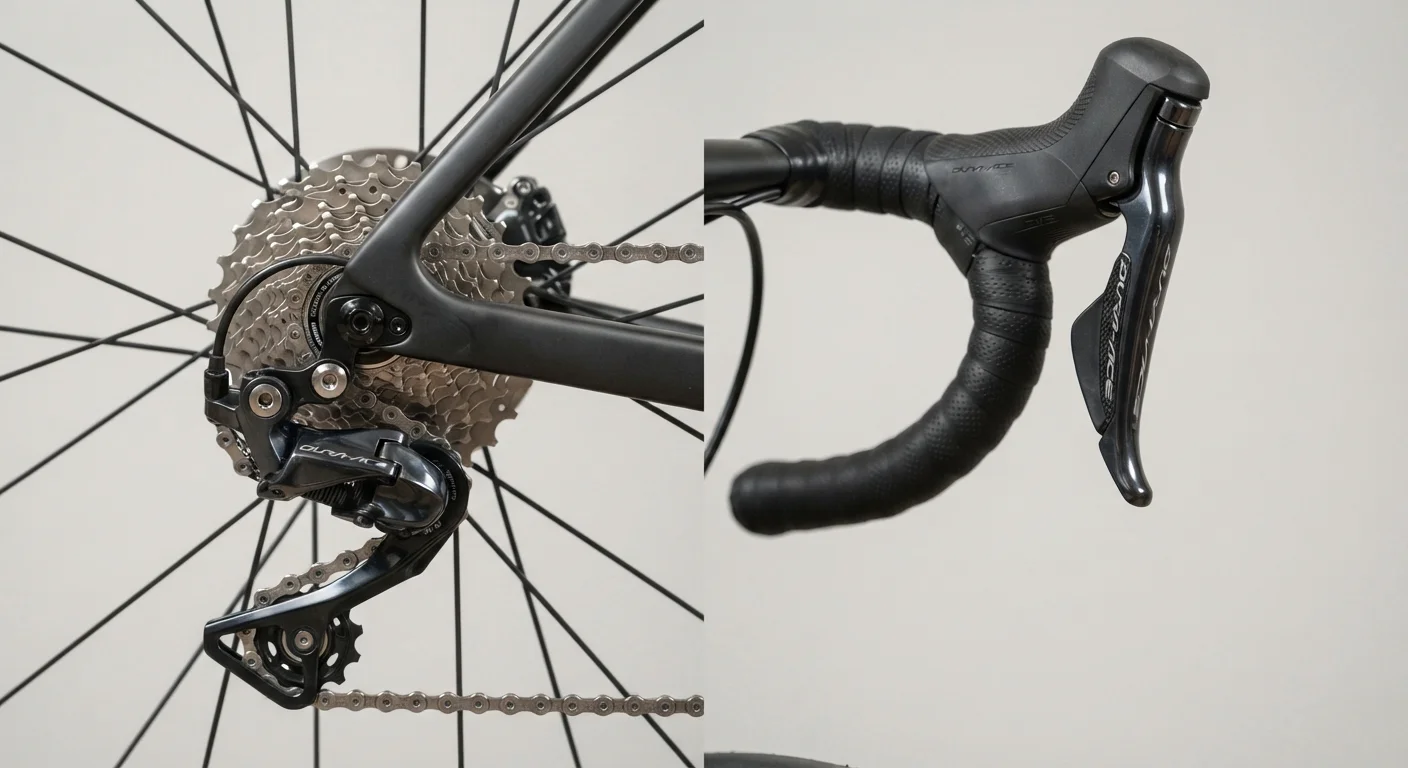
At the core of any bicycle drivetrain is the shifter's job: moving the derailleur laterally to position the chain on a different sprocket. The two shifting philosophies differ in how that lateral position is controlled. For a broader understanding of how all these components interact, see our guide to drivetrain basics.
Indexed shifting builds detents - mechanical stopping points - directly into the lever mechanism. Each click of the lever moves the derailleur cable by a fixed, predetermined amount corresponding to the spacing between sprockets on the cassette. The rider receives audible and tactile confirmation that a gear change is complete. This design was standardized across road and mountain groupsets during the late 1980s and has dominated production bicycles ever since.
Friction shifting uses a lever that moves freely through a range of positions, held in place by adjustable tension rather than detents. The rider controls exactly where the lever sits, listening for the chain to settle cleanly onto the desired sprocket and fine-tuning by feel. There are no clicks, no predetermined stops - just continuous, analog control over derailleur position.
| Criterion | Indexed Shifting | Friction Shifting |
|---|---|---|
| Mechanism | Detented clicks per gear | Continuous lever movement |
| Component compatibility | Matched speed standard required | Works across mixed components |
| Rider input required | Click to shift, system handles position | Rider positions lever by feel |
| Cable tension sensitivity | High - requires periodic re-indexing | Low - tolerates cable stretch |
| Learning curve | Minimal - click confirms each gear | Moderate - requires ear and feel training |
| Typical use context | Modern road, gravel, and mountain bikes | Vintage, touring, and mixed builds |
Compatibility, Maintenance, and Real-World Trade-offs
The indexed system's greatest strength is also its primary constraint: precision. Because the cable pull distance per click is engineered to match a specific sprocket spacing, indexed shifters must be paired with a compatible derailleur and cassette from the same speed standard - 9-speed shifters with 9-speed cassettes and derailleurs, for instance. Mixing generations or brands outside of known compatibility ranges typically produces missed shifts or chain rub. Understanding how gearing systems are constructed helps clarify why these tolerances matter.
Cable stretch is a routine maintenance concern for indexed systems. As housing compresses and inner cables settle after installation, the precise pull distances shift slightly. Barrel adjusters compensate for minor drift, but a drivetrain that has drifted significantly will require re-indexing at the derailleur. If your shifts feel sluggish or imprecise, consult our article on what causes rough gear changes to identify whether cable tension or component wear is the culprit.
Friction shifters sidestep these compatibility constraints entirely. A friction lever will work with virtually any rear derailleur and any cassette because it makes no assumptions about cable pull per gear. This freedom is especially valuable when sourcing replacement parts in remote locations or assembling a bike from components spanning multiple eras. The trade-off is a steeper learning curve: riders must develop an intuitive sense of lever position, and imprecise placement can leave the chain between gears, producing noise or hesitation.
Late 1980s
Era indexed shifting became widespread
Shimano's SIS (Shimano Index System) popularized click-per-gear shifting on production bicycles beginning in the mid-to-late 1980s.
6-13
Speed range in modern indexed cassettes
Contemporary indexed drivetrains span from 6-speed entry-level setups to 13-speed electronic groupsets, each with unique cable-pull specifications.
For riders evaluating which approach suits their riding context, consider that frame and component choices are interconnected decisions. Our overview on questions to ask before choosing a bike style provides a useful framework for aligning drivetrain choices with broader riding goals.