Why Shifting Problems Are Worth Taking Seriously
Rough gear changes are one of the most common complaints among cyclists, yet they're frequently misdiagnosed or masked with temporary fixes. Understanding what's actually happening mechanically - rather than just nudging a barrel adjuster until it feels better - is the difference between a lasting repair and a recurring problem.
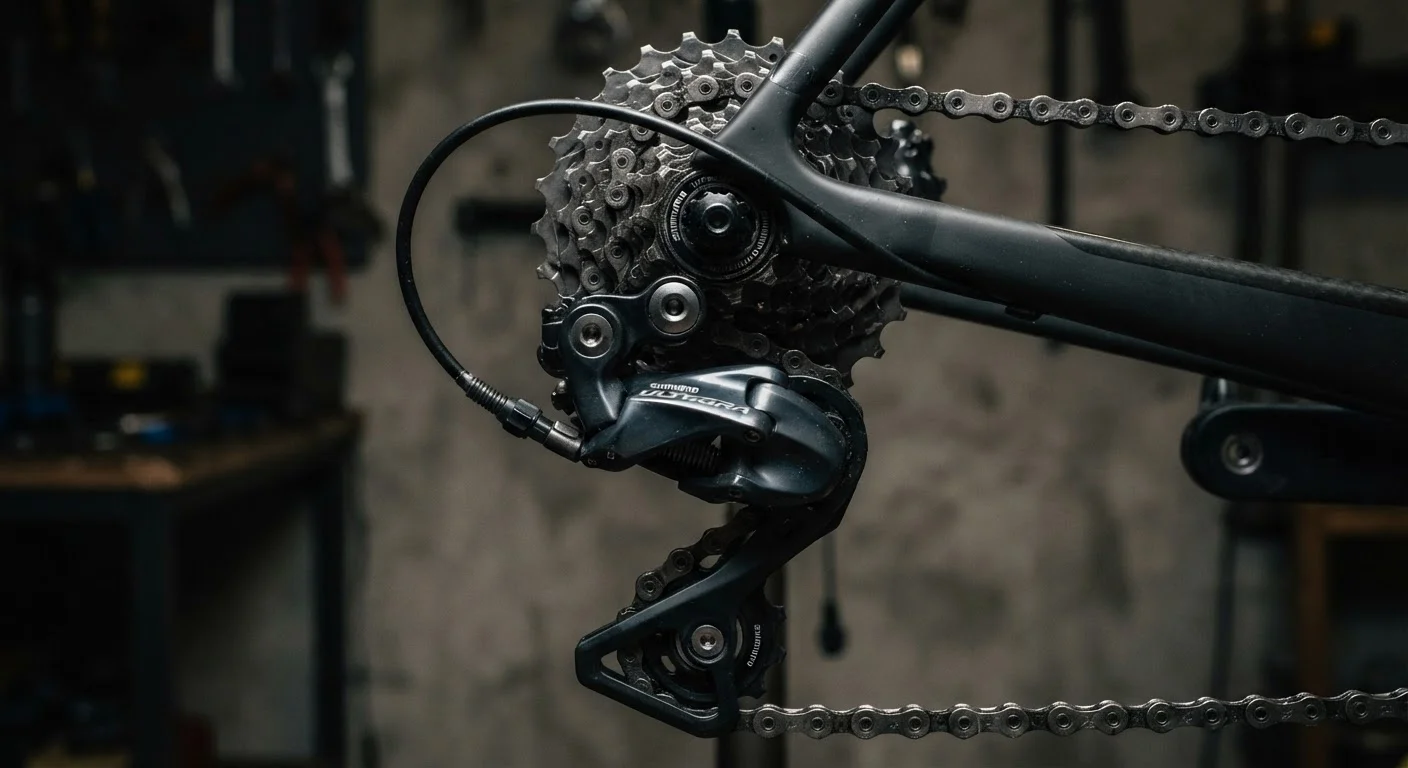
To appreciate why shifting degrades, it helps to understand the system as a whole. Our drivetrain fundamentals guide explains how chainrings, cassettes, derailleurs, and chains interact to move the bike. When any one element is out of specification, the others compensate - until they can't.
The mistakes below represent the most common errors riders make when their shifting feels off, why those errors happen, and what a more effective approach looks like.
Reaching for the barrel adjuster before checking cable condition.
Why it happens: Barrel adjusters produce an immediate, tangible change that feels like progress. Riders often stop there without asking whether the cable or housing is the actual problem.
Ignoring cable and housing stretch as a routine maintenance item.
Why it happens: New cables stretch noticeably in the first few hundred miles, then more gradually over time. Because the change is gradual, riders often attribute sluggish upshifts to something more complex.
Confusing limit screw adjustment with cable tension adjustment.
Why it happens: Both affect where the derailleur sits, so riders who aren't familiar with how each works will sometimes turn limit screws when cable tension is the actual issue - or vice versa.
Running a worn chain on an otherwise serviceable cassette.
Why it happens: Chain wear is invisible to casual inspection. Riders replace chains reactively - after skipping starts - rather than proactively based on stretch measurement.
Neglecting derailleur hanger alignment after an impact.
Why it happens: A bent hanger from a minor drop or bike-fall is easy to overlook visually. The shifting degradation it causes is often attributed to cable stretch or general wear instead.
Using incompatible lubricants or over-lubricating the chain.
Why it happens: More lubrication feels protective, and any lubricant seems better than none. In practice, excess lube attracts grit that acts as an abrasive, while the wrong viscosity for conditions accelerates drivetrain wear.
The Underlying Patterns That Compound Shifting Problems
Most shifting problems share a common thread: small tolerances matter enormously in indexed shifting systems. Indexed shifting relies on precise, repeatable cable movement to land the derailleur on an exact gear position. Even a millimeter of unintended cable movement produces a missed shift or chain rattle.
0.75%
Chain stretch threshold for replacement
Most drivetrain manufacturers cite 0.5-0.75% elongation as the serviceable limit before a chain begins accelerating cassette wear.
~1 mm
Cable movement per indexed shift
Indexed rear derailleurs typically move approximately 1-3 mm of cable per click depending on the system - illustrating why small cable irregularities produce noticeable missed shifts.
Component compatibility is another overlooked factor. Mixing drivetrain generations or brands without verifying spacing and pull ratios can produce shifting that no amount of adjustment will fully resolve. Upgrading one component often demands changes to others - something worth researching before swapping parts.
If you've worked through cable tension, alignment, and lubrication and shifting remains rough, the problem may lie deeper. Recognizing early drivetrain warning signs can help distinguish routine adjustment needs from components that are genuinely worn beyond reliable service.
Don't Force a Stiff or Frozen Derailleur
If a derailleur feels stiff or fails to return smoothly under spring tension, do not force movement by hand or with tools. A seized pivot, damaged spring, or cracked hanger requires inspection before further riding. Continuing to ride with a mechanically compromised derailleur risks the chain dropping into the wheel - a potentially dangerous situation at speed. Have a qualified mechanic assess it before your next ride.