The Rim: Foundation of the Wheel
The rim is the outermost ring of the wheel and serves two core functions: it provides the mounting surface for the tire and anchors the ends of the spokes. Understanding rim construction helps clarify why different riding disciplines call for different rim designs.
Most rims are manufactured from 6000-series aluminum alloy using an extrusion process, then bent into a hoop and joined. The cross-sectional profile matters enormously - a deeper section (measured in millimeters from the tire bed to the outer edge) is more aerodynamic but also heavier and more susceptible to crosswinds. Shallow-section rims are more versatile for general riding and climbing.
Carbon fiber rims use layers of woven carbon fabric set in resin, allowing engineers to tune stiffness and weight independently. They are common in performance road and cyclocross applications. One practical consideration: carbon rims used with rim brakes require special brake pads, as standard rubber compounds can damage the surface. Tire system compatibility is also determined partly by rim design - clincher, tubeless-ready, and tubular rims have distinct internal profiles.
Spokes and Nipples: The Tension Network
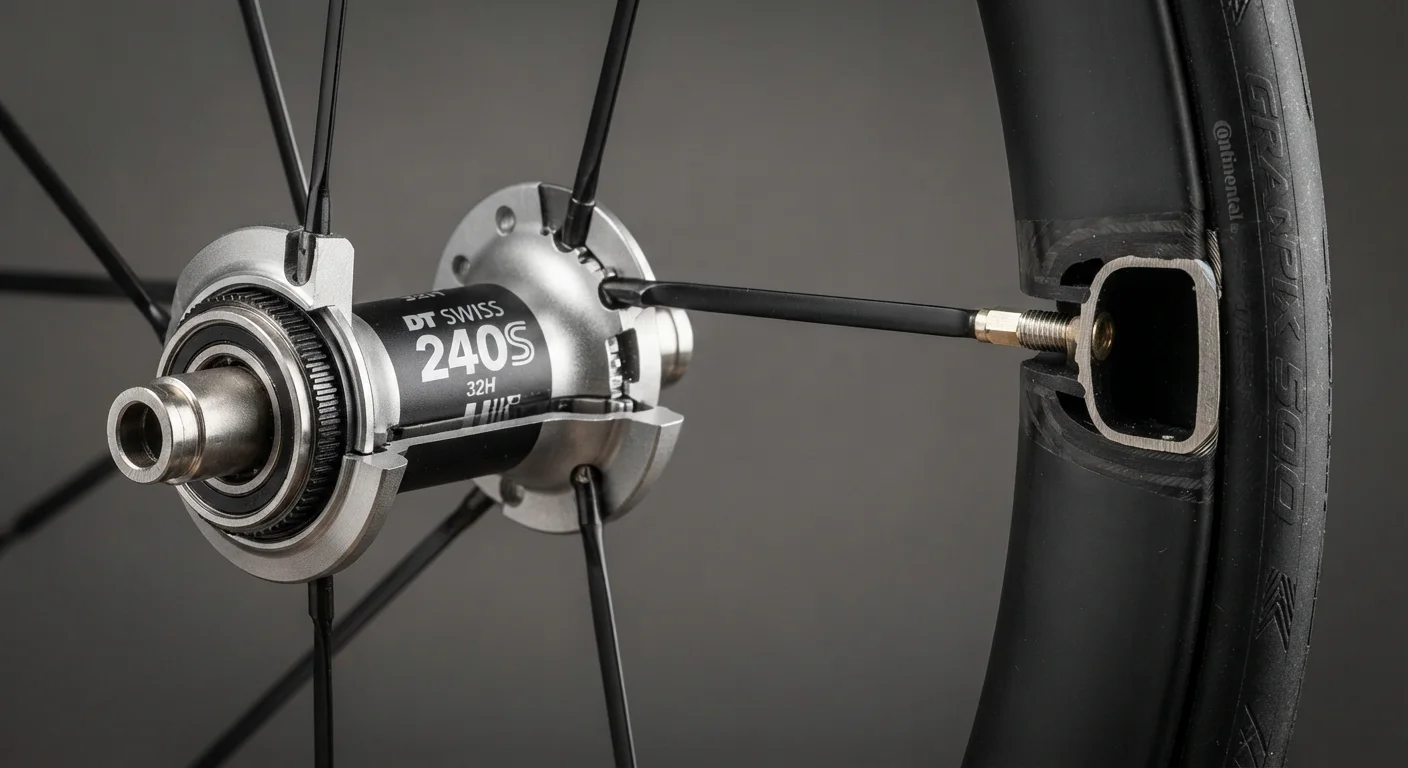
Spokes are thin rods - typically made from stainless steel, though butted steel and occasionally carbon or titanium variants exist - that connect the hub to the rim. They do not simply hold the wheel together; they keep it under calibrated tension so the wheel resists lateral and radial forces without flex or collapse.
Butted spokes are thicker at each end and thinner in the middle. This design reduces weight while concentrating material where stress is highest. A straight-gauge spoke has a uniform diameter throughout and is generally more affordable but slightly heavier.
Spoke lacing patterns describe how spokes cross each other between hub and rim. Common patterns include radial (no crossing, suited for front non-drive wheels), two-cross, and three-cross. More crossing creates a more flexible wheel that absorbs road vibration better - a key reason rear wheels and loaded touring wheels often use three-cross patterns.
Check Spoke Tension Periodically
Even well-built wheels lose tension gradually through normal riding. Squeezing paired spokes by hand can reveal obvious soft spots, but a proper tension check requires a spoke tensiometer. Having a qualified bike mechanic true and tension-check your wheels annually - or after hard impacts - can significantly extend wheel service life.
Nipples - small threaded cylinders, usually brass or aluminum - sit at the rim end of each spoke. A wheel builder rotates them with a spoke wrench to achieve uniform tension across all spokes, a process called truing. Brass nipples are heavier than aluminum but resist corrosion and are easier to adjust after years of use. Upgrading wheel components doesn't always deliver the performance gains riders expect, and spoke and nipple material is a prime example where marginal gains should be weighed carefully.
Hubs: The Axle at the Center
The hub is the central cylinder that the wheel rotates around, housing the axle and the bearings that allow smooth, low-friction spinning. Front hubs are mechanically simple - they contain two sets of bearings and mount to the fork via a quick-release skewer or thru-axle. Rear hubs are more complex because they incorporate a freehub body, the ratcheting mechanism that lets the cassette engage the drivetrain when pedaling and disengage when coasting.
Bearings inside the hub are either cup-and-cone (serviceable loose ball bearings seated in a cone-shaped race) or cartridge type (sealed units pressed into the hub shell). Cup-and-cone bearings can be adjusted and rebuilt by a skilled mechanic; cartridge bearings are replaced as a unit when worn.
~480g
Typical aluminum rim weight (700c road)
Mid-range aluminum 700c road rims commonly weigh between 430-530 grams depending on rim depth and wall design.
32
Standard spoke count for versatile wheels
A 32-spoke count has long been a default for road and trail wheels, offering a practical balance of durability and weight.
2x
Price premium for carbon over aluminum rims
Carbon fiber rims typically cost two to five times more than comparable aluminum rims, depending on layup quality and depth.
Hub flange diameter and the number of spoke holes drilled into the flange must match the rim's spoke hole count. Mismatched specs make it impossible to properly build a wheel. For e-bikes, rear hubs may also incorporate a motor - a topic covered in depth in our guide to e-bike component roles. For a broader look at how wheels fit within the entire bicycle system, see our complete bicycle anatomy guide.