Why Bike Style Matters More Than Brand
When first-time buyers walk into a bike shop or browse online, the instinct is often to focus on brand names or price tags. Neither is the right starting point. The single most consequential decision you will make is choosing the correct bike style for your riding conditions - a mismatch here causes discomfort, underuse, and wasted money regardless of what the bike costs.
Bike styles are not marketing categories. They reflect genuine engineering differences in geometry, tire width, gearing range, and handlebar design - all of which directly affect how the bike feels and performs in specific environments. A bike optimized for mountain singletrack will be slow and awkward on a daily city commute. A race-oriented road bike will be miserable on gravel paths.
Getting this decision right means asking honest questions about your lifestyle before you start comparing components or colors.
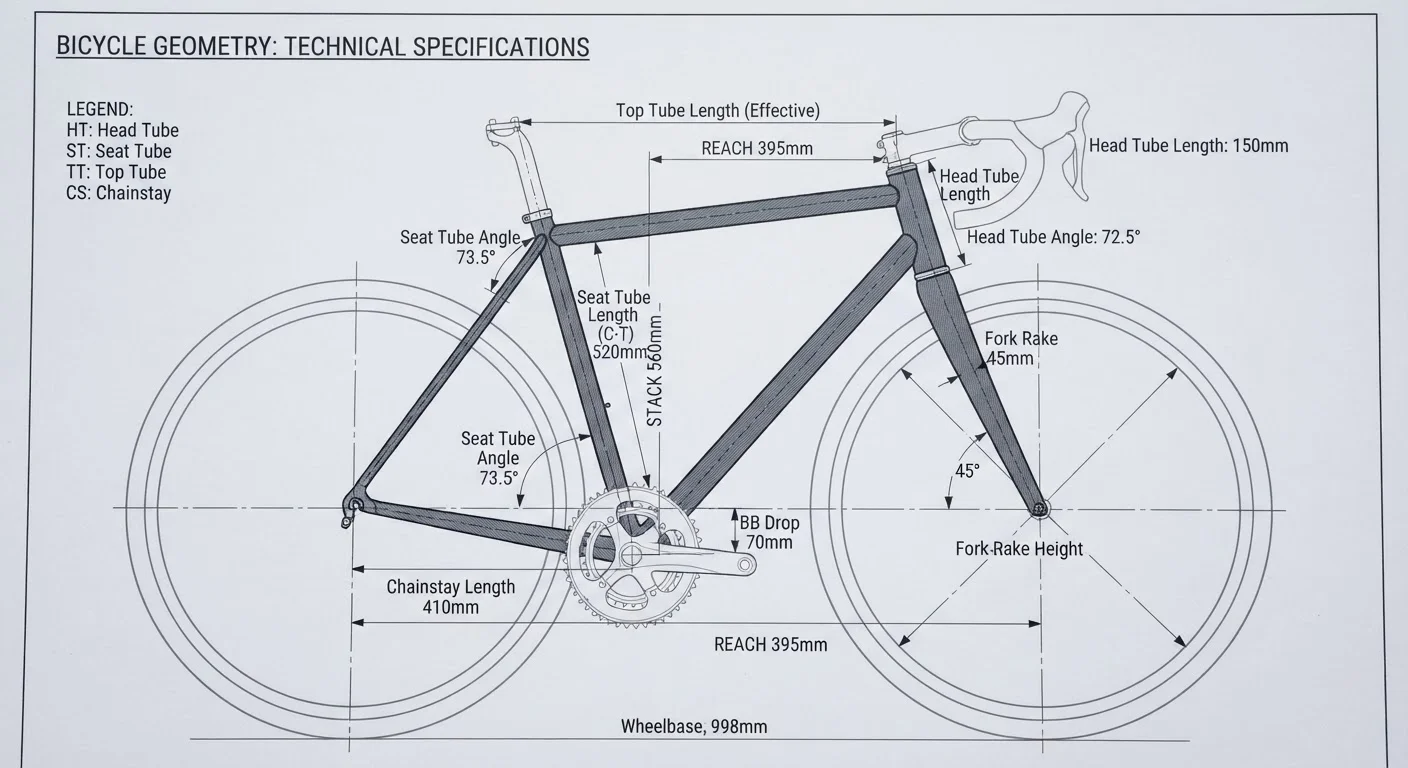
Bike geometry
The angles and dimensions of a bike's frame that determine riding posture, handling, and comfort. Different styles use different geometries - aggressive and forward-leaning for road bikes, upright for commuters.
Hardtail
A mountain bike with front suspension forks but no rear suspension. Less expensive than full-suspension bikes and suitable for most beginner off-road riding.
Internal hub gearing
A gearing system where all mechanical parts are sealed inside the rear wheel hub. It requires less maintenance than external derailleur gearing and handles well in urban, all-weather conditions.
Tire clearance
The maximum tire width a bike frame can accommodate. Greater tire clearance allows for wider tires, which provide more grip, cushioning, and stability on rough or loose surfaces.
Derailleur
The mechanical device that moves the chain between gears on a bike with an external gearing system. Most road, mountain, and hybrid bikes use derailleurs for front and rear gear shifting.
Drop handlebars
Curved handlebars that curve downward and forward, used on road and gravel bikes. They offer multiple hand positions and encourage a lower, more aerodynamic posture.
The Four Questions Every First-Time Buyer Should Answer
Before evaluating any specific bike style, work through these four questions. Your answers will eliminate most options and clarify what actually fits your situation.
- Where will you ride? Smooth pavement, mixed surfaces, dirt trails, or some combination? Surface type is the primary filter for bike selection.
- How far and how often? Short errands a few times a week demand different qualities than a 15-mile daily commute or weekend 40-mile rides. Distance and frequency affect gearing needs and saddle comfort.
- Where will you store the bike? Apartment dwellers with limited space may need a folding bike or a lighter bike they can carry upstairs. A garage simplifies options considerably.
- What is your realistic budget? Be honest. Factor in not just the bike purchase but a helmet, lock, lights, and basic tools - these are necessary costs, not optional add-ons.
For a more structured version of this process, the pre-purchase checklist article walks through each factor in greater depth.
Write Down Your Answers Before Shopping
Before visiting a bike shop or browsing online, write down your answers to the four questions above. Having a concrete summary of your terrain, distance, storage, and budget prevents salesroom influence from pulling you toward a style that does not fit your actual needs. It also makes test-ride comparisons more purposeful.
A Plain-English Guide to Common Bike Styles
Once you have answered those four questions, the following style breakdown should make your decision considerably clearer.
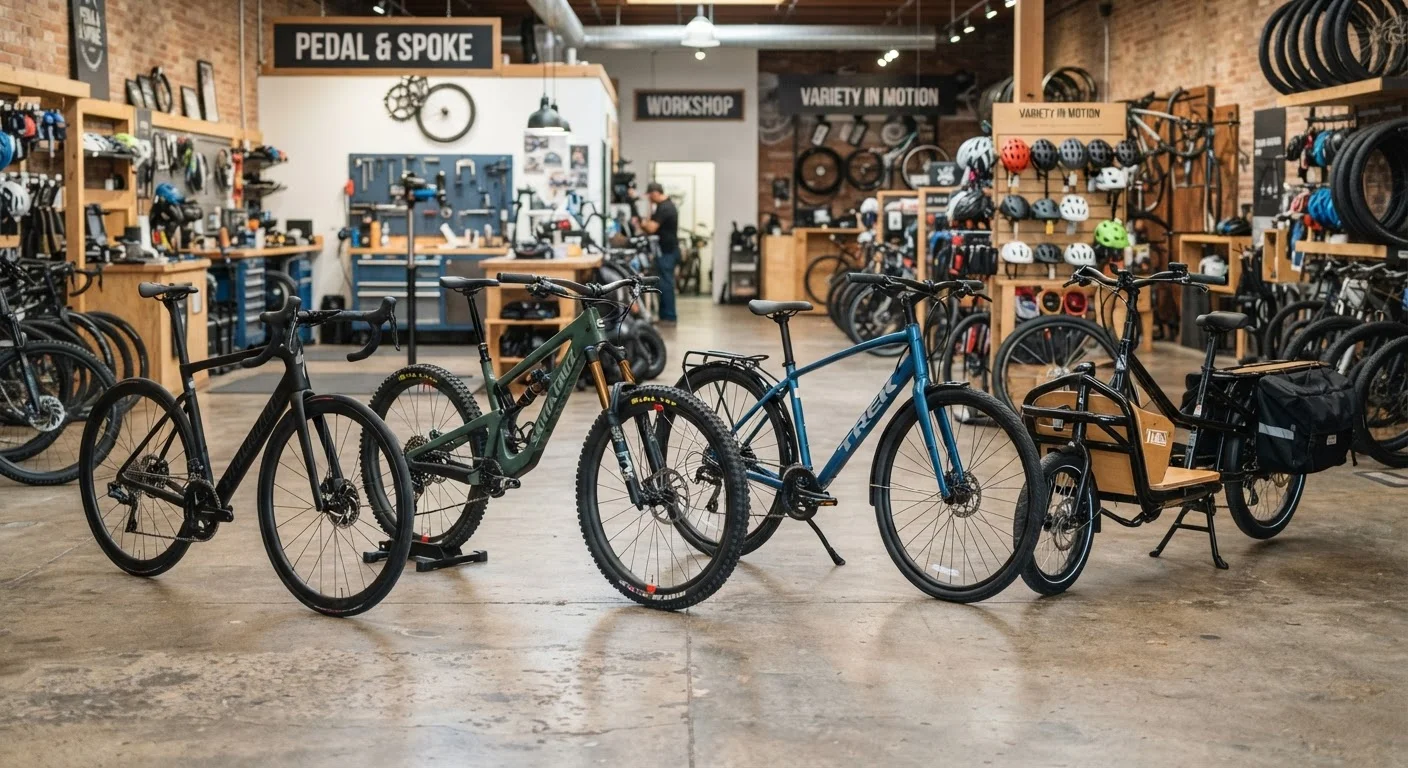
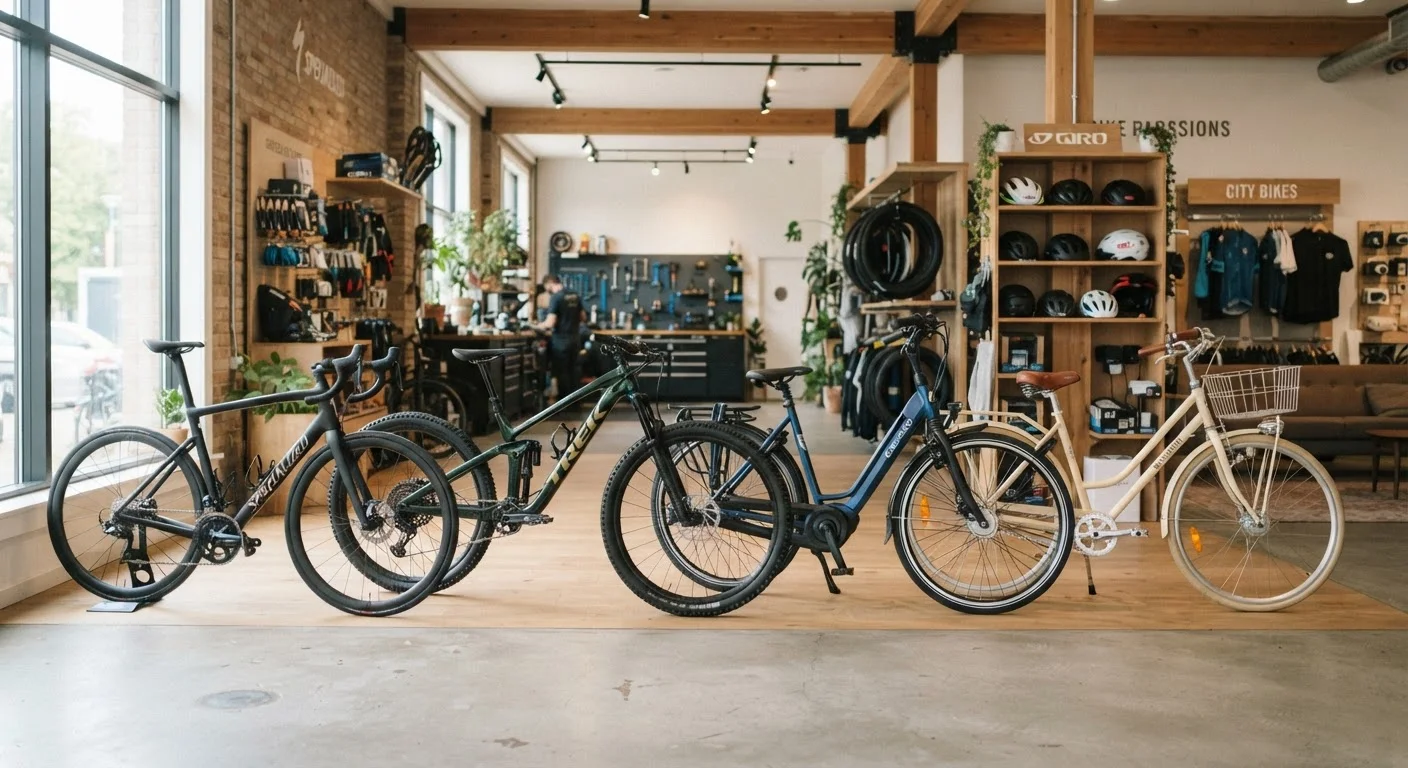
- Road Bikes
- Built for speed on smooth pavement. Drop handlebars encourage a forward-leaning aerodynamic posture. Narrow tires keep rolling resistance low. Best for riders prioritizing fitness riding, centuries, or fast commutes on well-maintained bike lanes.
- Mountain Bikes
- Designed for dirt trails, rocks, and roots. Wide, knobby tires and front (or full) suspension absorb rough terrain. Slower and heavier on pavement than other styles. Appropriate for off-road recreation, not daily road commuting.
- Hybrid Bikes
- A practical middle ground: flat handlebars, medium-width tires, and an upright riding position. Handle pavement and smooth gravel comfortably. A reliable default for urban commuters and casual recreational riders.
- Commuter / City Bikes
- Similar to hybrids but often include built-in fenders, racks, and lighting. Prioritize practicality and durability for daily use. Frequently come with internal hub gearing that requires minimal maintenance.
- Gravel Bikes
- Drop-bar bikes with wider tire clearance than road bikes. Navigate mixed-surface routes - pavement, gravel roads, light dirt - without sacrificing road efficiency. Increasingly popular for long-distance adventure riding.
If your rides will cross multiple surface types, the mixed-terrain bike selection guide explores how to navigate that tradeoff.
Practical Fit and Storage Considerations
Bike style selection is only part of the equation. Two practical factors - fit and storage - frequently override theoretical style preferences.
Fit means the bike's frame size and geometry match your body dimensions and riding posture preferences. A correctly fitted bike allows a slight bend in the knee at the bottom of the pedal stroke, a comfortable reach to the handlebars, and no strain on the lower back or neck. Frame sizing varies by manufacturer, so test-riding before purchasing is strongly advisable. Many local bike shops offer basic fitting assessments.
Storage shapes what is realistically usable. If you live in an apartment on the third floor, a 35-pound steel mountain bike may feel impractical to carry daily. Folding bikes sacrifice some ride quality but solve space constraints effectively. Lighter aluminum or carbon-frame hybrids are easier to manage in tight urban living situations.
Understanding how components like gearing will affect your daily experience is also worth investing time in - our introduction to bicycle gearing explains the basics clearly for new riders. You can also explore the broader components hub once you have a style narrowed down.
Avoid Buying a Bike You Cannot Test-Ride
Purchasing a bike without sitting on it - especially online - carries real risk for first-time buyers. Frame sizing differences between manufacturers mean a "medium" on one brand may fit very differently on another. If buying online, confirm the retailer has a return or exchange policy and understand the return shipping logistics before purchasing.
When to Consider an E-Bike Instead
Electric-assist bikes deserve mention in any first-bike conversation. An e-bike pairs a conventional bicycle with a motor that provides pedal assistance, reducing the effort required - particularly useful on hills or for longer distances.
An e-bike may be worth considering as your first bike if: your commute exceeds 10 miles each way, your route involves significant elevation gain, or you are returning to cycling after a period of inactivity and want to build back gradually. E-bikes are not a shortcut - they still require pedaling - but they meaningfully lower the physical threshold for regular riding.
They do carry higher purchase costs, added weight, and require understanding of battery care and local regulations. The new e-bike owner's starting guide is the recommended next read if this option is appealing.
Mixed-Terrain Bike Style Guide
A practical framework for narrowing down bike styles when your routes vary between pavement and gravel paths. Useful once you have identified your primary riding context.
Bicycle Gearing Systems Introduction
Explains how cassettes, chainrings, and gear ratios work in plain language - essential background for understanding how different bike styles handle varied terrain.
Pre-Purchase Bike Style Checklist
A structured checklist covering terrain, riding frequency, fit preferences, and practicality factors to consult before committing to a bicycle category.