
How Corrosion and Hull Maintenance Differ
The single greatest mechanical difference between freshwater and saltwater boating is corrosion. Saltwater is roughly 800 times more electrically conductive than freshwater, which dramatically accelerates galvanic and electrolytic corrosion on metal components including outboard engine brackets, propellers, through-hull fittings, and fasteners.
In freshwater, standard aluminum and untreated steel components hold up reasonably well with normal care. In saltwater, these materials require either marine-grade stainless steel, bronze, or specialized coatings to survive regular exposure. For a closer look at how specific boat features shift between environments, see how boat specs shift between environments.
Antifouling bottom paint - a biocidal coating that discourages barnacle and algae growth - is standard practice in saltwater but largely unnecessary in freshwater. Freshwater hulls typically use standard gelcoat or paint without the same biological fouling concerns. Saltwater boaters operating in warm coastal waters may need to haul out and repaint annually depending on local conditions.
| Criterion | Freshwater | Saltwater |
|---|---|---|
| Corrosion risk | Low to moderate | High - requires marine-grade hardware |
| Engine flushing frequency | Periodic, as needed | After every outing |
| Antifouling bottom paint | Not typically required | Standard practice |
| Tidal navigation | Not applicable | Essential skill required |
| Weather predictability | More stable on enclosed bodies | Can change rapidly offshore |
| Safety regulations | USCG rules apply | USCG rules apply |
| Hull fouling (algae, barnacles) | Minimal concern | Significant, especially in warm water |
| Overall maintenance cost | Generally lower | Generally higher |
Engine Care and Post-Trip Routines
Flushing an outboard engine with fresh water after every saltwater outing is considered non-negotiable by experienced marine mechanics. Salt that accumulates inside cooling passages, exhaust ports, and water pump housings can cause significant internal corrosion if left unaddressed. Most modern outboards include a dedicated flush port for a garden hose connection, making the process straightforward.
Inboard engines face similar risks, with raw-water cooling systems particularly vulnerable. Outboard vs. inboard engine differences matter here - each propulsion type has distinct flushing and winterization requirements in saltwater environments.
Freshwater boaters still benefit from periodic engine flushes, particularly after operating in silt-heavy rivers or polluted water bodies, but the urgency and frequency are considerably lower. Winterization procedures - draining cooling systems to prevent freeze damage - apply more commonly to freshwater boaters in cold climates than to saltwater operators in warmer coastal regions.
~800x
Greater electrical conductivity of saltwater vs. freshwater
This conductivity difference is why galvanic corrosion progresses so much faster in marine environments, according to marine engineering references.
2-4 hrs
Typical post-trip flush time investment for saltwater outboards
Marine mechanics commonly advise a complete flush cycle after every saltwater use, adding routine time to each outing.
12-24 hrs
Typical tidal cycle in US coastal waters
Most US coastal areas experience two high and two low tides approximately every 24 hours, shaping departure and return windows for saltwater boaters.
Navigation, Tides, and Situational Awareness
Freshwater navigation is generally more predictable. Lakes and reservoirs have stable water levels (though seasonal variation does occur), no tidal currents, and well-marked channels on popular recreational waterways. Rivers introduce current considerations, but these remain relatively constant compared to tidal flows.
Saltwater navigation introduces tides - the cyclical rise and fall of sea level driven by gravitational forces - which directly affect depth, current speed and direction, and access to shallow anchorages or inlets. Boaters operating in tidal waters need to consult tide tables and factor tidal windows into departure and return planning. Ignoring tidal state is one of the more common causes of groundings in coastal environments.
Weather windows matter more offshore. Open saltwater amplifies wave height, and conditions can deteriorate faster than on enclosed freshwater bodies. Understanding how water type should drive your boat choice is essential before committing to a coastal or offshore route.
What Stays the Same Regardless of Environment
Core boating safety principles don't change with salinity. Life jacket requirements, navigation light rules, VHF radio protocols, and safe speed regulations apply equally in both environments under U.S. Coast Guard regulations. New boaters should become fluent in these fundamentals before focusing on environment-specific details. What to expect on the water is a useful starting point for anyone approaching their first outings.
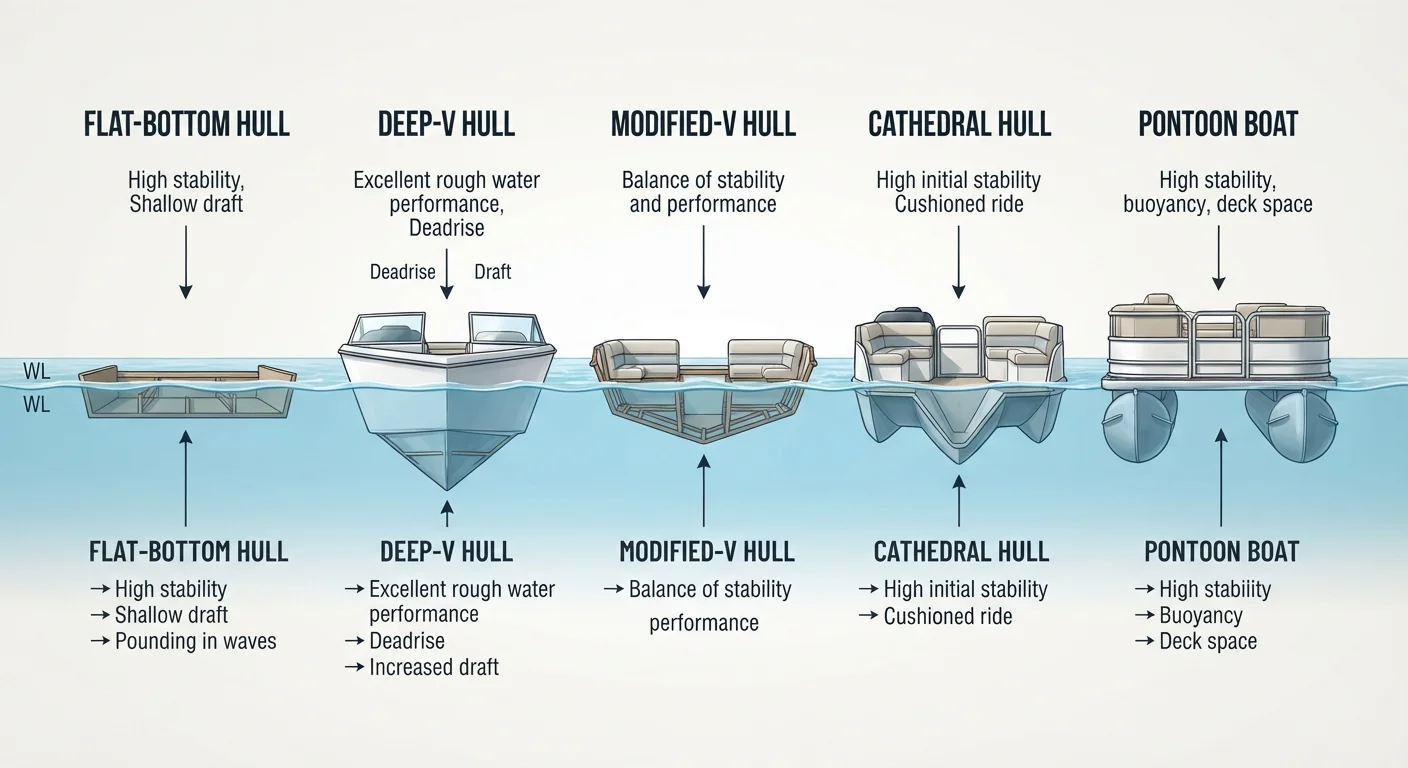
Hull design principles also translate across environments in broad terms. A deep-V hull handles chop better whether that chop comes from wind on a large lake or coastal swells. The fishing boat categories covered in fishing boats decoded - center consoles, walkarounds, bass boats - are optimized for particular use cases that often align with environment, but the underlying hull logic applies universally.
Ultimately, competent seamanship - reading conditions, understanding your vessel's limits, and maintaining your equipment - is the common thread that defines responsible boating in any water type.
This article provides general educational information about boating environments and is not a substitute for certified boating safety instruction or professional marine advice.