What Separates These Two Propulsion Systems
The fundamental difference between outboard and inboard engines comes down to where the powerplant lives relative to the hull. An outboard engine is a self-contained unit - engine, gearbox, and propeller - clamped or bolted to the boat's transom (the flat rear panel of the hull). Steering is achieved by rotating the entire unit. An inboard engine, by contrast, is mounted inside the hull, typically amidships or toward the stern, and drives a fixed propeller shaft that exits through the hull bottom. Steering relies on a separate rudder.
This placement difference cascades into nearly every aspect of how the boat performs, how it's maintained, and what activities it suits. For a broader look at how propulsion choices shape hull design and deck layout, see how propulsion systems shape the boats built around them.
| Criterion | Outboard Engine | Inboard Engine |
|---|---|---|
| Placement | External, mounted on transom | Internal, within the hull |
| Steering mechanism | Unit rotates for direction | Fixed shaft; separate rudder |
| Maintenance access | Generally straightforward | More involved; enclosed compartment |
| Shallow water capability | High; unit tilts up | Limited; fixed propeller shaft |
| Cockpit/transom space | Transom occupied by engine | Transom clear; more swim platform space |
| Typical vessel size | Small to mid-size boats | Mid-size to larger vessels |
| Wake quality for sports | Variable; suitable for casual use | Consistent, clean wake preferred for tow sports |
| Corrosion management | Can tilt clear of water | Hull-integrated; requires regular flushing |
Maintenance, Access, and Ownership Considerations
Outboard engines are widely regarded as the more owner-serviceable option. Because the entire unit is external, routine tasks - flushing the cooling system, changing the gear oil, inspecting the propeller - are typically accessible without hauling the boat out of the water. Replacement is also straightforward: an outboard can be unbolted and swapped in a marina parking lot. This modularity is a practical advantage for owners who do some of their own upkeep.
Inboard engines demand more involved access. The engine compartment is enclosed within the hull, which means many service tasks require removing hatches, working in confined spaces, or scheduling professional yard time. Tasks like impeller replacement, belt changes, or exhaust system inspection are doable but less convenient. Owners of inboard-powered boats generally budget more for professional maintenance labor.
Sterndrive: A Middle-Ground Option
A third configuration - the sterndrive (also called inboard/outboard or I/O) - combines an inboard engine with an external drive unit mounted through the transom. It offers some of the maintenance accessibility of an outboard with the hull integration of an inboard. If you're evaluating all three systems together, see our full comparison of inboard, outboard, and sterndrive systems.
Operating environment also matters. Salt water accelerates corrosion on any exposed metal component. Outboards benefit from the ability to be tilted clear of the water after use - a meaningful advantage in saltwater settings. For a deeper look at how the environment affects your entire maintenance routine, see freshwater vs. saltwater boating considerations.
Performance, Space, and Intended Use
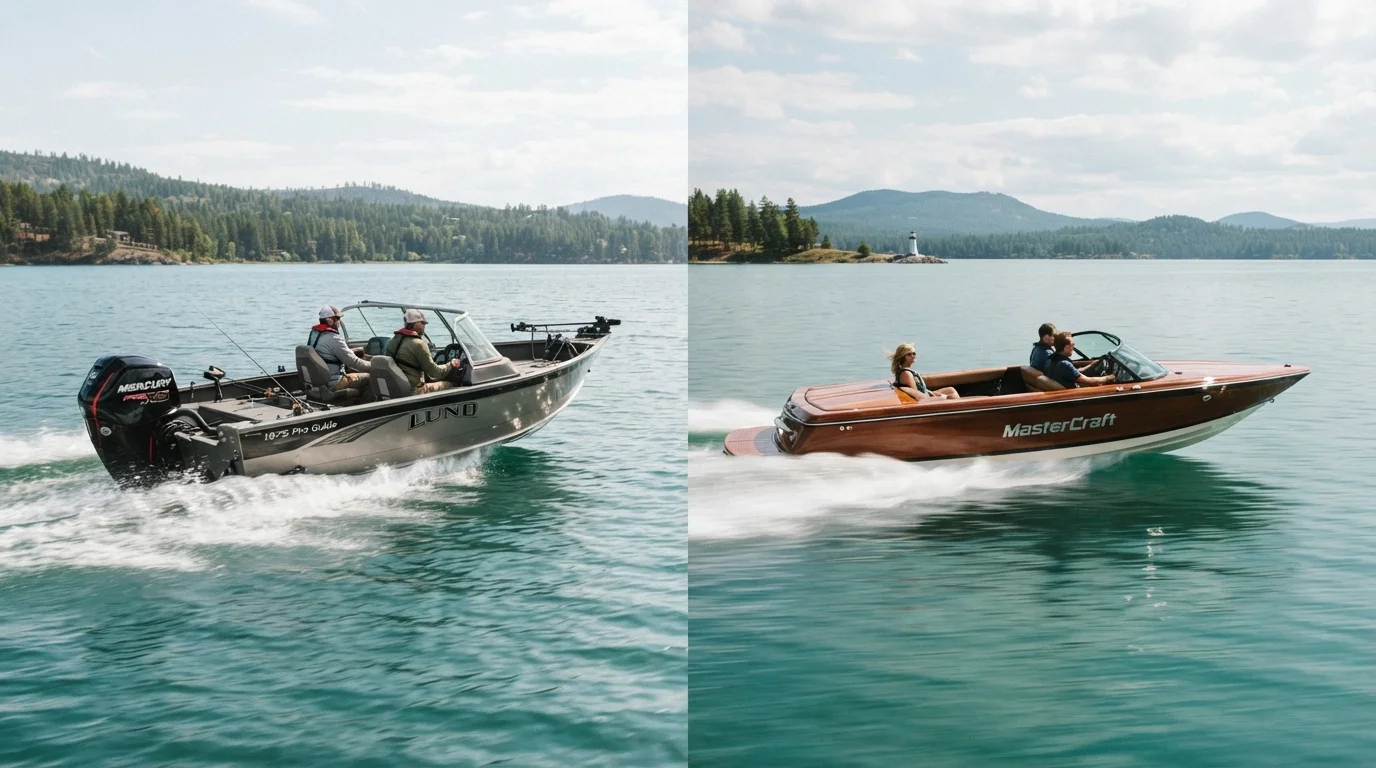
Outboard engines have improved dramatically in recent decades, with modern four-stroke units offering strong fuel efficiency and reduced emissions. They scale from small portable units used on jon boats and dinghies up to high-horsepower multi-engine setups found on center console fishing boats. The ability to run multiple outboards side by side gives boaters flexibility in power configuration - a topic covered in detail in our guide on single engine vs. twin engine trade-offs.
Inboard engines, particularly those used in dedicated wake sport boats, are engineered to produce a specific wake shape at defined speeds. Because the propeller is positioned under the hull rather than at the transom, the boat's hull generates a cleaner, more controllable wave - a critical factor for wakeboarding and slalom skiing. Inboards also keep the transom open, allowing swimmers to board from the rear without proximity to a spinning propeller, which is an important safety consideration.
~70%
US recreational boats powered by outboards
Industry data from the National Marine Manufacturers Association consistently shows outboards account for the large majority of US recreational powerboat sales by volume.
4-stroke
Dominant outboard engine type sold today
Four-stroke outboard technology has largely displaced two-stroke designs in new sales, driven by cleaner emissions and improved fuel efficiency standards.
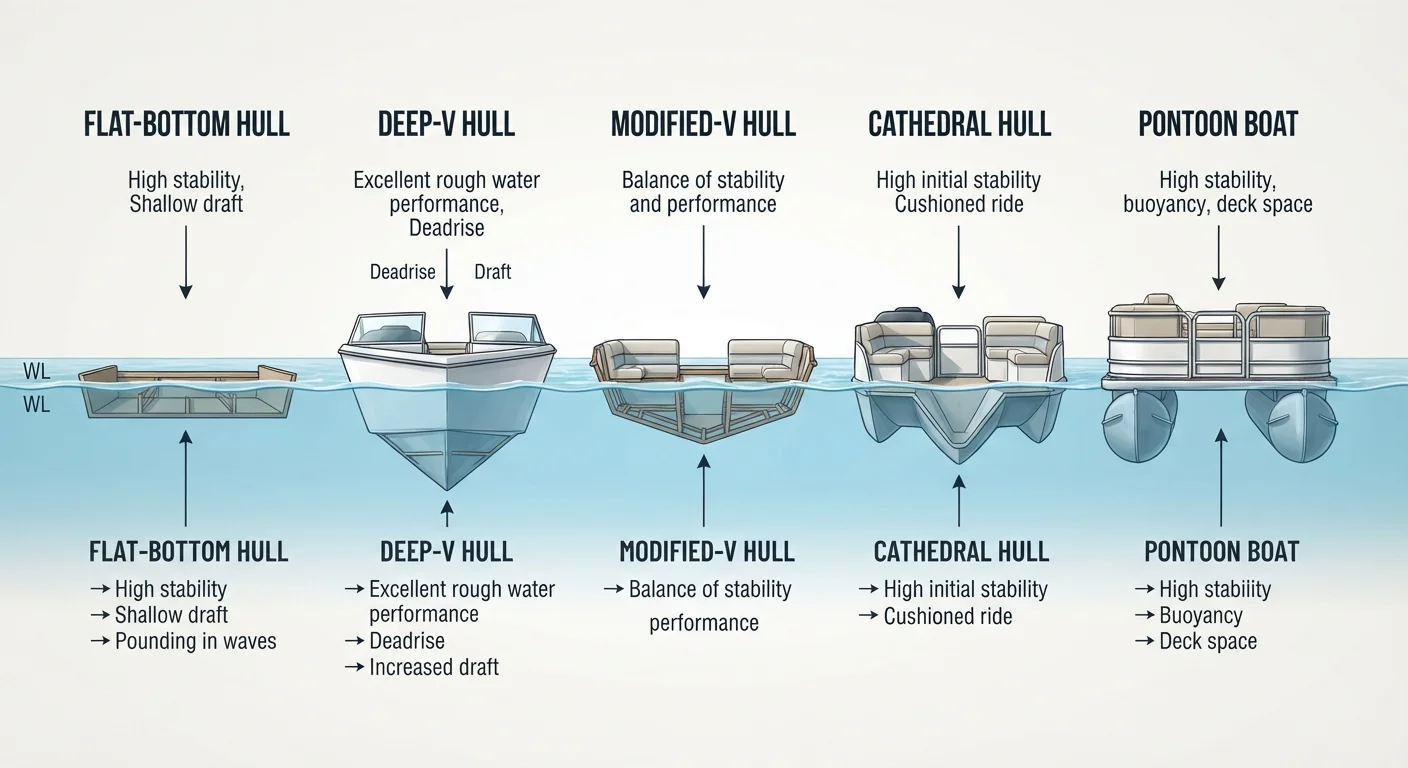
For buyers weighing how operating environment - not just engine type - should guide their decision, matching your hull and engine to your water type provides useful context on how inland versus offshore conditions shape the right configuration.