Why Hull Shape Is the Foundation of Boat Behavior
Every performance characteristic you associate with a boat - how it rides in chop, how quickly it planes, how stable it feels at rest - originates with hull geometry. Before evaluating horsepower, seating capacity, or electronics, understanding the underwater shape of a vessel gives you the single most accurate predictor of how it will behave on the water.
Hull design is a set of engineering compromises. Designers optimize for specific use cases: calm inland water versus open ocean, fishing versus water sports, shallow-draft rivers versus deep coastal bays. Knowing which design suits which environment helps buyers and boaters avoid mismatches that no amount of power or outfitting can fix. For a broader look at how geometry translates to performance data, see how hull shape affects ride, stability, and speed.
The Four Core Hull Types Compared
While naval architects produce a wide range of hybrid and purpose-built designs, most recreational and light commercial boats fall into four primary hull categories. Each carries distinct hydrodynamic characteristics that shape real-world handling.
| Flat-Bottom | Modified-V | Deep-V | Pontoon | Catamaran | |
|---|---|---|---|---|---|
| Primary stability (at rest) | Excellent | Good | Moderate | Excellent | Excellent |
| Rough-water ride quality | Poor | Moderate | Excellent | Poor | Good |
| Typical draft | Very shallow | Shallow | Moderate | Very shallow | Moderate |
| Fuel efficiency | High | Good | Moderate | Moderate | Good |
| Deck space | Moderate | Moderate | Limited | Excellent | Excellent |
| Best-suited environment | Calm inland water | Lakes, bays | Open coast, offshore | Protected lakes | Offshore, coastal |
For a deeper dive into how individual hull measurements translate to spec sheets, reading a boat specification sheet breaks down beam, draft, and displacement in practical terms.
Flat-Bottom and Modified-V Hulls
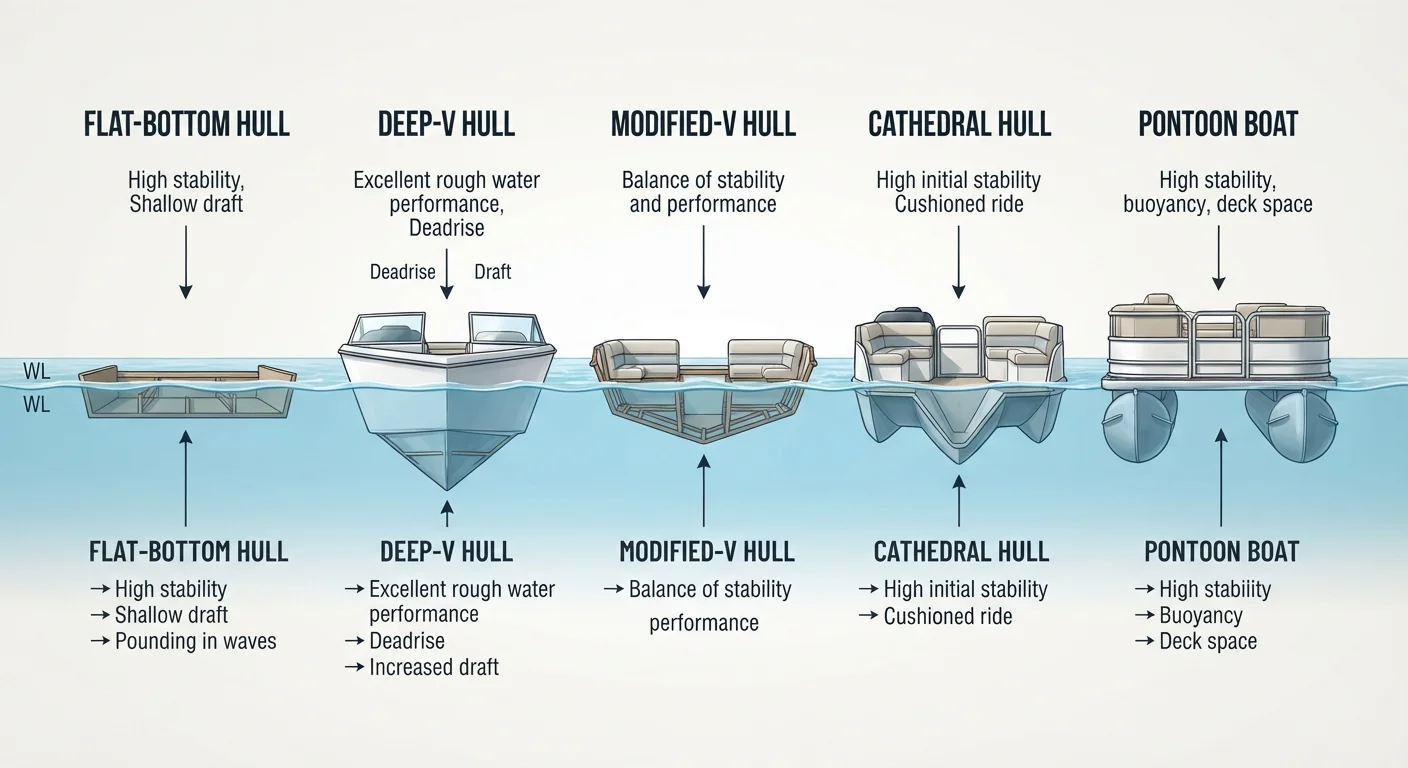
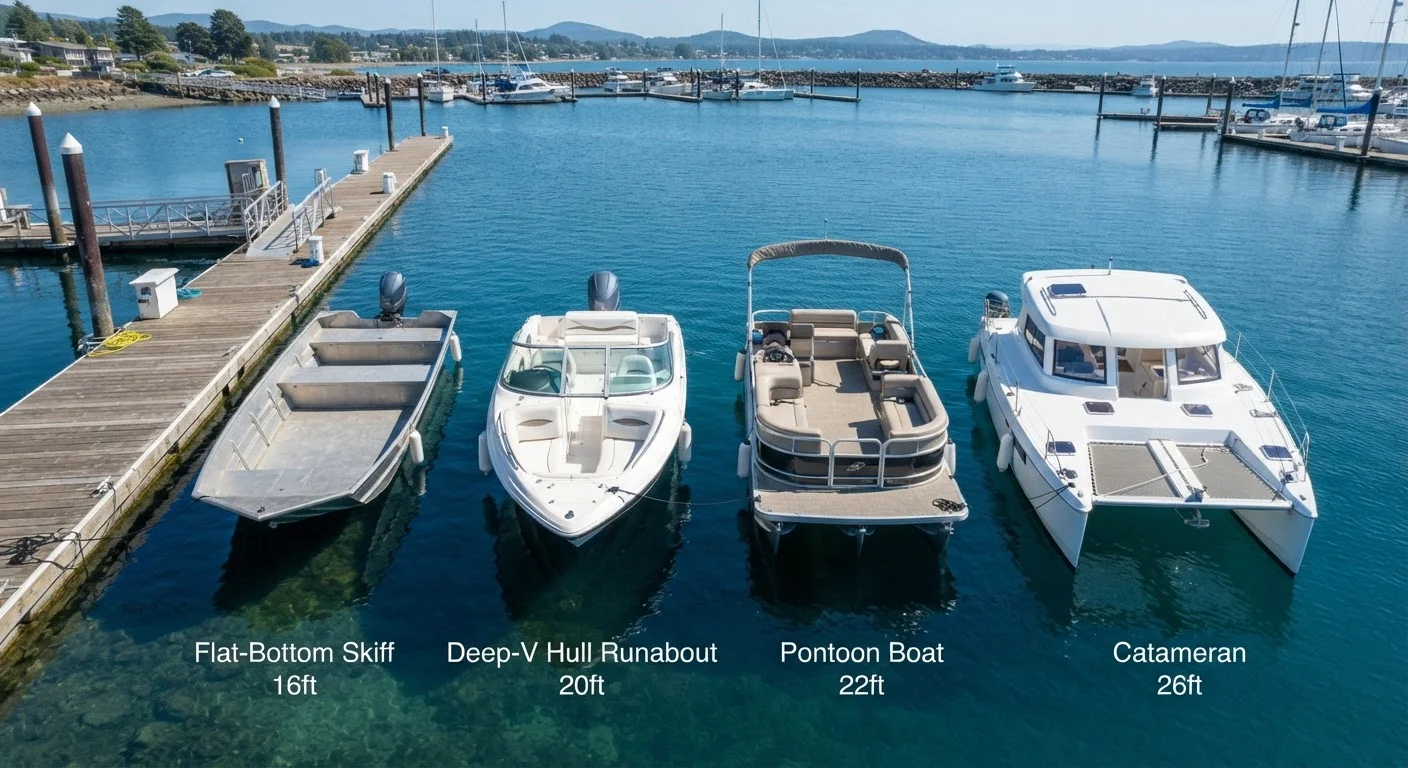
Flat-bottom hulls provide maximum primary stability - the resistance to initial tipping - when at rest or moving slowly through calm water. This makes them well-suited to jon boats, skiffs, and utility craft used on protected inland waterways. Their shallow draft also allows operation in very thin water. The trade-off is a rough, jarring ride in even moderate chop, as the flat surface pounds across wave faces rather than cutting through them.
The modified-V hull represents a practical middle ground. A shallower deadrise angle (typically 12-18 degrees at the transom) improves rough-water manners compared to a true flat bottom while preserving reasonable stability and fuel efficiency at lower speeds. Most family runabouts and bass boats use some variation of this geometry. Common misconceptions about hull shapes explores why flat bottoms are often misunderstood.
Match Your Hull to Your Home Water
The most common hull-selection mistake is optimizing for occasional trips to rough water rather than your typical conditions. If 90 percent of your boating happens on a calm inland lake, a flat or modified-V hull will serve you better day-to-day than a deep-V optimized for offshore swells. Identify your primary use environment first, then evaluate hull types from there.
Deep-V Hulls: Offshore Performance
A deep-V hull is defined by a pronounced deadrise angle - typically 20 degrees or more measured at the transom - that allows the bow to slice cleanly into oncoming waves rather than slamming across them. The result is a significantly smoother ride in rough water, which is why center consoles, offshore fishing boats, and performance cruisers almost universally adopt this geometry.
The cost of that offshore capability is reduced primary stability at rest or low speeds, higher fuel consumption at planing speeds, and generally deeper draft. Anglers and coastal cruisers who regularly encounter wind chop or ocean swells tend to find these trade-offs well worth it. For a direct structural comparison between monohull V-bottom designs and twin-hull alternatives, see monohull vs. catamaran trade-offs.
Pontoon and Catamaran Hulls: Beam-Based Stability
Pontoon boats achieve stability not through hull shape but through wide beam - two or three aluminum tubes (pontoons) spread across a wide platform generate buoyancy at the outer edges, creating a very stable, level platform ideal for lounging, fishing, and entertaining on protected water. They are not designed for rough open-water conditions, where their flat deck and limited wave-piercing ability become significant limitations.
Catamarans use two separate hulls connected by a bridgedeck to achieve similar beam-based stability, but with far more sophisticated hydrodynamics. Each hull can be designed with a fine entry that reduces wave resistance, allowing catamarans to achieve competitive speeds while offering exceptional secondary stability (resistance to capsizing). This makes them popular for offshore sailing and power cruising. For boaters weighing recreational day-use platforms specifically, pontoon, bowrider, or deck boat comparisons narrows the focus further.