The Word 'Dinghy' Does a Lot of Work
Walk the docks of any marina and you'll see the word 'dinghy' applied to everything from a battered inflatable lashed to a sailboat's stern rail to a sleek, high-performance racing craft glinting under regatta lights. That range isn't an accident - the term is genuinely broad, and understanding why helps buyers, newcomers, and enthusiasts make sense of boat listings, specification sheets, and marina conversations.
The word itself traces back to South Asian nautical tradition, entering English through colonial-era seafaring. Today it functions less as a precise technical category and more as a practical descriptor for a class of small, open boats. If you're mapping the full landscape of vessel types, the New Boater's Map to Boat Categories offers useful context for where dinghies sit relative to other craft.
Regional Terminology Varies
In some parts of the world, 'dinghy' specifically implies a sailing vessel, while 'tender' or 'runabout' is preferred for motorized or inflatable craft. In the United States, the term is used broadly across all subtypes. When reading international boat listings or manufacturer documentation, it's worth noting the regional context of the terminology used.
What Defines a Dinghy
Despite the loose usage, several characteristics consistently apply across dinghy types:
- Small size: Most dinghies are under 20 feet in length. Many sailing dinghies fall between 8 and 16 feet.
- Open hull: Dinghies lack a cabin or enclosed cockpit. The interior is exposed to the elements, which keeps weight low and simplicity high.
- Light displacement: Because they carry little volume and few heavy systems, dinghies sit relatively high in the water. Understanding displacement in context is covered in our guide to reading a boat specification sheet.
- Versatile propulsion: Dinghies may be rowed, sailed, paddled, or fitted with a small outboard motor - sometimes all of the above.
No single feature is exclusively diagnostic, but together they form a recognizable profile that separates dinghies from larger cruising or fishing boats.
~8-16 ft
Typical length range for sailing dinghies
Most production sailing dinghies fall within this range; racing classes often specify exact length as part of class rules.
~2-6 HP
Common outboard motor size for inflatable tenders
Small outboard motors in this range are standard for inflatable dinghy tenders, balancing portability with adequate thrust for harbor use.
The Main Types of Dinghy
Dinghies fragment into several distinct subtypes, each optimized for a different use:
Sailing Dinghies
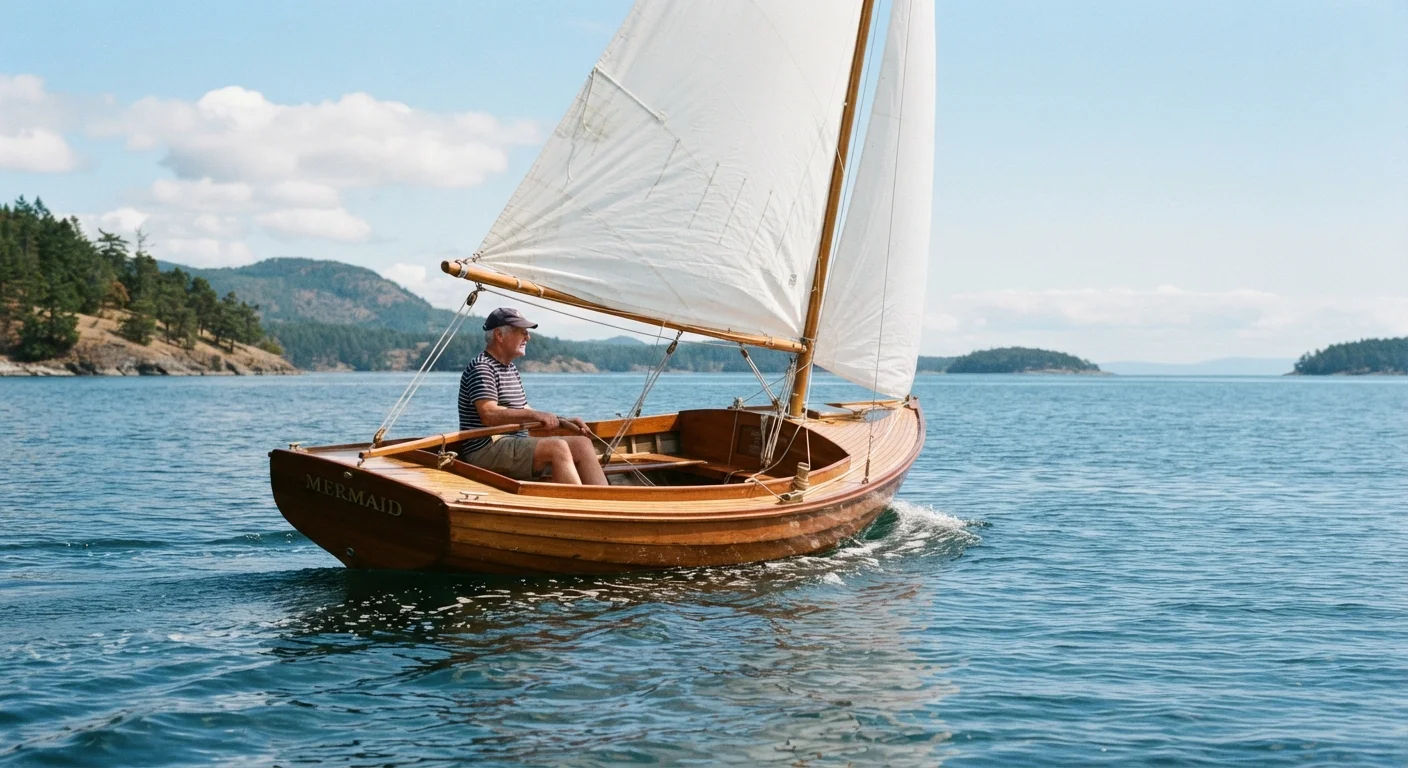
These are purpose-built for wind propulsion, with a centerboard or daggerboard replacing the fixed keel found on larger sailboats. One-design racing classes - where all competing boats must meet identical specifications - are common in this category. Because a sailing dinghy has no ballasted keel to right itself, capsize recovery skill is essential. The world of sailboats guide details how dinghies fit into the broader sailing spectrum.
Inflatable Dinghies and RIBs
Inflatable dinghies - including rigid inflatable boats (RIBs), which combine an inflatable collar with a solid fiberglass or aluminum hull - are the workhorse tenders of offshore cruising. They stow compactly, handle rough conditions well, and accept a wide range of small outboard motors.
Rowing and Utility Dinghies
Traditional wooden or fiberglass rowing dinghies prioritize simplicity. Often used as yacht tenders, they're rowed or fitted with a small motor for short trips to shore. Their design has changed little in over a century.
“The dinghy is the most democratic of boats - it demands skill rather than resources, and rewards understanding of wind and water more than any other vessel type.”
— Gary Jobson, Sailing instructor, author, and Emmy Award-winning sailing broadcaster
Dinghies as Tenders vs. Standalone Craft
One distinction worth drawing clearly: not all dinghies are tenders, and not all tenders are dinghies. A tender is defined by its function - shuttling crew and provisions between a larger vessel and shore. A dinghy is defined by its form. The two categories overlap extensively, which is why the terms are often used interchangeably, but they aren't synonymous.
Standalone dinghies - used for day sailing, racing, fishing, or exploring - exist entirely independent of a mothership. They're launched from a trailer, a beach, or a ramp, and they're the primary craft rather than a supporting one. For readers comparing different hull types and vessel functions, eight distinct boat types worth knowing provides a useful adjacent reference.
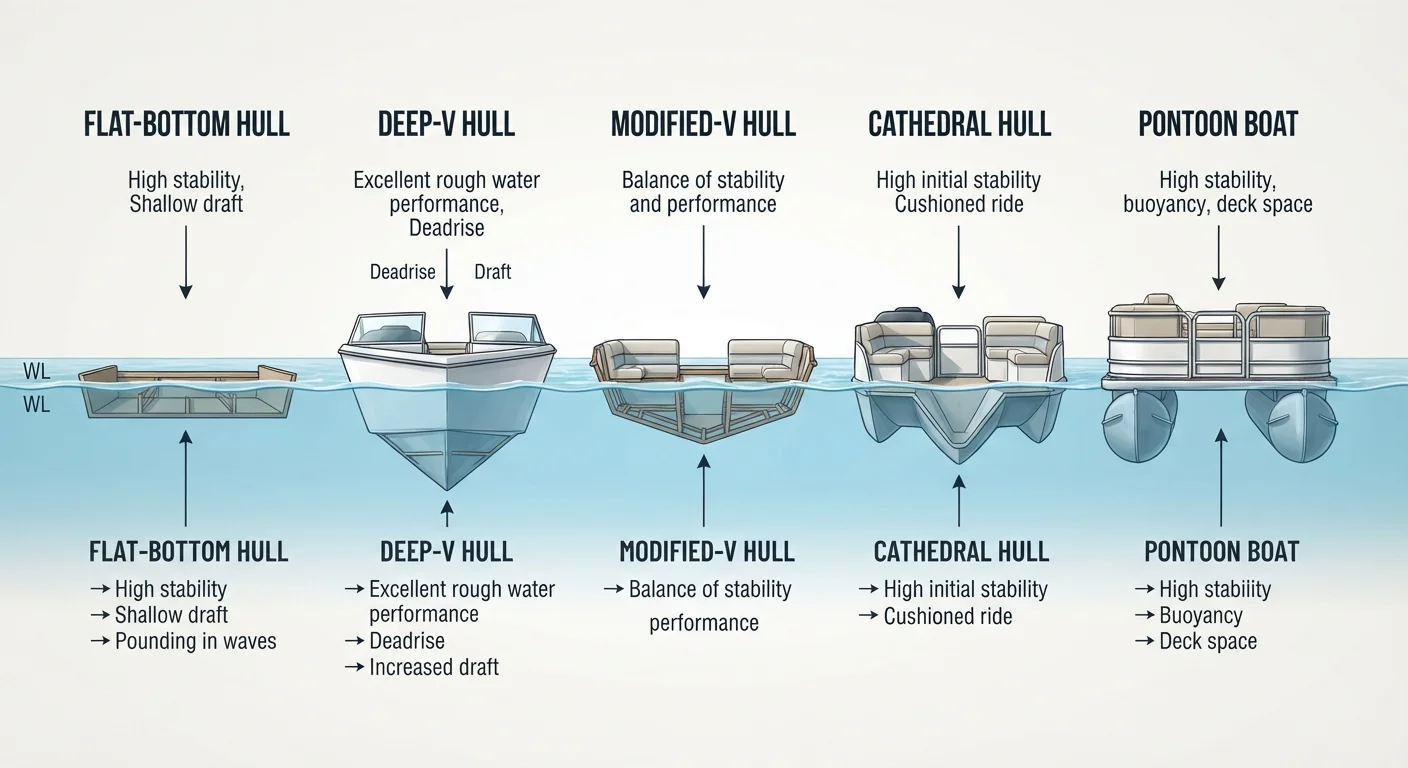
Understanding this distinction shapes how you evaluate a dinghy's specification: a racing dinghy is optimized for speed and responsiveness, while a tender dinghy prioritizes stability, load capacity, and ease of boarding. For foundational knowledge on vessel anatomy - including how hull shape affects all of this - see the anatomy of a boat.
Choosing a Dinghy: Match Form to Function
Before evaluating any dinghy, define its primary job. A craft used exclusively as a yacht tender should be assessed on stability, load capacity, and outboard compatibility - not sailing performance. Conversely, a dinghy bought for racing needs responsive hull geometry and a well-supported one-design class. Conflating the two use cases is one of the most common missteps in small-boat purchasing.