How Each Propulsion System Works
Understanding the mechanical distinctions between these three systems is the foundation for any meaningful comparison. For a broader look at how propulsion shapes overall vessel design, see how propulsion systems shape the boats built around them.
Outboard Motors
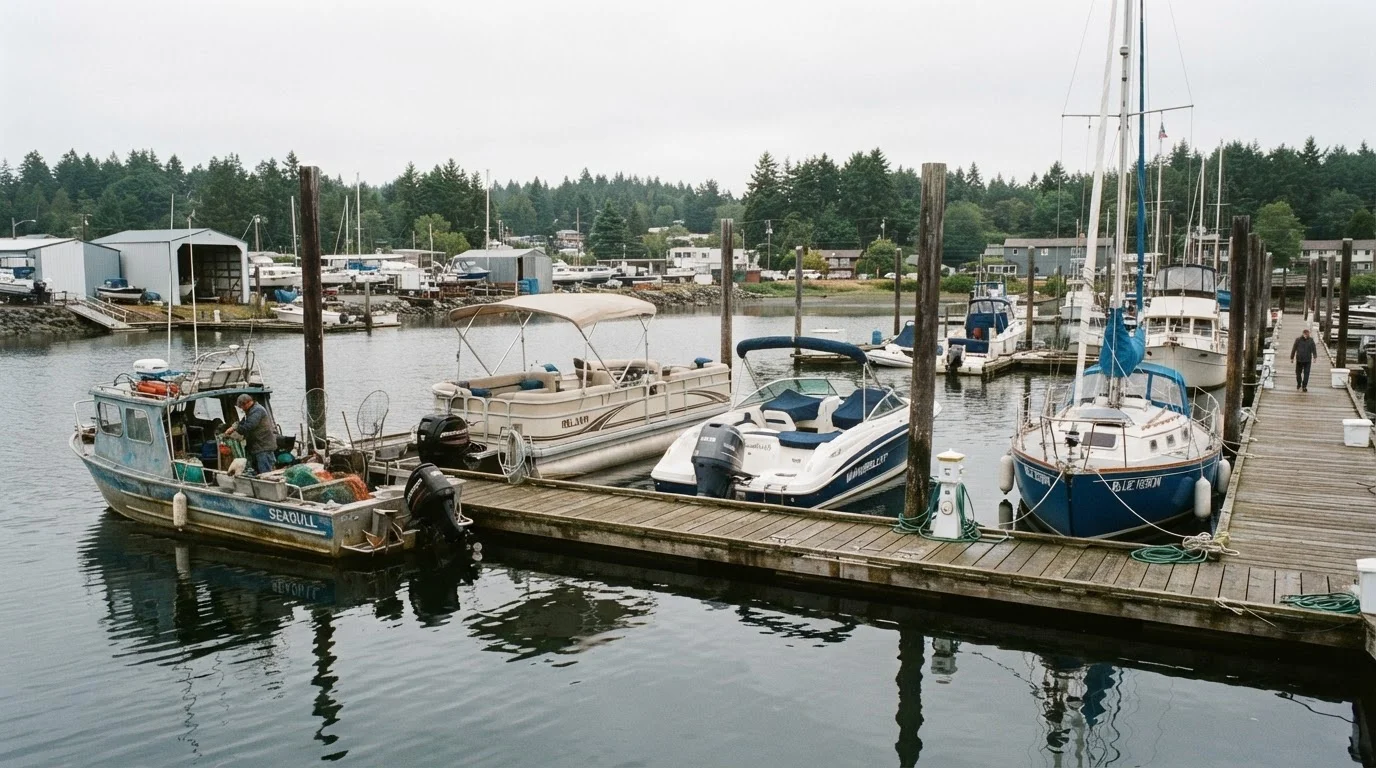
An outboard is a self-contained unit - engine, gearcase, and propeller - mounted externally on the transom. The entire unit pivots for steering and tilts clear of the water when not in use. Outboards run on gasoline or, increasingly, electric power, and are available in a wide range from under 10 horsepower to over 600 hp in high-output V8 configurations.
Inboard Engines
Inboard powerplants are mounted within the hull, typically amidships or toward the stern, and drive a fixed propeller shaft that exits through the bottom of the hull. Steering is handled by a separate rudder. This arrangement keeps mechanical components entirely inside the boat, which protects them from direct water exposure and lowers the vessel's center of gravity.
Sterndrive (Inboard/Outboard)
A sterndrive - also called an I/O - mounts the engine inside the hull like an inboard but uses an external drive unit (the "outdrive") that pivots for steering and trims for performance. The drive leg and propeller extend through the transom, combining characteristics of both systems. Understanding the anatomy of a boat helps clarify where these components sit relative to the overall hull.
Performance and Handling Characteristics
Each system produces a different on-water experience, influenced by weight distribution, thrust angle, and how steering forces are applied.
| Outboard | Inboard | Sterndrive | |
|---|---|---|---|
| Engine Location | External, transom-mounted | Inside hull, amidships or aft | Inside hull, drive leg external |
| Steering Method | Motor pivots on transom | Separate rudder | Outdrive unit pivots |
| Maintenance Access | Easiest - fully external | Varies by hull design | Moderate - two service areas |
| Typical Use Cases | Fishing, cruising, pontoons | Wakeboarding, ski boats | Bowriders, sport cruisers |
| Hull Space Impact | Minimal interior impact | Occupies interior volume | Minimal interior impact |
| Trim Adjustment | Yes - via tilt/trim | No - fixed shaft angle | Yes - via drive trim |
| Winterization Complexity | Low | Moderate | High - two systems |
Inboard engines, positioned low in the hull, improve stability and allow hull designers to optimize running surfaces without accommodating a transom-mounted unit. This makes inboards the preferred choice for competitive wakeboarding and water skiing, where precise wake shape and low-interference stern design are critical.
Outboards deliver excellent performance across a wide range of hull types. Modern four-stroke and direct-injection two-stroke outboards have largely closed the efficiency gap with inboards on planing hulls. Trim adjustment - raising or lowering the motor's angle - allows real-time tuning of bow lift and top-end speed.
Sterndrive systems offer strong mid-range performance and benefit from the ability to trim the outdrive independently of the hull. However, the drive leg introduces drag compared to a clean inboard shaft arrangement, and the added mechanical complexity can affect long-term reliability if maintenance schedules slip.
Maintenance Access and Ownership Considerations
Serviceability is a practical concern that affects both cost and convenience over the life of a vessel.
Inspect Sterndrive Bellows Before Buying
On any pre-owned sterndrive vessel, a thorough bellows inspection should be a non-negotiable part of the survey process. Cracked or deteriorated bellows can allow water to enter the bilge, potentially causing serious damage. Have a qualified marine technician assess the bellows, gimbal bearing, and U-joints before completing any purchase.
Outboard: The engine is entirely external and accessible without opening hatches or working around hull structure. Most outboard service - including impeller replacement, gear oil changes, and spark plugs - can be performed dockside or in a garage. Engine swaps or horsepower upgrades are straightforward, provided the transom rating accommodates the new unit.
Inboard: Access to inboard components varies widely by hull design. Some cruiser-style boats provide excellent engine room clearance; others require contortion to reach basic service points. Winterization involves draining internal water passages, and shaft seal (stuffing box or dripless seal) maintenance is an added recurring task. Haul-outs for running gear inspection are typically required annually.
Sterndrive: The outdrive unit requires its own maintenance cycle - bellows inspection and replacement, gimbal bearing checks, and gear oil changes in the drive housing - in addition to standard engine service. Bellows failure is a known failure mode that can result in water intrusion into the hull if not caught early, making inspection intervals non-negotiable.
For buyers weighing a single powerplant against multiple engines, single vs. twin engine trade-offs add another dimension to total ownership cost analysis.
Typical Use Cases and Vessel Types
Propulsion choice is rarely independent of vessel category. Certain hull types and intended activities strongly favor one system over another.
~75%
US outboard engine market share
Outboard motors account for the majority of recreational powerboat engine sales in the United States, according to the National Marine Manufacturers Association.
18-28 ft
Most common sterndrive vessel range
Sterndrive configurations are most prevalent in mid-size recreational boats in this length range, where hull volume justifies an inboard engine without the complexity of a full inboard running-gear setup.
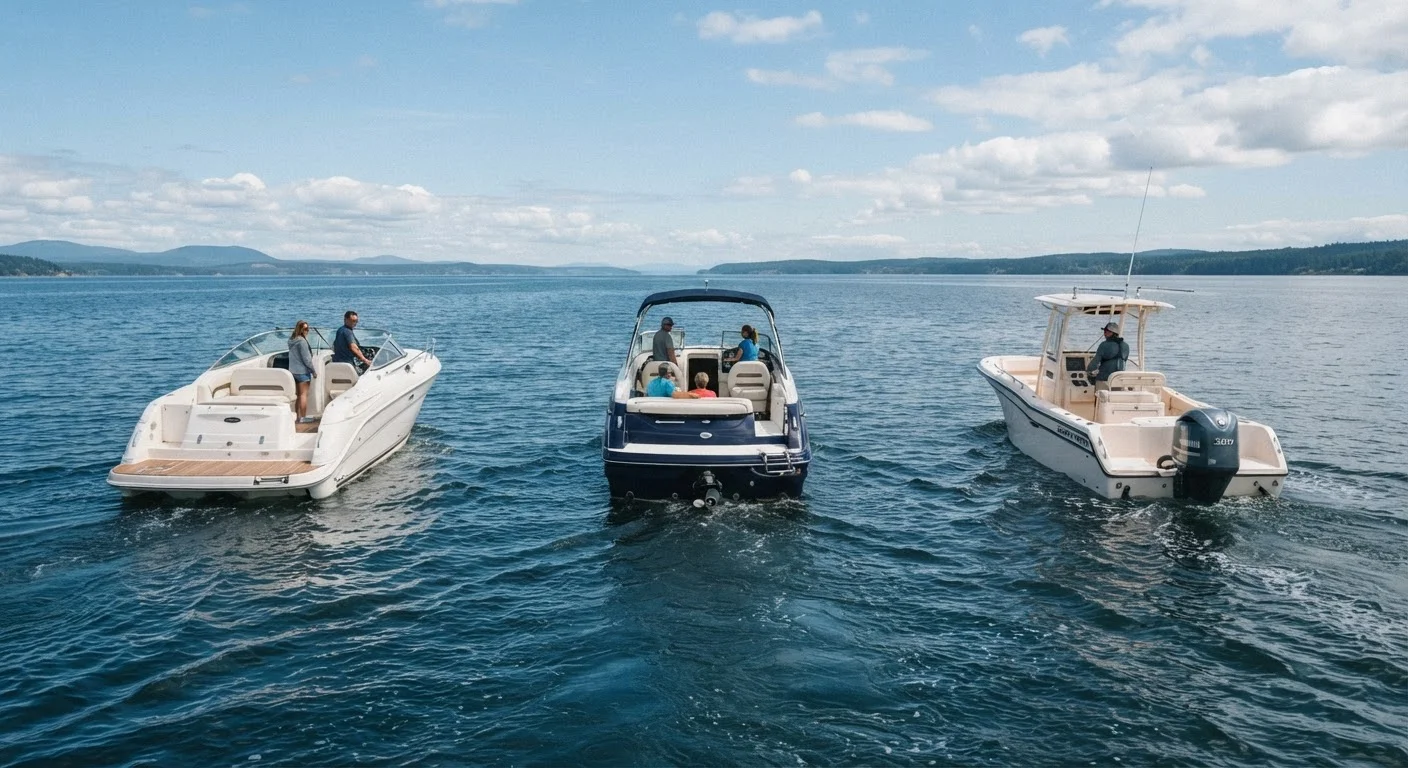
- Outboard: Bass boats, center consoles, jon boats, pontoons, bay boats, and smaller runabouts. The outboard's versatility has made it the dominant system in the recreational powerboat segment by unit volume.
- Inboard: Ski boats, wakeboard boats, and some larger express cruisers. Direct-drive and V-drive inboard layouts are the standard in dedicated towboat applications.
- Sterndrive: Bowriders, sport cruisers, and larger cuddy cabin boats where an inboard engine is desired but outboard-style steering authority is valued. The system is common in the 18-28 foot recreational segment.
For a comprehensive look at how propulsion fits within the broader set of features that define a modern vessel, the complete watercraft features guide covers hull type, electronics, safety systems, and more in one reference.