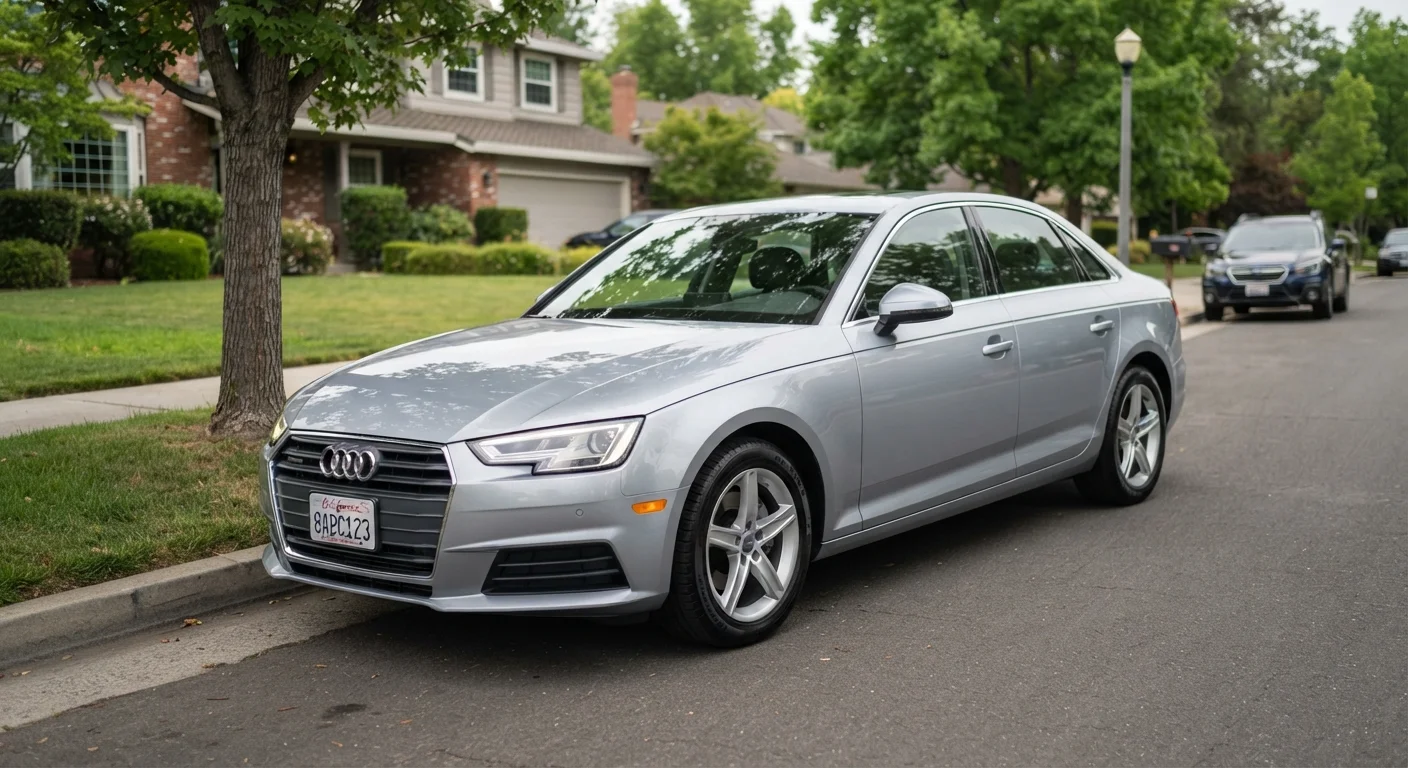

Why Roofline Shape Actually Matters
When most people shop for a sedan, they focus on powertrain, fuel economy, and interior tech. The roofline rarely tops the list - yet it shapes nearly everything about how the car looks, how passengers fit, and how much cargo you can carry. The terms notchback, fastback, and hardtop describe three fundamentally different approaches to the sedan silhouette, each with real trade-offs worth understanding before you sign anything.
These distinctions matter beyond aesthetics. Roofline geometry affects rear headroom, trunk access, aerodynamic drag, and - in the case of hardtops - structural rigidity and weather sealing. If you've ever wondered why two sedans with the same wheelbase feel dramatically different inside, the answer often starts at the roofline.
For a broader look at how body style affects the sedan-versus-coupe decision, see what sets sedans and coupes apart.
| Notchback defining trait | Three-box profile with a sharp step (notch) between roofline and trunk |
| Fastback defining trait | Continuous sloping roofline from cabin to rear bumper |
| Hardtop defining trait | Pillar-free or frameless-glass design mimicking a convertible's open look |
| Best for rear headroom | Notchback - upright rear glass preserves vertical cabin space |
| Best aerodynamic profile | Fastback - raked roofline reduces aerodynamic drag (Cd) |
| Rarest in modern production | True pillarless hardtop - side-impact safety standards limit B-pillar deletion |
Notchback: The Classic Three-Box Profile
The notchback is what most people picture when they think "sedan." The body is divided into three visually distinct boxes: the engine compartment, the passenger cabin, and the trunk. A sharp, near-vertical drop from the rear roofline to the trunk lid creates the characteristic "notch" at the C-pillar.
This geometry has practical advantages. The upright rear glass maximizes rear headroom, making notchbacks a strong choice for taller passengers. The trunk is also clearly separated from the cabin, which means a more structured cargo area - though it limits the maximum load height compared to a hatchback. Aerodynamically, notchbacks are a mixed bag: the blunt rear can increase drag, though modern engineering has largely managed this through subtle body sculpting.
Most traditional family sedans follow this template. If rear-seat comfort and a clean, conventional look are priorities, the notchback delivers both reliably. See how interior dimensions play out in practice in our guide to reading a sedan's interior dimensions.
Fastback: Aerodynamics and Attitude
A fastback replaces the notch with a continuous, steeply raked slope from the roofline all the way to the rear bumper. The result is a sleek, coupe-like silhouette on a four-door platform - a profile associated with sportier, more driver-focused vehicles.
The aerodynamic benefit is measurable. A flowing roofline reduces the coefficient of drag (Cd), which contributes to higher top speeds and, in some configurations, improved highway fuel efficiency. That's one reason fastback styling has become common on performance-oriented sedans. Performance sedans frequently adopt fastback profiles to signal - and deliver - a sportier character.
The trade-off is rear headroom. The raked roofline eats into the available vertical space above rear passengers, which can be a genuine constraint for taller riders. Trunk access may also differ: some fastbacks use a traditional trunk lid, while others incorporate a liftback-style hatch that opens the entire rear aperture, significantly improving cargo flexibility.
Notchback
A sedan body style with three visually distinct sections - engine bay, cabin, and trunk - separated by a sharp drop at the rear roofline. It is the most traditional sedan silhouette.
Fastback
A body style featuring a continuous, steeply raked slope from the roofline to the rear of the vehicle. It improves aerodynamics and gives the car a sportier appearance, sometimes at the cost of rear headroom.
Hardtop
Historically, a closed body style without a B-pillar, giving an open, convertible-like appearance. Modern use sometimes refers to frameless side glass even when structural pillars are present.
B-Pillar
The vertical structural post located between the front and rear side windows. It is critical for side-impact crash protection and roof integrity in modern vehicles.
Coefficient of Drag (Cd)
A dimensionless number measuring aerodynamic resistance. Lower Cd values indicate a more aerodynamically efficient vehicle shape, which can influence top speed and highway fuel consumption.
Liftback
A variant of the fastback where the entire rear section - including the rear glass - opens as a hatch, combining the sleek roofline of a fastback with the cargo access of a hatchback.
Hardtop: A Historical Term With Modern Relevance
The hardtop sedan is the least common of the three today, but understanding it clarifies a lot of automotive history. Originally, the term described a closed body style that mimicked the open, pillar-free look of a convertible - specifically, the absence of a B-pillar (the vertical post between the front and rear side windows).
Classic hardtop sedans from the 1950s through 1970s featured frameless side windows and a continuous glass greenhouse that gave an airy, open feel. The absence of a B-pillar was considered a style and convenience feature - doors felt more open, and sight lines improved dramatically.
Modern automakers have revived the term loosely to describe frameless door glass designs, even when structural pillars are present but hidden. True pillarless hardtops are rare in current production due to modern side-impact safety requirements, which typically demand robust B-pillar structures. When you encounter "hardtop" in a contemporary spec sheet, verify whether it refers to genuine pillar deletion or simply frameless glass styling.
Modern Hardtops and Safety Standards
True B-pillar-free hardtop sedans became largely impractical after modern side-impact and roof-crush safety standards were introduced. Today's federal safety regulations in the US - including FMVSS 216 for roof strength - effectively require robust pillar structures. When a manufacturer uses the term 'hardtop' in current marketing, it most often refers to frameless door glass design rather than genuine pillar elimination. Always check the structural details in the vehicle's safety documentation if this distinction matters to you.
Understanding how roofline interacts with cabin size is part of a larger framework. A full sedan buyer's framework covers every dimension worth examining before you decide.