Why Interior Dimensions Are Harder to Read Than They Look
A sedan's spec sheet lists interior dimensions as objective numbers - 38.1 inches of rear legroom, 14.8 cubic feet of trunk space - but those figures are more conditional than they first appear. Every measurement follows the SAE J1100 standard, which defines exactly where and how the measurement is taken. That consistency is useful for comparing models, but it can obscure how a cabin actually feels once you're seated inside it.
Legroom, headroom, and shoulder room are each measured at a standardized H-point - the theoretical hip pivot point of a 50th-percentile adult male. Taller or shorter occupants will experience different results. Trunk volume is calculated by filling the cargo area with small balls to a specific load line, which doesn't account for the shape of the opening, the presence of a spare tire well, or awkward floor contours that make loading bulky items difficult.
The first step toward reading these numbers usefully is understanding what they actually measure - and where their limits are. For a broader look at how spec sheets work overall, see how to read a sedan spec sheet without getting lost in the numbers.
Use Manufacturer Media Sites for Accuracy
Interior dimension figures on third-party listing sites are sometimes rounded or copied from older model years. For the most reliable data, check the manufacturer's official newsroom or media site, where spec sheets are published alongside the press release for each model year. This is especially important when comparing a carryover model against a freshly redesigned competitor.
How to Interpret Each Key Measurement
Once you know the method behind the numbers, you can apply each figure more confidently to your own situation.
Locate the front and rear measurements separately
Spec sheets list headroom, legroom, and shoulder room for both the front and rear rows independently. Never assume front figures apply to the back seat. Rear legroom in particular varies significantly across sedan classes - a compact may offer 33-35 inches while a full-size can approach 40 inches or more.
Understand legroom as a minimum, not an average
Legroom is measured from the accelerator heel point (front) or from the back of the front seat cushion to the rear seat back (rear) at the H-point height. This is the maximum available distance at that single point. A reclined front seat or a sunroof motor housing intruding on headroom can reduce the practical figure below what's published.
Evaluate trunk volume with shape in mind
The SAE cubic-foot trunk figure is measured to a standardized load floor height. Compare that number across competing models, but then look at trunk opening width and height separately. A sedan with 15.5 cubic feet but a narrow trunk lip will be harder to load than one with 14.8 cubic feet and a wide, low opening.
Compare numbers across at least three competing models
A single number in isolation is nearly meaningless. Build a simple comparison table listing front legroom, rear legroom, front headroom, rear headroom, and trunk volume for each model you're considering. Patterns in the data - where one model consistently outperforms or underperforms - are far more informative than any single figure.
Validate with a physical seat test
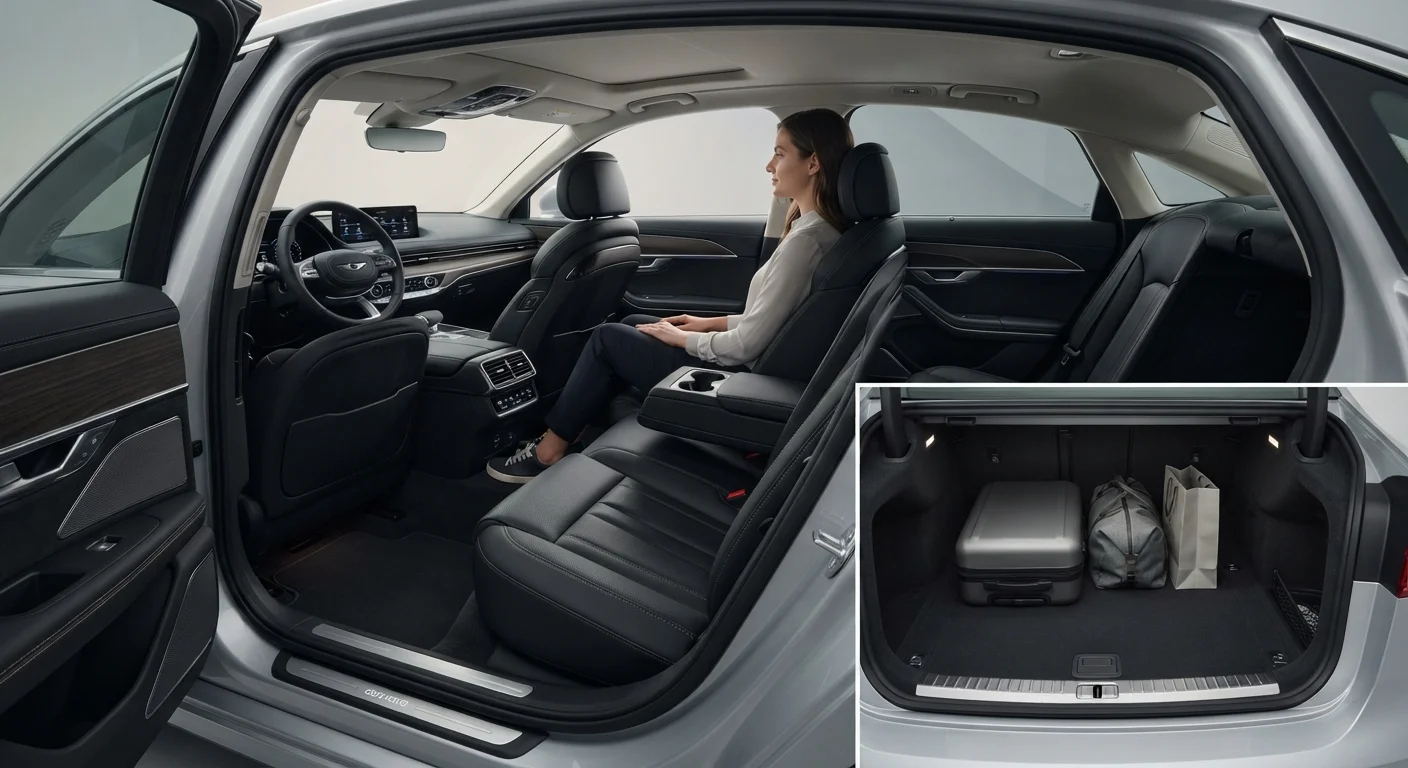
Sit in the rear seat with the front seat adjusted to your own driving position - not a neutral factory position. Check headroom with your normal seated posture, not by craning forward. Open and close the trunk lid with a moderately heavy bag to judge the opening height and lip clearance. Spec sheets cannot replicate this experience.
After working through these steps, cross-referencing dimensions against sedan size classes will sharpen your comparison. Our guide to compact, mid-size, and full-size sedans explains how interior space scales across the segments.
Trim Level Can Change Interior Dimensions
Adding an optional panoramic moonroof or a thicker headliner package on a higher trim can reduce published headroom by a meaningful margin. Always confirm that the dimensions listed apply to the specific trim and option package you intend to purchase, not just the base model used in most published specs.
Applying Dimensions to Your Real-World Needs
Raw numbers become meaningful once you map them to how you actually use a vehicle. If you regularly carry rear passengers, prioritize rear legroom and rear headroom rather than front figures, which are almost universally generous in modern sedans. Families with child safety seats should pay close attention to rear shoulder room, since wider seats affect how many seats can be used simultaneously.
For cargo-focused buyers, trunk volume alone is insufficient. Look for published trunk opening dimensions and load floor height - both affect how easily you can load and unload groceries, luggage, or sports equipment. Fastback and notchback rooflines also influence trunk access shape; sedan body style differences are worth understanding before settling on a configuration.
If you're debating between a sedan and an SUV primarily on cargo and passenger space grounds, keep in mind that the comparison is less straightforward than raw volume suggests. A detailed look at sedan vs. SUV trade-offs helps frame that decision more accurately. Interior dimensions are one input in a larger framework - for the complete picture, the full sedan buyer's framework covers every dimension worth examining.
No Spec Sheet Replaces a Physical Fit Test
Interior dimensions are standardized approximations, not guarantees of comfort for any specific occupant. Body proportions, torso length, and shoulder width all affect how a given set of numbers translates to real comfort. Before committing to a purchase, seat every regular occupant - including rear passengers - in the actual vehicle with the seat adjusted to your real driving position.