A History Hidden in Plain Sight
Car culture in America is often told as a singular story - one dominated by male drivers, male engineers, and male collectors. That version of history is both incomplete and, frankly, less interesting than the full picture. Women have been present at nearly every stage of automotive development: behind the wheel, under the hood, on the factory floor, and at the design table.
Recognizing these contributions isn't a revision of history - it's a restoration of it. Just as landmark vehicles reshaped how engineers and drivers thought about cars, the women who drove, built, and championed those cars deserve an equal place in the record. Here are some of the most significant - and overlooked - chapters in that story.
The Pioneering Racers of the Early 20th Century
Long before sanctioned racing series had formal gender restrictions codified in rule books, women were competing - and winning. Drivers such as Dorothy Levitt in Britain and Joan Newton Cuneo in the United States were setting speed and endurance records in the early 1900s. Cuneo competed in reliability runs and hill climbs until the American Automobile Association barred women from competition in 1909, a ban that reflected social pressure rather than any deficit in ability.
These early racers didn't simply participate - they challenged the assumption that automobiles were a male domain at a moment when cars themselves were still a novelty.
Women were setting speed records before organized racing bodies even thought to ban them.
Wartime Factory Workers Who Kept Production Rolling
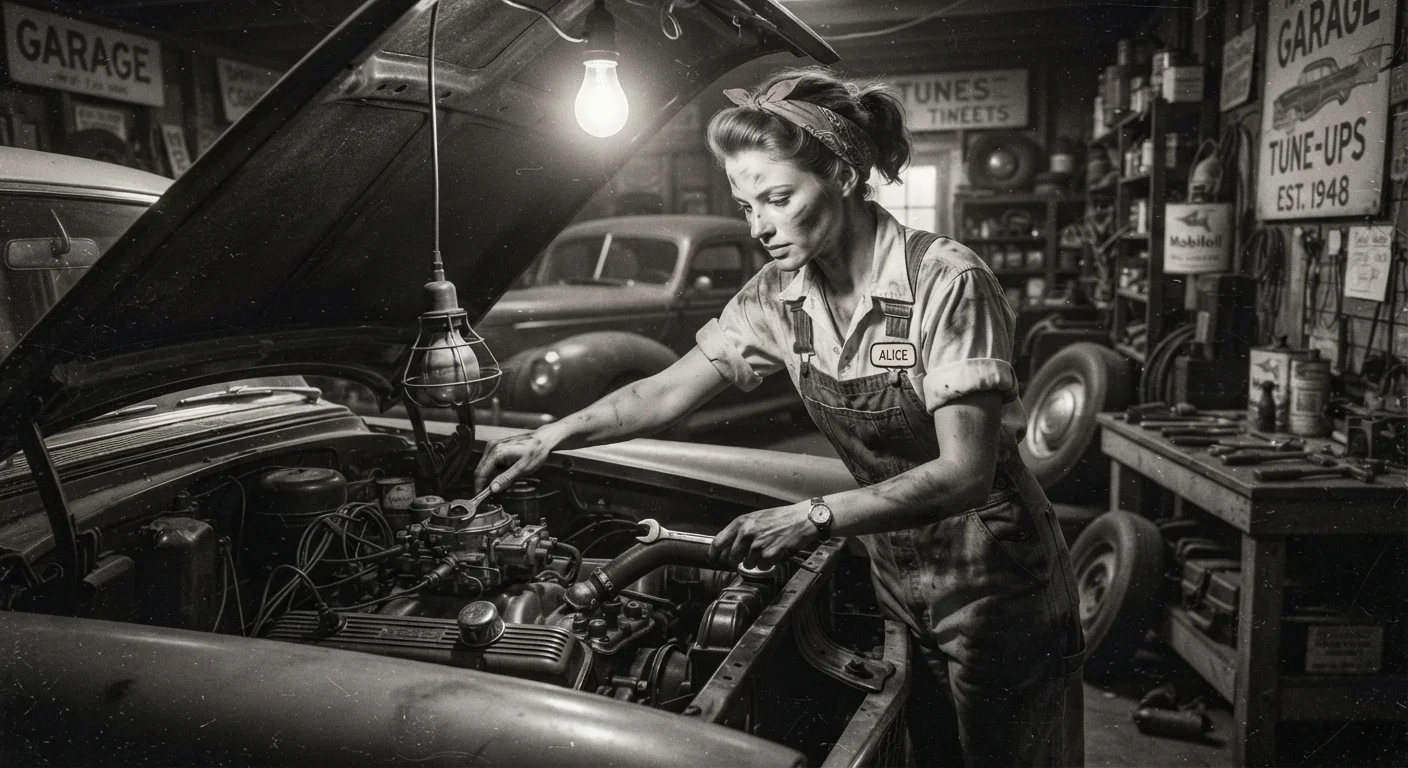
During World War II, women entered automotive manufacturing plants in enormous numbers as male workers entered military service. At facilities operated by Ford, GM, Chrysler, and others - many of which had converted to war materiel production - women machined parts, assembled engines, and operated equipment previously considered exclusively male work.
This wasn't just a wartime anomaly. It demonstrated, at industrial scale, that women could operate and maintain complex mechanical systems. The skills developed in those factories didn't disappear when the war ended, even if the jobs often did.
Women machined engines and assembled vehicles at industrial scale - a fact the postwar narrative quickly minimized.
Female Designers Who Shaped Iconic Interiors
Automotive design studios were male-dominated spaces for most of the 20th century, but women did gain footholds - and their contributions were significant. General Motors' Styling Section included women designers as early as the late 1950s, brought in partly under Harley Earl's direction, who recognized that women represented a major portion of household purchasing decisions.
Designers working in that era influenced color palettes, upholstery choices, and interior ergonomics on vehicles that are now considered classics. Their work is embedded in cars that enthusiasts restore and show today, often without knowing it. For more on how design evolved across decades, the decades that defined classic car design offer essential context.
Women designers at GM shaped the interiors of vehicles that collectors now prize - their credit rarely followed the cars.
Shirley Muldowney and the Drag Racing Breakthrough
Few figures in motorsport have faced - and overcome - institutional resistance as publicly as Shirley Muldowney. She became the first woman licensed by the National Hot Rod Association (NHRA) to drive a Top Fuel dragster, and she went on to win the NHRA Top Fuel championship three times (1977, 1980, and 1982). Her career wasn't a footnote; it was a defining chapter in drag racing's history.
Muldowney's achievements are well-documented and undisputed. What's less often acknowledged is how much resistance she encountered along the way, and how her persistence changed what the sport would accept as possible.
Three Top Fuel championships made Muldowney impossible to dismiss - and changed what drag racing could not ignore.
Women-Led Build and Restoration Communities Today
Contemporary car culture includes a growing ecosystem of women-led build clubs, restoration shops, and automotive education programs. Organizations and informal networks have emerged specifically to support women learning mechanical skills - from basic maintenance to full frame-off restorations - in environments that prioritize teaching over gatekeeping.
Social media has accelerated this visibility. Female builders, fabricators, and restorers now document their work to audiences in the millions, normalizing the image of a woman doing serious mechanical work. This isn't a trend - it's a correction, bringing today's culture closer to a reality that always existed but was rarely amplified.
Women-led restoration communities aren't new - they're finally visible, and car culture is stronger for it.
Racing Series and Engineering Roles in the Modern Era
In recent decades, women have held engineering roles at Formula 1 teams, led aerodynamics programs, and competed across multiple racing disciplines globally. In the United States, series including IndyCar and NASCAR have seen female competitors reach elite levels, while engineering programs have produced graduates who now work across OEM and motorsport organizations.
These aren't isolated breakthroughs - they reflect a pipeline that has been building for decades, shaped in part by the pioneers who came before. The muscle car era, explored in depth in the rise of the muscle car, unfolded largely in parallel with these quieter advances in who was allowed to participate in automotive culture at all.
Modern female engineers and competitors stand on decades of accumulated groundwork - most of it underpublicized.
Why This History Matters Now
Car culture is living tradition. From the Chicano heritage embedded in lowrider artistry to the community forged on drag strips across the country, automotive enthusiasm has always been broader and more diverse than the dominant narrative suggests. Recovering women's roles in that history doesn't diminish anyone's experience - it expands what car culture can mean.
For enthusiasts exploring the classic car world for the first time, understanding this fuller history provides richer context for every era and every machine. The cars don't change. The stories around them just become more complete.
Dig Deeper Into Automotive History
If this history surprises you, that's worth sitting with. Primary sources - racing records, factory employment data, design studio archives - often tell a different story than popular automotive histories. Seeking out accounts written by or about women in the industry adds dimension to any enthusiast's understanding of the cars and culture they love.