How Each Cushion Design Works
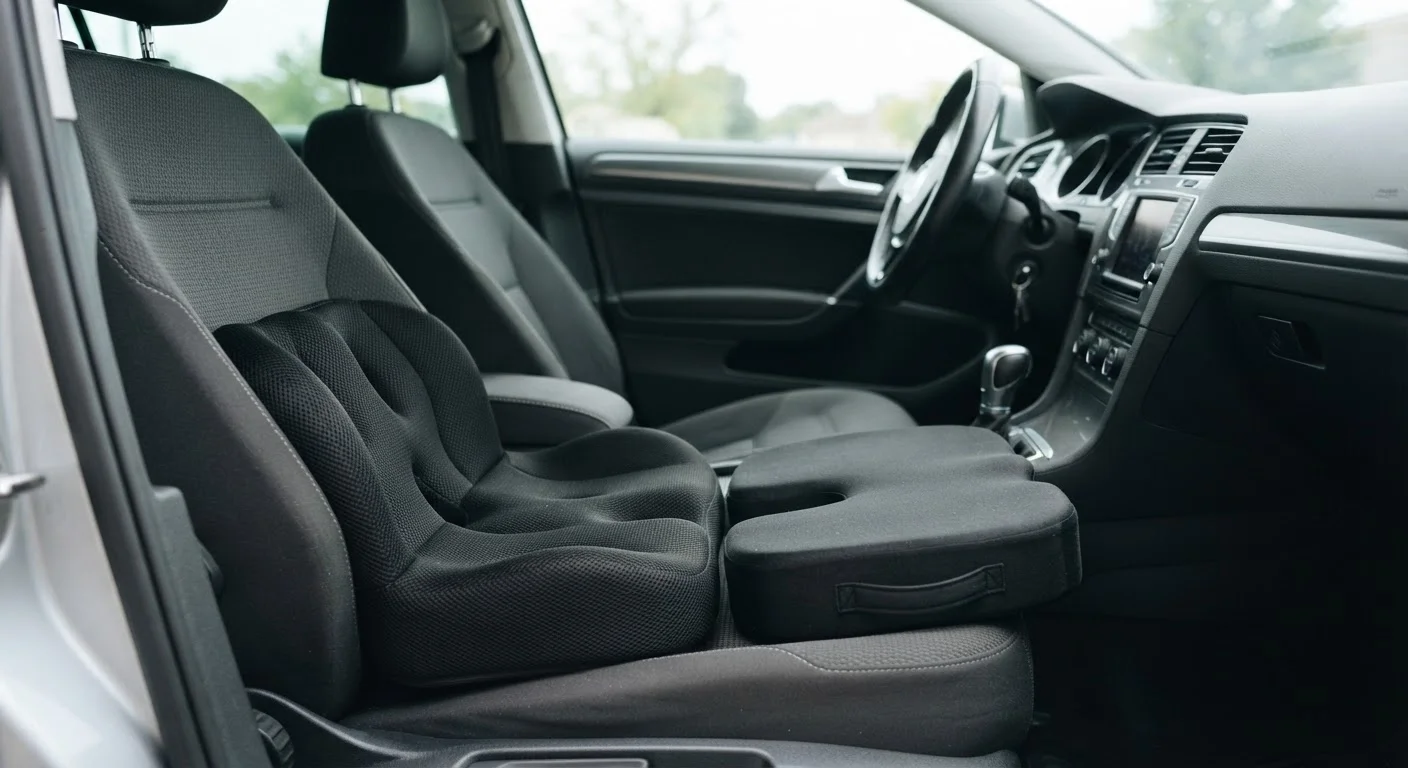
Memory foam cushions use viscoelastic material that softens in response to body heat and weight, conforming to the unique contours of each driver's sit bones and thighs. This distributes load across a wider surface area, reducing concentrated pressure at any single point. The result is a cushion that feels personalized over time - though that same heat-responsiveness can cause warmth buildup on longer trips.
Coccyx cutout cushions take a fundamentally different engineering approach. Rather than conforming to the tailbone, they remove contact with it entirely. A U-shaped or V-shaped cutout at the rear of the cushion allows the coccyx to sit suspended in open space. The surrounding foam - typically a medium-to-firm density - supports the sit bones and thighs while keeping the most pain-sensitive bony prominence completely unloaded.
Understanding this mechanical difference is essential before choosing. Memory foam addresses how pressure is distributed; coccyx designs address where pressure is eliminated. For general comfort, these are complementary goals. For tailbone-specific pain, they are not interchangeable.
| Criterion | Memory Foam | Coccyx Cutout |
|---|---|---|
| Primary mechanism | Full-surface contouring | Tailbone pressure elimination |
| Best for | General fatigue and even load distribution | Coccyx or tailbone-specific pain |
| Heat retention | Higher - foam absorbs body heat | Lower - denser foam, often ventilated |
| Foam density typical range | 2-5 lb/ft³ viscoelastic | 3-5 lb/ft³ polyurethane or HR foam |
| Orientation sensitivity | Works in most orientations | Must align cutout with coccyx precisely |
| Durability under daily use | Moderate - compression set over time | Generally higher - no heat cycling |
| Seat height added | Moderate (2-4 inches typical) | Moderate to low (1.5-3 inches typical) |
Matching Cushion Type to Your Seating Situation
Drivers without a specific injury but dealing with general fatigue on commutes or road trips tend to benefit most from memory foam. The gradual contouring effect reduces the numbness and aching that builds in the hamstrings and sit bones after extended periods behind the wheel. If you're refining your overall driving setup, pairing a memory foam cushion with proper seat adjustment is worth exploring - see our guide to ergonomics inside the car for context on how seat position interacts with cushion use.
Coccyx cushions are more targeted. They're commonly used by people recovering from tailbone bruising, those with chronic coccydynia, or anyone who notices that pain appears specifically at the base of the spine after sitting. The cutout design works only if the cushion is positioned correctly - the gap must align with the actual coccyx, not the lumbar curve or mid-sacrum. Most designs include a non-slip base to help maintain placement during a drive.
Trip length also matters. On short urban trips, the heat-retention drawback of memory foam is negligible. On multi-hour highway runs, that factor grows. Drivers covering significant mileage regularly - particularly in vans or vehicles with elevated seating - may find a coccyx cushion's firmer, cooler foam more comfortable overall. For van and high-roofline operators, our comfort accessories guide for vans and tall vehicles covers how seat height interacts with cushion choice.
Persistent Pain Warrants Professional Evaluation
If tailbone or lower back discomfort while driving is persistent or worsening, a cushion is not a substitute for medical evaluation. Coccydynia and related sacral conditions have a range of underlying causes, and a healthcare provider can help determine whether a specific cushion design is appropriate for your situation. Use cushions as a comfort aid, not a diagnostic or treatment tool.
For a broader look at how these foam-based options compare to gel and inflatable alternatives, the seat cushions comparison for drivers covers the full category in detail.
Durability, Fit, and Practical Considerations
Memory foam degrades over time, particularly lower-density formulations. With heavy daily use, compression set - the foam's inability to fully recover its original shape - can develop within one to two years. Higher-density memory foam resists this longer but also costs more. Look for cushions with removable, washable covers, since foam itself cannot be laundered.
Coccyx cushions using traditional polyurethane or high-resilience foam often outlast equivalent memory foam designs under the same conditions, since they don't rely on heat-activated softening. However, the cutout geometry means the cushion only functions correctly in one orientation. If it shifts or gets flipped during loading and unloading, the relief benefit is lost entirely until repositioned.
Both types should be assessed for their impact on seated height. Adding even 2-3 inches of cushion raises the driver relative to the steering wheel and sightlines - a concern for shorter drivers who may already be near the top of their seat adjustment range. Check that adding a cushion doesn't compromise seatbelt routing or bring your head uncomfortably close to the headliner. For cushion-related considerations that extend to passenger comfort beyond the driver's seat, the neck pillows and headrest cushions guide addresses complementary accessories for long-haul setups.
~70%
Drivers reporting seat discomfort on trips over 2 hours
Industry comfort surveys consistently indicate the majority of drivers experience some form of seat-related discomfort on extended trips, underlining the demand for aftermarket cushioning.
2-4 in
Typical seat height increase from aftermarket cushions
Most seat cushions raise the occupant between two and four inches, which can affect sightlines, headroom, and seatbelt geometry depending on the vehicle and driver height.