
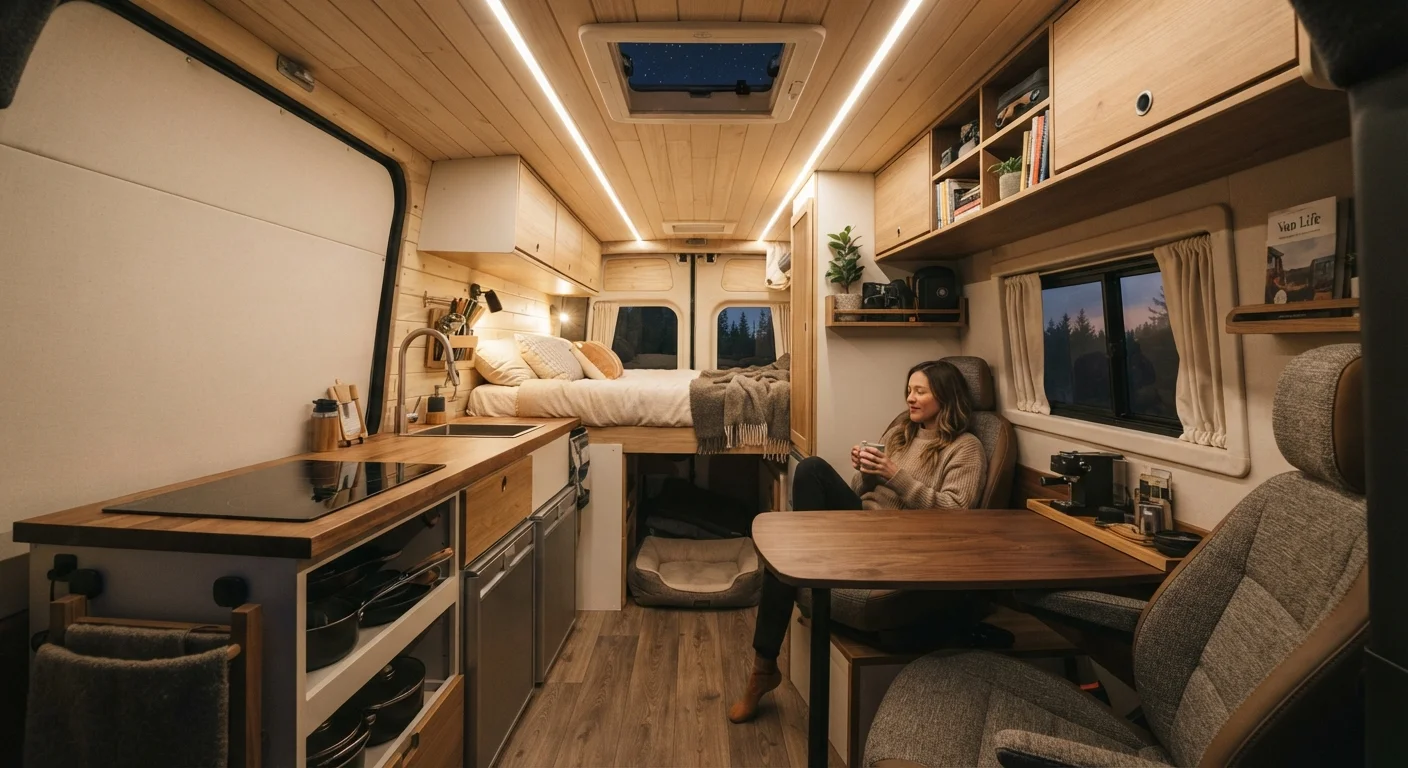
Why Vans and Tall-Bodied Vehicles Demand a Different Approach
Comfort accessories engineered for passenger cars rarely translate cleanly into vans, full-size SUVs, and high-roofline vehicles. The interior geometry is fundamentally different - taller headroom, wider cabins, larger glass surfaces, and in many cases, rear seating configurations that are completely unlike what a sedan or hatchback owner would encounter. Understanding these structural differences is the first step to spending accessory budget wisely.
The challenges cluster around three areas: thermal management, seating ergonomics, and ambient comfort (light, noise, and air quality). Solving any one of these in a van takes more hardware than the same task in a compact car, simply because of scale. That doesn't mean the problem is harder - it means the solution looks different.
For readers who are also optimizing a standard passenger vehicle, setting up a car interior for all-day comfort covers positioning and accessory placement strategies that contrast usefully with van-specific approaches. And if you're considering how accessories interact - or whether adding more gear is always better - see our piece on when accessories help and when they create new problems.
| Typical High-Roof Van Headroom | 72-76 inches (6-6.3 ft) (General industry specification range) |
| Standard-Roof Van Headroom | 52-56 inches (4.3-4.7 ft) (General industry specification range) |
| Most-Upgraded Comfort Category | Seating and sleeping surfaces (Common van build community priority) |
| Climate Accessories | Roof vents, diesel heaters, window insulation (Standard van conversion priorities) |
| Lighting Upgrade Impact | Significant; larger interior volume amplifies poor lighting (Noted by van conversion specialists) |
| Swivel Seat Compatibility | Varies by vehicle platform; verify before purchasing (Manufacturer fitment guidance) |
Climate Control: The Non-Negotiable Starting Point
Thermal comfort in a van is not a luxury consideration - it's foundational. The large metal roof and sidewalls of a full-size van create significant heat gain in summer and rapid heat loss in winter. Standard car window shades and single-layer curtains are inadequate at this scale.
~74 in
Typical high-roof interior standing height
High-roof cargo van variants commonly offer approximately 74 inches of interior headroom, enabling full standing access throughout the cabin.
3x
Greater roof surface area vs. sedans
Full-size vans and tall-bodied vehicles expose significantly more metal roofing to sun and ambient temperature, making thermal management accessories disproportionately important.
Effective thermal accessories for vans include multi-layer window insulation panels custom-cut to each window, reflective roof vent covers, and floor-to-ceiling thermal barrier curtains that divide the cab from the cargo area. Roof vent fans - purpose-built units that mount through a roof cutout - are among the highest-impact single additions available, actively exchanging the air volume of a van in minutes rather than relying on passive ventilation.
For cold-weather use, diesel parking heaters have become standard equipment in van conversions. These self-contained units burn a small amount of fuel to heat the cabin without idling the engine, making them practical for stationary overnight use. Installation should be carried out by a qualified technician, as improper venting of combustion gases carries serious safety risks. RV interior layouts - from compact vans to full-size motorcoaches - often use comparable climate systems, and that resource offers useful framing for thinking about thermal zones within a vehicle.
Accessory Fit Is Not One-Size-Fits-All
Many comfort accessories marketed for passenger cars physically fit vans but underperform due to scale differences. A lumbar cushion designed for a low-backed sedan seat, for instance, may shift or lose contact on a higher captain's chair. Always verify compatibility with your specific vehicle's seat geometry and cabin proportions before purchasing any comfort accessory.
Seating, Sleeping, and Surface Ergonomics
Van seating configurations vary enormously - from fixed factory bench rows to fully swappable captain's chairs to flat platform beds in converted builds. The accessory logic must match the configuration.
For everyday driver and passenger seating, swivel base adapters are worth evaluating if the vehicle platform supports them. These allow front seats to face rearward when parked, creating a functional conversation or work area - a genuine comfort upgrade that has no equivalent in passenger cars. Compatibility depends heavily on the specific van model and seat mounting geometry, so treat manufacturer fitment data as authoritative here.
Cushion accessories - including memory foam and coccyx cushions - can work on van seats, but fit validation is essential. High-backed captain's chairs have different lumbar contact points than low-backed sedan seats. For rear passengers on bench seating, neck pillows and headrest cushions remain useful, particularly on longer runs.
Sleeping surfaces in converted vans - fixed platform beds or fold-out systems - benefit from moisture-wicking mattress toppers and appropriate under-mattress ventilation to prevent condensation buildup, a common issue in enclosed metal-bodied vehicles.
Lighting, Noise, and Organizational Accessories
The larger interior volume of a van amplifies both inadequate lighting and road noise. A 12V LED strip system with multiple independently controlled zones is more practical than a single overhead fixture - it allows task lighting at a workstation, ambient lighting in a seating area, and complete darkness when sleeping, all without rewiring. Warm-toned (2700-3000K) LEDs reduce eye fatigue during extended stationary use.
Acoustic comfort in vans is often underinvested. Cargo-area walls and floor in uninsulated vans transmit significant road and engine noise. Closed-cell foam insulation panels - often installed as part of a thermal barrier system - provide dual benefit, attenuating both heat transfer and sound. Mass-loaded vinyl layered beneath flooring is a more targeted acoustic solution where thermal insulation is already addressed.
Organizational accessories - modular wall tracks, overhead nets, and magnetic component holders - contribute to comfort indirectly by keeping the interior uncluttered. In a van, a disorganized cabin feels chaotic quickly; structured storage directly improves the experience of spending extended time in the vehicle. Readers interested in cargo van platforms more broadly will find this utility breakdown of cargo vans vs. pickup trucks a useful complement.
Standing Height
The interior vertical clearance of a van or RV that allows an adult to stand upright. High-roof configurations typically achieve 6 feet or more of headroom.
Thermal Barrier
Any insulating layer - foam, reflective film, or composite panel - installed to reduce heat transfer through walls, floors, or roof panels. Critical in tall vehicles with large surface areas.
Swivel Base Adapter
A mounting mechanism that lets a front cab seat rotate toward the cabin interior, effectively creating additional usable living or working space when parked.
Blackout Curtain System
Purpose-fitted window coverings that block exterior light completely. In vans and tall-bodied vehicles, these often attach via tension rods, magnetic strips, or track systems suited to larger glass panels.
Diesel Parking Heater
A self-contained fuel-burning heating unit that warms the cabin without running the main engine. Commonly installed in vans and camper builds for climate control during stationary use.
Roof Vent Fan
A fan unit mounted through a roof cutout that actively circulates air and exhausts heat or odors. The high interior volume of tall vans makes powered ventilation especially effective.