
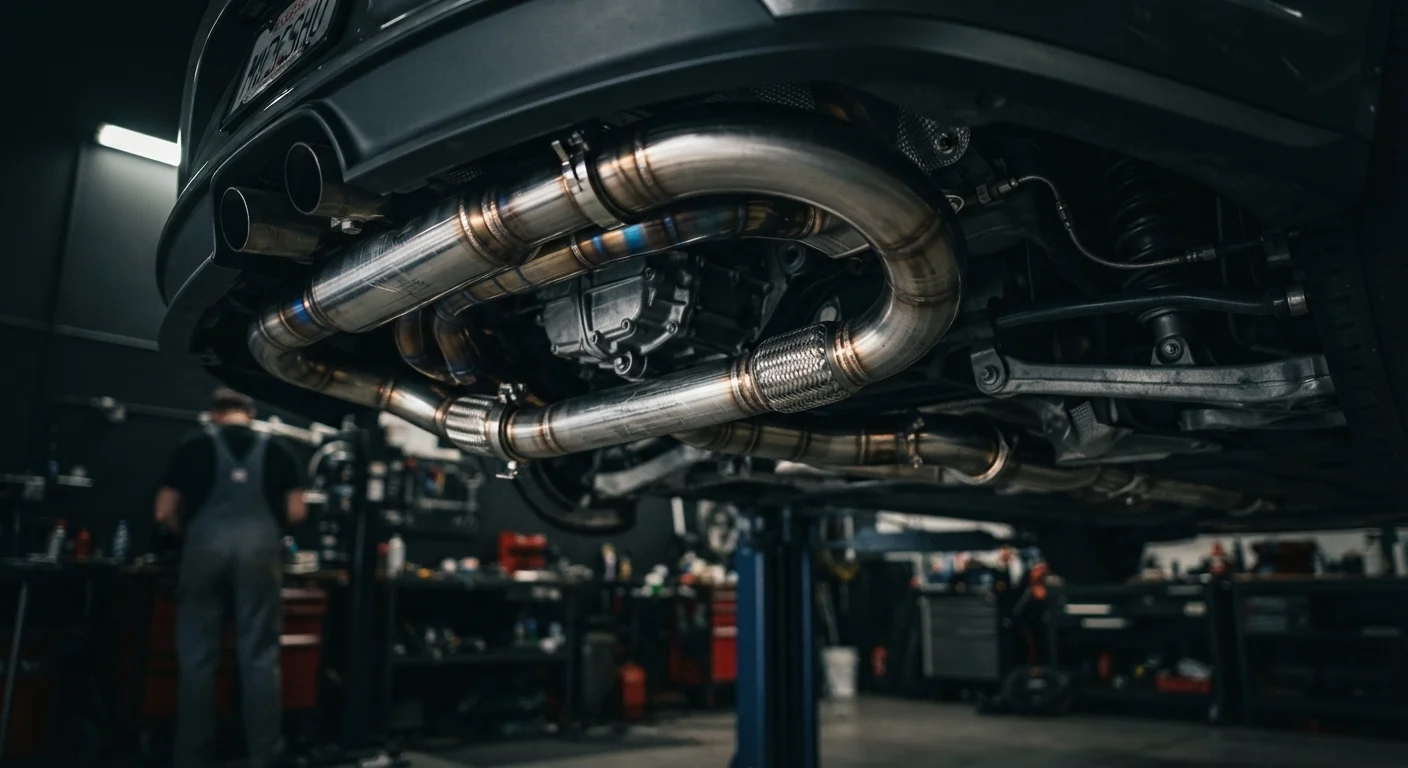
What Exhaust Modifications Actually Do
An exhaust system's core job is moving spent combustion gases out of the engine as efficiently as possible. Restriction in that path - back-pressure - forces the engine to work harder on each exhaust stroke, costing power. Aftermarket exhaust components aim to reduce that restriction, though the degree of improvement varies dramatically depending on which part of the system you modify and what the rest of the engine can support.
There are three primary upgrade categories worth understanding: cat-back systems (everything from the catalytic converter rearward), headers (the exhaust manifold replacement that connects directly to the cylinder head), and high-flow catalytic converters. Each targets a different section of the exhaust path and delivers a different result. See how exhaust fits into broader performance modifications for a wider view of what's happening under the hood.
Where the Sound Ends and the Substance Begins
Cat-back systems are the most popular entry point. They replace the muffler and rear piping with larger-diameter, less-restrictive components. The acoustic difference is immediately noticeable; the power difference on a stock engine with a stock intake is often modest - typically in the range of a few horsepower at best. That's not nothing, but it's rarely transformative on its own.
Headers are a different matter. By replacing cast-iron exhaust manifolds with individually tuned pipes - either short-tube for low-end torque or long-tube for peak power - headers meaningfully alter exhaust scavenging (the process by which outgoing exhaust gas helps pull in the next intake charge). Long-tube headers, in particular, can produce measurable mid-range and top-end gains, especially on naturally aspirated engines. The trade-off is installation complexity, potential clearance issues, and cost.
High-flow catalytic converters reduce restriction compared to OEM units while retaining emissions control function. Understanding what a catalytic converter actually does chemically helps clarify why simply deleting one isn't a legal or environmentally sound path - and why high-flow alternatives exist as a compromise.
The Compliance and Cascade Problem
Emissions regulations in the US vary by state. California Air Resources Board (CARB) standards are the strictest, and many other states follow suit. An exhaust component not CARB-compliant may be illegal for street use in those states regardless of how it's marketed. Always verify a component's legal status for your specific state before purchasing.
Beyond legality, exhaust upgrades rarely work in isolation. Modifying one part of the system often exposes constraints elsewhere - a freer-flowing exhaust on a restrictive intake and stock tune may deliver underwhelming results. This is why many builds that start with an exhaust end up requiring an intake upgrade and an ECU retune to realize the full benefit.
Setting Realistic Expectations
If your goal is purely sound, a cat-back system is an honest and relatively straightforward modification. If your goal is measurable performance gain, headers combined with supporting modifications and a proper tune offer a more substantive path - but require more planning, more budget, and ideally a relationship with a qualified tuner or performance shop.
For those just starting out with performance modifications, a grounded overview of first performance steps is worth reviewing before committing to any exhaust work. Exhaust upgrades can be rewarding, but they reward the enthusiast who treats them as part of a coherent build rather than a single fix.