Why the Record Itself Has Real-World Value
Most vehicle owners understand that doing maintenance matters. Fewer appreciate that proving it matters almost as much. A documented service history functions as evidence - to a potential buyer, to a warranty administrator, and to yourself when you're trying to remember whether the coolant was flushed at 60,000 or 90,000 miles.
When selling a vehicle privately, a complete maintenance log reassures buyers that the car has been cared for methodically, not just when something broke. Dealers often factor documented history into certified pre-owned evaluations. For classic or collector vehicles, a thorough paper trail can be a significant credibility asset - see how this applies specifically in documenting a classic car's history and provenance.
Beyond resale, a good log helps your mechanic. Knowing the precise date and mileage of a previous repair can eliminate diagnostic guesswork and save labor hours.
~$500-$1,000
Estimated resale premium for documented service history
Industry observers and used-car appraisers commonly note that verifiable maintenance records can increase a private-party vehicle's perceived value by several hundred dollars compared to an identical vehicle with no records.
1 in 3
Owners who report losing track of service intervals
Consumer automotive surveys have consistently found that a significant share of vehicle owners cannot accurately recall when their last oil change, tire rotation, or fluid service occurred.
What to Record Every Time
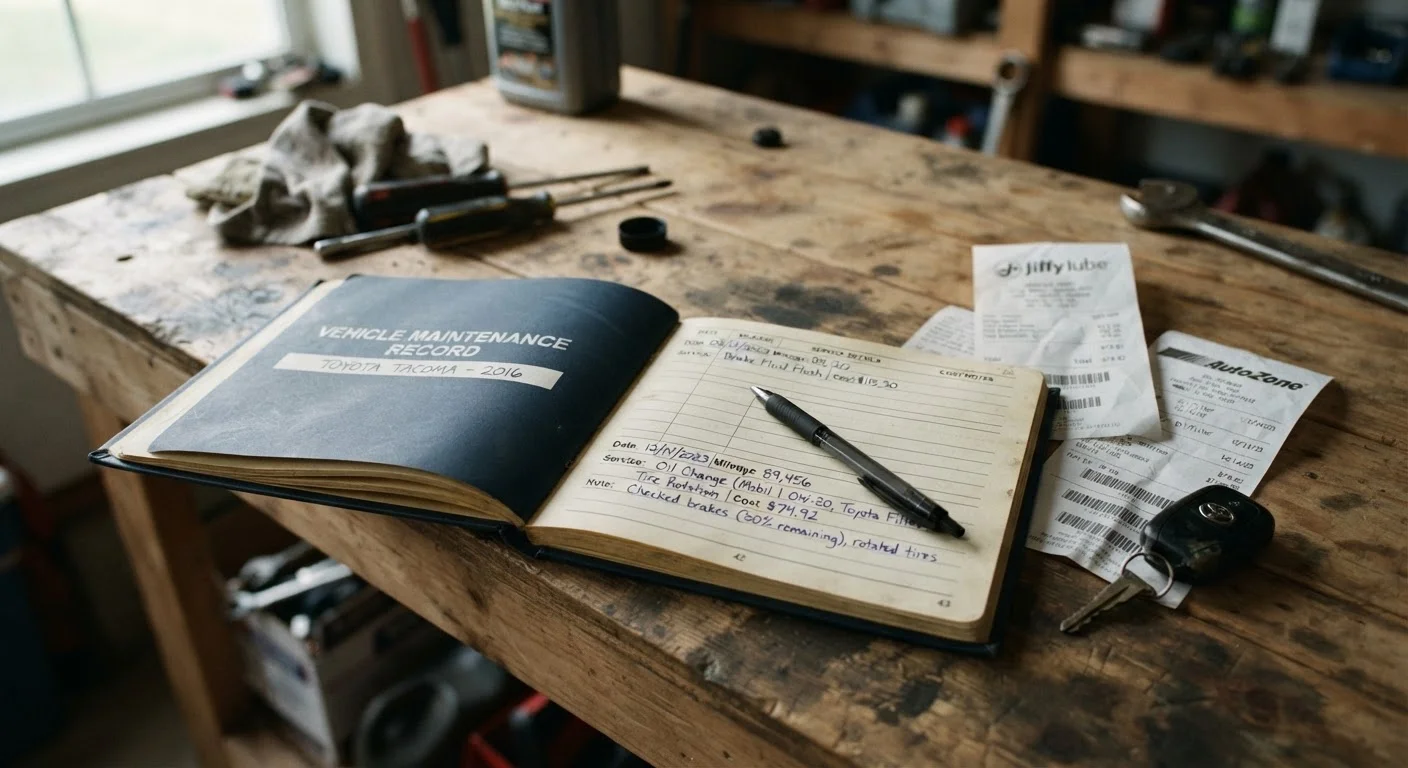
The goal is capturing enough detail to reconstruct what was done, when, at what mileage, with what parts, and by whom. The following fields cover most situations:
- Date and odometer reading - both together, not just one or the other
- Service performed - specific enough to be useful (e.g., "replaced front brake pads and rotors" rather than "brake work")
- Parts installed - part numbers if available, or at minimum brand and specification
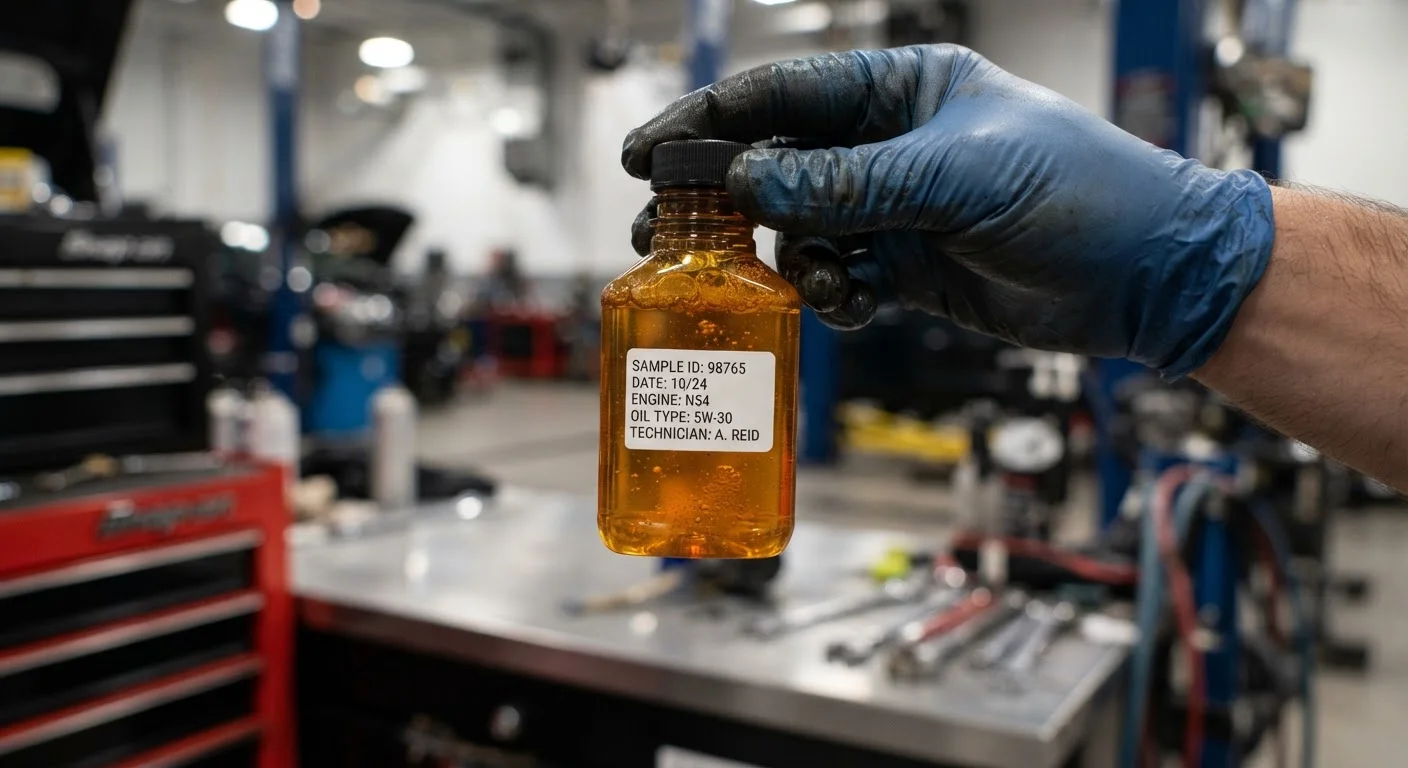
- Fluids changed or topped off - type, grade, and quantity
- Labor source - shop name, or "owner-performed" for DIY work
- Cost - useful for budgeting and for establishing investment in the vehicle
- Next service due - mileage or date reminder for recurring intervals
Keep all physical receipts clipped or stapled to the relevant log page, or scan them for digital storage. Receipts serve as independent corroboration of log entries.
Log every service immediately after it's completed, not from memory days later.
Details like part numbers, fluid specifications, and exact mileage are easy to misremember or forget entirely within 48 hours. Immediate entry ensures accuracy and prevents gaps that undermine the log's credibility.
Include owner-performed maintenance, not just professional shop work.
DIY services count equally toward a vehicle's history. Omitting them creates false gaps that may mislead future owners or complicate warranty discussions.
Attach or link physical receipts to each log entry.
Receipts provide independent, timestamped verification of service claims. They're particularly valuable during resale negotiations or warranty disputes where documented proof is expected.
Note the next due interval alongside each completed service.
Recording the upcoming service mileage or date at the time of each entry closes the loop and makes the log a proactive scheduling tool, not just a backward-looking record.
Review the full log before any significant repair or diagnostic appointment.
Knowing the complete recent service history helps a technician identify patterns, rule out recently replaced components, and focus diagnostic time more efficiently - which can reduce labor costs.
Choosing and Sticking to a Format
There is no single correct format - the right one is whichever you'll actually use. Common approaches include:
- Paper logbook - a dedicated notebook stored in the glovebox. Durable, always accessible, requires no battery or connectivity.
- Spreadsheet - a simple table in any spreadsheet application, easy to search and sort, shareable as a file.
- Dedicated apps - several vehicle maintenance apps allow you to log services, set reminders, and attach photos of receipts. Features vary; evaluate them based on export capability so your data isn't locked in.
Whatever format you choose, make an entry immediately after each service - not a week later when details blur. If you use a digital method, keep a backup copy in a separate location (cloud or external drive).
Start Partial Records - Don't Wait for Perfection
If your vehicle already has 80,000 miles and no written history, don't let that stop you from starting now. Pull what receipts you can find, reconstruct what you remember, and begin logging from today forward. An incomplete record that grows consistently is far more useful than waiting to build a perfect one from scratch.
For a full picture of when each service is due in the first place, see your vehicle's maintenance schedule, explained - logging and scheduling work best as a pair.
Quick Wins to Build the Habit
Getting started is often the hardest part. The practices below remove friction and make consistent logging feel like a natural extension of vehicle ownership rather than a chore.
New drivers especially benefit from building this habit early - vehicle maintenance for new drivers covers how to integrate logging from your very first service interval. And if you want to understand which wear components need the most attentive tracking, keeping wear parts in good shape explains what to watch and when.