What Is Boondocking - and What Does It Actually Demand?
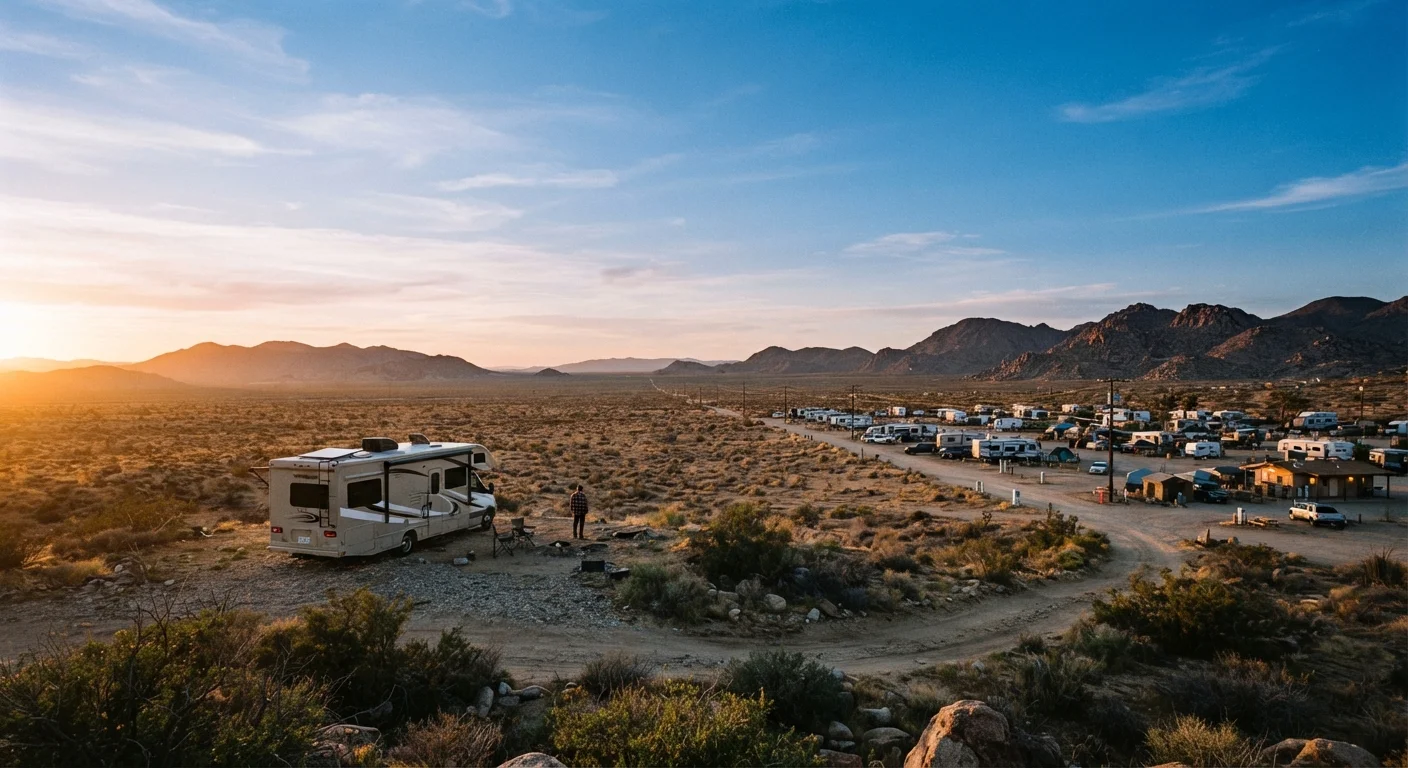
Boondocking - also called dry camping or dispersed camping - means parking on public land (Bureau of Land Management or U.S. Forest Service territory, most commonly) with no electrical hookup, water connection, or sewer access. It's free or very low cost, and in the right location, it's genuinely remote.
The catch is resource management. Every gallon in your fresh water tank, every amp-hour in your battery bank, and every inch of space in your gray and black tanks becomes a variable you actively track. Standard 14-day stay limits on BLM land mean you move regularly, which adds to fuel costs and planning load. If you're working remotely from your RV, boondocking sites often mean spotty cellular signal and no backup Wi-Fi - a serious practical constraint.
245M+
Acres of BLM land open to dispersed camping
The Bureau of Land Management administers over 245 million acres of public land across the western United States, much of it open to free dispersed camping under general regulations.
14 days
Standard BLM stay limit per location
Most BLM dispersed camping areas enforce a 14-day consecutive stay limit before requiring campers to move at least 25 miles, which shapes the movement patterns of boondockers.
How Campground Living Changes the Equation
Established campgrounds - whether national park sites, state parks, KOAs, or private RV parks - provide varying levels of infrastructure. Full hookup sites offer 30- or 50-amp electrical service, water, and sewer connections, effectively turning your RV into a stationary apartment. Partial hookup and dry sites exist in between.
The trade-off is cost and density. Nightly fees for full hookup sites range widely by region and season, and those fees compound quickly for long stays. Monthly rates at private RV parks bring the per-night cost down but still represent a significant line item - one that full-time RV living cost analyses consistently flag as underestimated. Sites are also closer together, and neighbors are simply part of the experience. For a deeper look at that social dimension, see what to expect from campground communities.
Partial Hookup Sites: A Middle Ground
Not all campground sites are full hookup. Electric-only or water-and-electric sites are common in state parks and some national forest campgrounds. These cost less than full hookup sites and still ease the power and water constraints of boondocking - a useful intermediate option for RVers building off-grid confidence. Sewer access is absent, so black and gray tank management remains a daily consideration.
Pros and Cons at a Glance
Weighing both approaches side by side helps clarify which fits your situation. Most experienced RVers don't treat this as a permanent either/or choice - they shift between modes based on location, schedule, and budget.
Boondocking eliminates nightly campsite fees entirely
BLM and Forest Service dispersed camping is free in most areas, making it a powerful cost-reduction tool for budget-conscious full-timers.
Campgrounds provide reliable electrical, water, and sewer hookups
Full hookup sites remove resource constraints almost entirely, letting you run air conditioning, charge devices, and shower without tracking usage.
Boondocking offers genuine solitude and scenic locations
Remote dispersed sites deliver the kind of privacy and natural immersion that crowded campgrounds simply cannot replicate.
Campgrounds often include amenities like laundry and Wi-Fi
On-site laundry, dump stations, camp stores, and even pools make extended stays more comfortable, especially for families or full-timers.
Boondocking builds practical off-grid RV skills
Managing water, power, and waste carefully sharpens self-sufficiency and deepens your understanding of your RV's systems.
Campgrounds offer predictable, reservable sites
Reservation systems provide certainty for travelers with fixed itineraries, removing the uncertainty of arriving to find a dispersed area crowded or closed.
Boondocking requires careful resource management daily
Fresh water, battery capacity, and tank space are finite - exceeding your limits means cutting a stay short or making uncomfortable compromises.
Campground fees accumulate into a major monthly expense
Full hookup sites can run from $40 to over $100 per night depending on location and season, making prolonged campground stays costly.
Boondocking connectivity is often unreliable or absent
Remote BLM and forest land frequently falls outside strong cellular coverage, creating real obstacles for remote workers or those with medical monitoring needs.
Campgrounds can feel crowded and noisy
Sites are often close together, and campground noise - generators, music, pets - is a common complaint among RVers seeking a quieter experience.
Boondocking sites require advance location scouting
Finding quality dispersed sites takes research via apps and land agency websites, and conditions on the ground can differ from what's described online.
Campground availability is not guaranteed without reservation
Popular parks and private campgrounds fill months in advance, limiting spontaneity for travelers who prefer to move on short notice.
Which Strategy Fits Your RV Setup and Lifestyle?
Your rig's specifications set real limits here. Smaller tanks and a modest battery bank (a common configuration in entry-level travel trailers) make multi-day boondocking uncomfortable. Larger Class A or Class C rigs with lithium battery upgrades and solar panels extend off-grid capability considerably. Review how different RV classes compare and common RV layouts if you're still evaluating which rig matches your intended camping style.
For part-time versus full-time RVers, the calculus also differs. A weekend warrior may find campground hookups more practical for their limited time window. A full-timer with flexibility can rotate between free dispersed sites and campgrounds strategically - stretching budget while accessing amenities when needed. Internet access is a decisive factor for many: connectivity options across different regions vary enough that location planning around coverage maps is increasingly common among remote-working RVers.
For those new to the RV lifestyle, a grounded introduction to RV living fundamentals can help set realistic expectations before committing to either approach.