What Makes a RIB Different from Other Hull Types
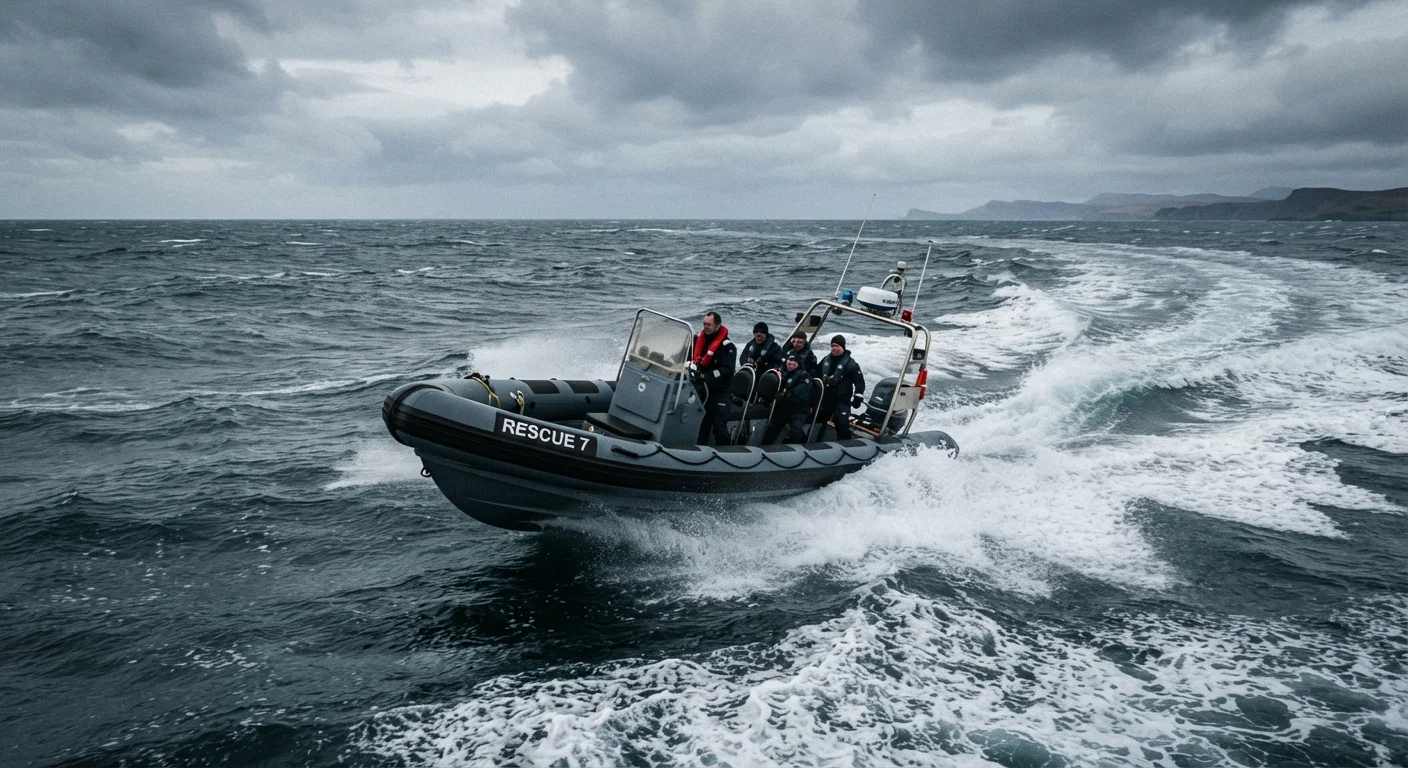
Most hull categories are defined by a single material or a single geometry. A RIB is defined by a deliberate combination of both. The rigid hull - shaped with a deep-V or modified-V keel - handles hydrodynamic forces the way any conventional hull does: it planes, tracks, and corners predictably. The inflatable collar does something a rigid hull cannot: it compresses on impact, absorbs lateral shocks, and provides enormous reserve buoyancy at the waterline.
That combination means a RIB sits lower in the water than a pure inflatable of comparable volume, while offering far greater stability than a rigid hull of equivalent beam width. For a full breakdown of terms like beam, freeboard, and transom, the Watercraft Features Glossary is a useful reference point.
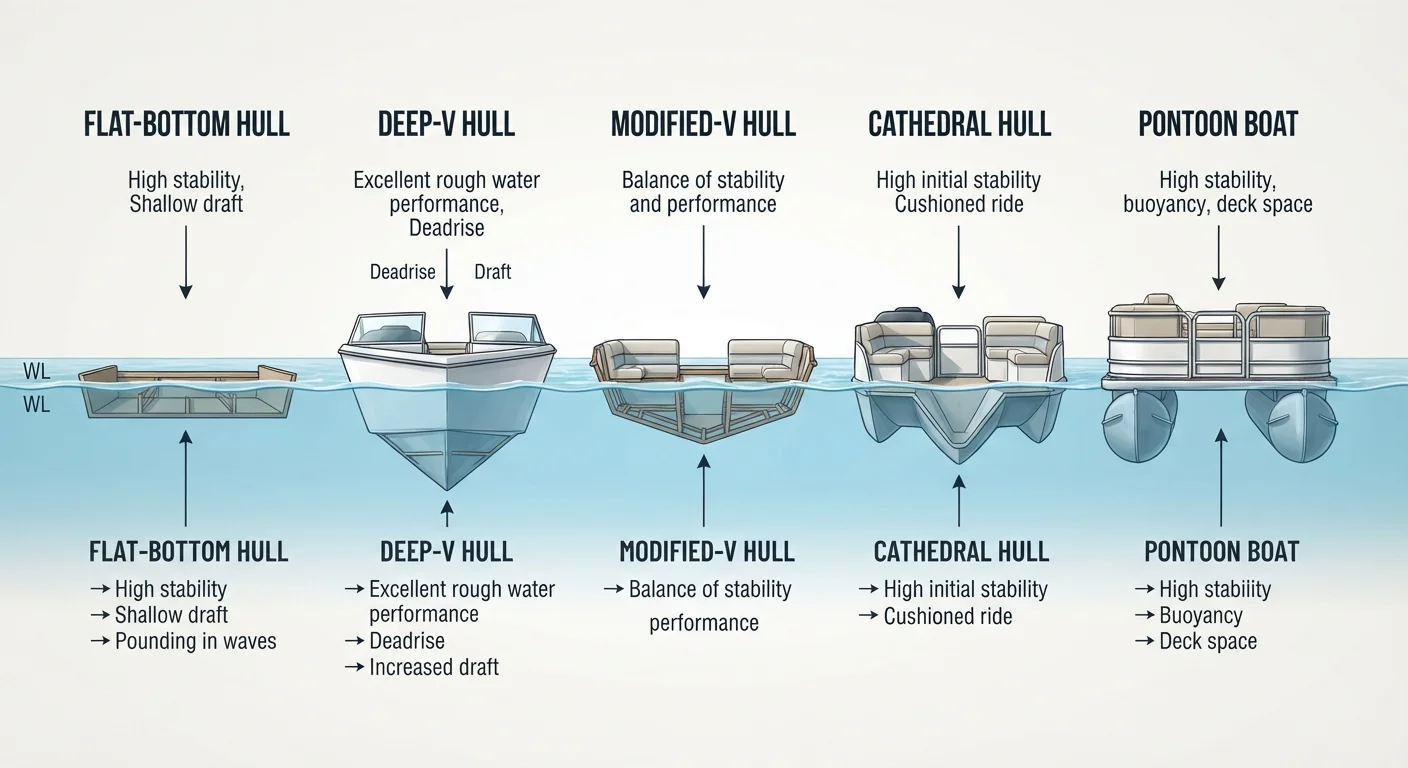
If you're comparing RIBs against other recreational platforms - say, a bowrider or pontoon - it helps to understand what each hull form trades away. The Pontoon, Bowrider, or Deck Boat guide lays out those differences clearly.
Where RIBs Work - and Why That List Is So Long
The RIB's cross-sector adoption is not coincidental. It stems directly from a handful of performance characteristics that happen to matter across very different operating environments.
Multi-chamber
Sponson tube design for buoyancy redundancy
Independent air chambers mean a single puncture does not compromise overall vessel buoyancy, a key reason professional operators trust the design.
15-20 yrs
Typical Hypalon tube service life
Hypalon (CSM) sponsons with proper maintenance and UV protection can remain serviceable for 15-20 years, though results vary by use and environment.
Deep-V
Hull geometry used in most RIB designs
A deep-V keel is the standard choice for offshore and rough-water RIBs, providing directional stability and wave-cutting performance.
- Search and rescue / coast guard: Self-righting versions can recover from capsize. Fast launch from a ship's davit is straightforward. The collar cushions impacts against vessel hulls during person-in-water operations.
- Military and law enforcement: Fast intercept capability, low radar cross-section in smaller models, and the ability to operate from beach gradients that would strand a rigid-hull craft.
- Dive charters and water taxis: Low freeboard on many RIB designs makes boarding from the water simpler than climbing into a high-sided cabin cruiser. The stable platform supports gear staging.
- Yacht tenders: A deflated or semi-deflated RIB stows aboard larger vessels more readily than a rigid dinghy of equivalent capacity. Re-inflation at anchor takes minutes.
- Recreational day boating: Responsive handling, efficient planing, and the ability to run shallow areas where a deep draft hull cannot go make RIBs popular among anglers, water sports participants, and general day-trippers.
For a broader look at where the RIB fits among other vessel categories, see the Eight Distinct Boat Types article.
“The RIB is perhaps the only small-craft design that simultaneously satisfies the performance demands of military operators and the practical convenience demands of recreational users - a convergence that almost no other hull form has managed.”
— Boats & Watercraft Editorial Team, Marine industry analysts and boating journalists
Construction Materials and What They Mean for Buyers
The rigid hull section is most commonly fiberglass, though aluminum is used in heavy-duty patrol and rescue builds for its impact resistance and repairability. The sponson tubes present the more consequential material choice for long-term ownership.
Hypalon (CSM - chlorosulfonated polyethylene): Historically the professional standard. Resistant to UV radiation, ozone, fuel, and saltwater. Repairs bond reliably. Heavier and more expensive than PVC at purchase, but generally more durable over a decade-plus of use.
PVC (polyvinyl chloride): Lighter, less expensive, and widely available. Performs well in recreational contexts with proper care. More susceptible to UV degradation over time, and repairs can be less permanent than Hypalon bonds - particularly in heat or cold.
Neither material is universally superior; the right choice depends on budget, operating environment, and expected service life. What matters most is honest assessment of how and where the boat will be used.
Extending Sponson Tube Life
Store your RIB out of direct sunlight whenever possible - UV radiation is the single largest factor in premature tube degradation for both Hypalon and PVC. When storing inflated, maintain recommended pressure rather than fully deflating, which can stress seam adhesives over time. Clean tubes with mild soap and fresh water after saltwater use and inspect seams seasonally for early signs of delamination.
Practical Considerations Before Choosing a RIB
RIBs are not universally suited to every boating need. Overnight accommodations, for instance, are essentially absent - a RIB contrasts sharply with cabin vessels discussed in the Evaluating a Boat's Livability guide. Storage on a RIB is also limited, which matters more than many first-time buyers expect - a point reinforced by the Features First-Time Shoppers Overlook.
That said, for day use, high-performance water sport activity, or professional operational roles, the RIB's design strengths are difficult to replicate in any other single hull form. Buyers should weigh intended use honestly, accounting for sea conditions typically encountered, passenger loads, required range, and storage or trailering logistics before committing to any vessel class.
The features hub offers additional context on how to evaluate watercraft capabilities systematically, regardless of hull type.