The Transom: More Than a Back Wall
Most boaters pay careful attention to bow design, hull deadrise, and deck layout - but the transom quietly does some of the heaviest structural work on the entire vessel. As part of the boat's core anatomy, the transom closes off the stern of the hull, resisting hydrostatic pressure, wave impact loads, and - critically - the torque and thrust forces generated by mounted propulsion systems.
Transoms are constructed in several configurations. A flat transom runs perpendicular to the keel and is the most common form on outboard-powered runabouts and bowriders. A raked transom angles aft at the top, contributing to a sportier profile and slightly reduced windage. Reverse transoms, which angle forward above the waterline, are associated with performance and offshore hulls where reduced drag at speed is a design priority.
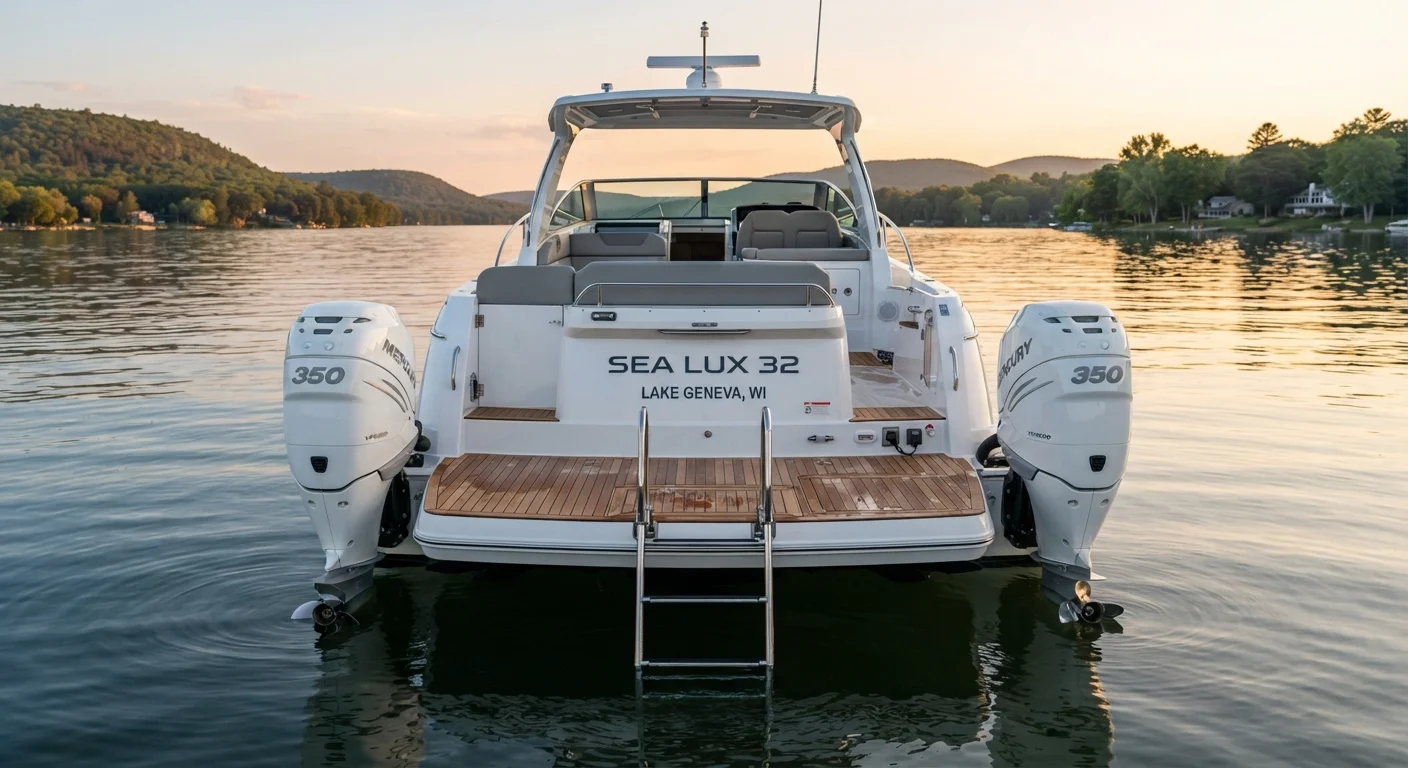
The relationship between the transom and the propulsion system is intimate. Outboard, inboard, and sterndrive configurations each place different demands on the transom's thickness, reinforcement, and geometry. Outboards hang directly from the transom bracket, making core integrity essential - any moisture infiltration that softens the laminate stack can compromise the engine mount over time.
Transom Height and Motor Compatibility
Outboard motors are manufactured in standard shaft lengths - typically short (15 in.), long (20 in.), and extra-long (25 in.) - to match corresponding transom heights. Using a motor with the wrong shaft length can cause ventilation, vibration, or insufficient cooling water intake. Always verify that a motor's shaft length matches the rated transom height of the hull before purchasing or swapping engines.
Swim Platform Design: Function First
The swim platform emerged as a practical boarding solution, and its functional demands still drive its design more than aesthetics. At its most basic, a platform must offer a stable, slip-resistant surface at a height that allows safe water re-entry without requiring climbers to haul themselves over the gunwale. From there, the design priorities diverge sharply depending on how the boat is used.
For family cruisers and pontoon-adjacent designs, platforms tend to be wide and flat, sometimes incorporating seating, storage, or a fold-down ladder that reaches well below the surface. For wake and ski boats, platform geometry is carefully considered alongside propeller placement - wakeboard and ski boat designs often feature recessed or walk-through cutouts so athletes can board while remaining clear of the drivetrain. On offshore sport fishing boats, platforms may be narrow and raised to manage wave wash, while still accommodating a fighting chair or bait prep area immediately inboard.
Test the Ladder Before You Commit
When evaluating a boat in person, actually use the boarding ladder while the vessel is in the water if at all possible. Ladder reach, step width, and grab handle placement vary widely between manufacturers. A ladder that feels awkward to use on dry land at a dealership may be genuinely difficult to use when you're wet, tired, and the boat is moving gently on a wake.
Surface treatment is non-negotiable. Wet fiberglass without texture can be dangerously slick. Look for molded non-skid patterns, synthetic teak overlays, or EVA foam padding - each provides meaningful grip when boarding after a swim or in light rain. The boating features glossary explains additional spec terms you may encounter when comparing platform options on listings.
Integrated vs. Bolt-On Platforms
Platforms fall into two broad categories: those molded as a continuous extension of the hull during manufacturing, and those added as bolt-on aftermarket accessories. Factory-integrated platforms share the same gelcoat and fiberglass layup as the hull, providing a seamless structural connection and consistent aesthetic. They also allow manufacturers to engineer the platform's buoyancy contribution into the vessel's stability calculations.
Bolt-on platforms are useful for retrofitting, but they require careful attention to installation quality. Fasteners penetrating the transom must be properly bedded with marine sealant, and load distribution across the mounting surface matters - an improperly loaded platform can cause stress cracking or, in severe cases, transom delamination. This is a task that warrants a qualified marine technician rather than a DIY approach.
~60%
Of new powerboats sold with integrated swim platforms
Industry estimates from marine trade associations suggest a strong majority of new retail powerboats now include factory-integrated swim platforms as standard equipment rather than optional accessories.
12-24 in.
Typical platform height above waterline
Platform elevation varies significantly by hull type and manufacturer; lower platforms ease re-boarding while higher ones shed wave wash more effectively in offshore conditions.
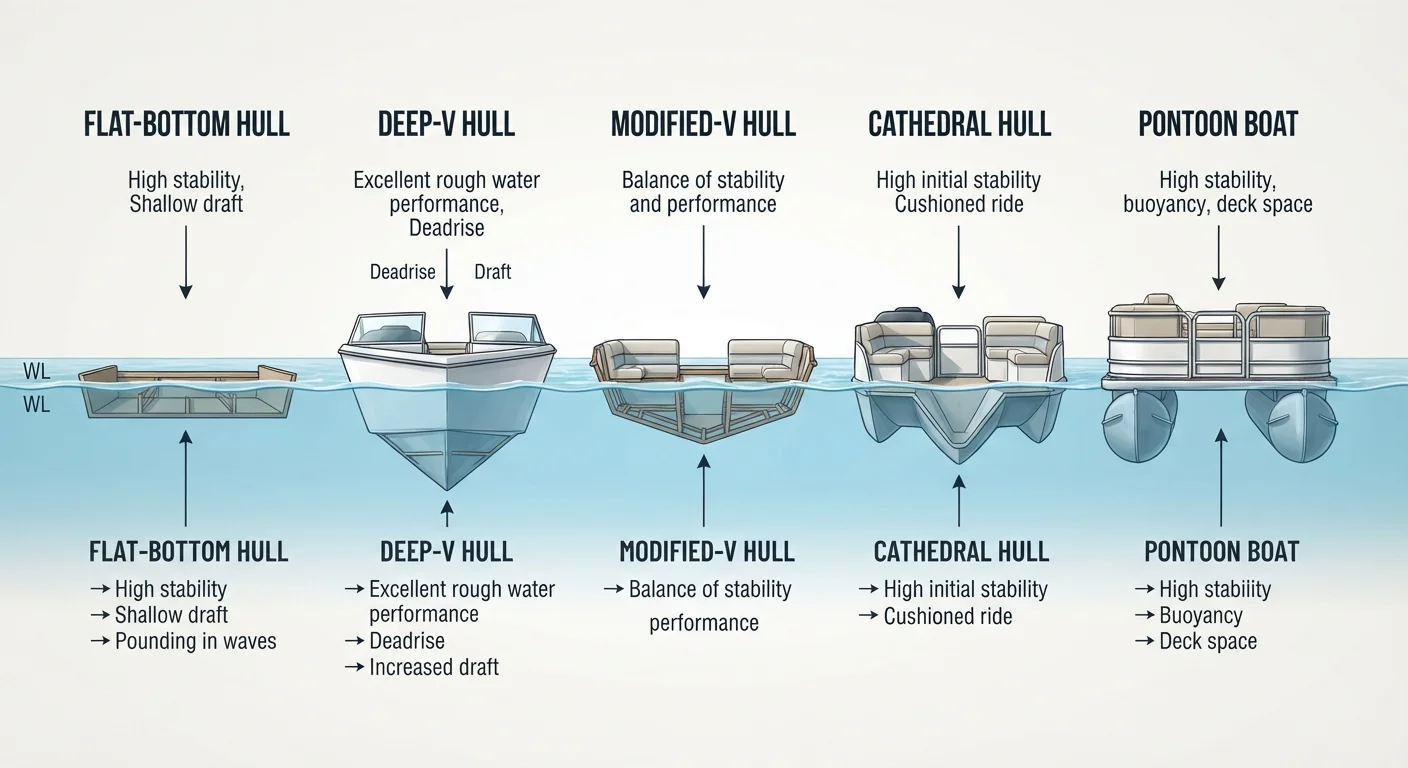
Hull shape also influences platform options. Deep-V and modified-V hulls present a narrower stern cross-section than flat-bottom or cathedral hulls, which can limit platform width without adding buoyancy sponsons on either side. Buyers should evaluate platform dimensions relative to their intended use - a platform that's adequate for solo re-boarding may feel cramped when two adults are donning gear simultaneously.
Evaluating the Stern Before You Buy
When assessing any vessel, the stern deserves methodical inspection. On a used boat, walk the platform and press firmly across its surface - flex or sponginess suggests moisture in the core, a condition that worsens over time and can become a significant structural repair. Examine the transom-to-hull joint for stress cracks, crazing, or signs of previous repair work. Inspect all fittings - ladder hinges, grab handles, and drain plugs - for corrosion and secure attachment.
On new boats, consider how the platform design matches your actual use patterns. A platform that photographs well but positions the boarding ladder awkwardly relative to the propeller, or that sits so high in the water that re-boarding is physically demanding, is a design compromise you'll notice every time you're on the water. The stern of a boat is where people get wet, where they get back aboard, and where engine power is delivered to the water - getting that zone right matters considerably more than it might appear at first glance.