What Defines a Three-Row SUV
A three-row SUV adds a rearmost bench or captain's chairs behind the standard two rows found in most crossovers. The segment spans a broad range - from mid-size unibody crossovers with modest dimensions to larger, sometimes truck-based platforms with serious towing credentials. Understanding that distinction matters before shopping, because platform architecture shapes almost every performance and practicality variable you'll encounter. See how unibody and body-on-frame platforms differ for the underlying engineering context.
Most three-row models sold in the US today use unibody construction, which prioritizes on-road ride quality and fuel efficiency over raw towing muscle. A smaller group relies on truck-derived ladder frames that unlock higher payload and tow ratings. The choice between these two architectures often determines whether a vehicle can handle a boat or camper trailer - a key consideration for active families. Size class and platform together define capability more than marketing language ever will.
The Real Advantages
Three-row SUVs solve a genuine logistical problem: moving a large family or mixed group without renting a van or running two vehicles. That core benefit ripples outward into several day-to-day conveniences worth naming directly.
Seats six to eight passengers in one vehicle
Eliminating the need for a second vehicle on group trips reduces fuel costs and simplifies logistics. Many three-row SUVs offer flexible second-row captain's chairs that improve comfort for middle-distance passengers.
Unibody ride quality rivals two-row crossovers
Most mainstream three-row models use car-derived platforms that deliver smooth, composed highway manners - a significant improvement over older truck-based SUVs of the same class.
Available all-wheel drive for year-round confidence
Most three-row crossovers offer AWD as an option or standard feature, providing improved traction on wet roads and light snow without the complexity of a traditional four-wheel-drive transfer case.
Modern safety technology fits the whole family
Automatic emergency braking, blind-spot monitoring, and rear cross-traffic alerts - features that matter more when passengers include children - are widely available across the three-row segment.
Towing capacity covers light trailer needs
Many unibody three-row SUVs are rated to tow between 3,500 and 5,000 lbs when properly equipped, sufficient for a small boat, jet skis, or a lightweight travel trailer.
15-18 cu ft
Typical cargo space behind third row
Mid-size three-row crossovers generally offer between 15 and 18 cubic feet of cargo volume when all seats are occupied - less than many compact two-row SUVs.
~30 in
Third-row legroom in many mid-size models
Third-row legroom in the 28-32 inch range is common in mid-size three-row crossovers, making extended adult comfort a genuine concern on longer trips.
5,000 lbs
Typical upper tow limit for crossover-based models
Most unibody three-row SUVs are rated to tow up to 5,000 lbs when properly equipped - adequate for light trailers but well below truck-based alternatives.
Beyond raw seating, three-row models tend to ride higher than sedans, which improves outward visibility for the driver and eases entry for adults - though the same height can complicate access to the third row for children and older passengers. For families navigating car-seat installations across multiple rows, the wider door openings common on mid- and full-size three-row SUVs provide measurable convenience.
Where Three-Row SUVs Fall Short
Every engineering decision involves a trade-off, and adding a third row is no exception. The compromises are specific and worth evaluating against your actual usage patterns rather than hypothetical ones.
Third-row legroom is often genuinely tight
In mid-size three-row crossovers, third-row legroom frequently measures under 30 inches - uncomfortable for adults on trips longer than 30-45 minutes. Full-size models offer more room but come with larger footprints and higher prices.
Cargo capacity collapses when all rows are occupied
Behind-third-row cargo space in a typical mid-size three-row crossover can drop to 15 cubic feet or less, forcing families to use roof carriers or trailers for any significant luggage load.
Fuel economy is measurably worse than two-row alternatives
The added weight and aerodynamic profile of a three-row body typically reduces combined fuel economy by 2-4 mpg compared with a comparable two-row model - a cost that compounds significantly over high annual mileage.
Third-row access can be awkward and time-consuming
Getting into the rearmost row requires the second-row seat to tumble or slide forward, a process that frustrates children and is genuinely difficult for adults, especially in tighter parking situations.
Higher ownership costs across multiple categories
Larger tires, heavier curb weights, and increased insurance premiums all add to the total cost of ownership relative to smaller alternatives. These costs are often underestimated during the purchase decision.
Parking and maneuvering in urban areas is harder
Three-row SUVs typically measure between 196 and 210 inches in overall length, which can make parallel parking and tight garage clearances a daily challenge in dense suburban and urban environments.
Third-Row Use Varies More Than You'd Expect
Industry surveys and consumer research consistently suggest that many three-row SUV owners use the third row only occasionally - for specific events rather than routine daily driving. Before committing to the larger vehicle, track your actual passenger counts over a typical month. If you're rarely carrying more than five people, a two-row crossover with a larger cargo floor may serve your household more effectively across a broader range of days.
Fuel economy is among the most consistent downsides. A three-row crossover typically weighs several hundred pounds more than a comparable two-row model, and that mass - combined with a taller, less aerodynamic profile - translates directly into lower mpg figures. For high-mileage drivers, that gap compounds meaningfully over a five-year ownership cycle.
Handling dynamics shift as well. Families transitioning from sedans or compact crossovers should understand how a taller center of gravity and longer wheelbase change braking distances and cornering behavior. New-to-SUV drivers should review these handling differences before their first extended drive.
Cargo Space: The Hidden Equation
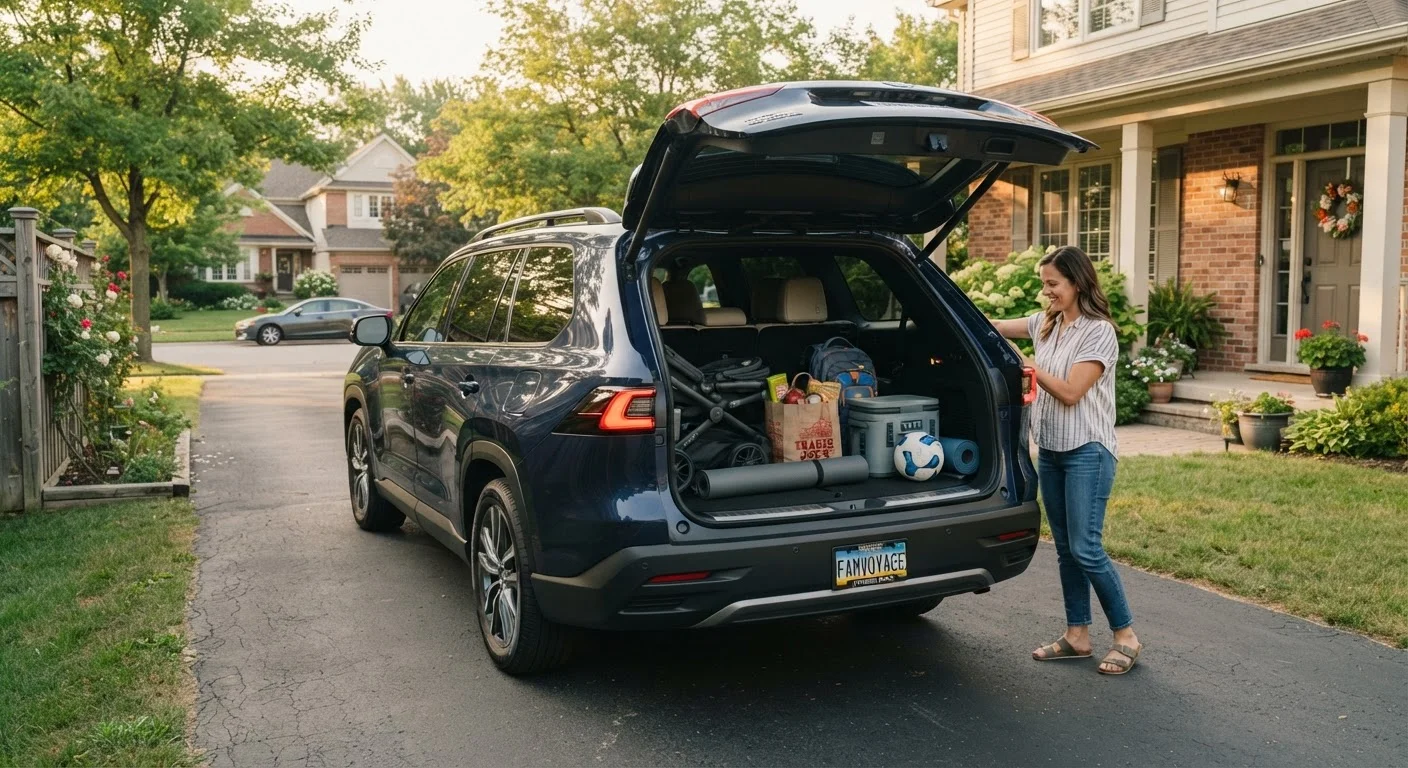
Three-row SUVs are often marketed on passenger capacity, but the cargo story is more nuanced. When all three rows are occupied, the space behind the third row in a typical mid-size crossover shrinks to roughly 15-18 cubic feet - barely enough for a week's worth of luggage for a large family. Fold the third row flat and that figure expands dramatically, but only when those seats are empty.
Families planning road trips with a full complement of passengers frequently discover that roof cargo carriers, hitch-mounted cargo trays, or a small trailer become practical necessities rather than optional accessories. That reality should factor into budget planning from the start. If towing a trailer is likely, verify each model's specific tow rating carefully - crossover-based three-row SUVs vary widely, and manufacturer figures assume specific hitch and cooling equipment configurations.
For a broader comparison between the spaciousness of SUVs and the more efficient packaging of sedans, this sedan vs. SUV breakdown offers useful perspective on what each body style genuinely delivers.
Making the Decision Work for Your Family
The most useful exercise before committing to a three-row SUV is auditing how often you actually need all three rows occupied simultaneously. Many buyers discover that the third row stays folded flat the majority of the time - at which point a well-sized two-row crossover may serve the same cargo needs with better fuel economy and easier parking in tight urban spaces.
If the need is genuine - weekly school runs with multiple children, regular trips with grandparents, youth sports carpools - then the three-row category delivers real value. In that case, prioritize third-row legroom measurements (not just seat count), evaluate how the second row slides and folds to enable third-row access, and test-drive with your actual passengers to confirm comfort at the back. The complete SUV guide covers the full selection framework if you're still narrowing down the segment.
This article is for general informational purposes only. Vehicle specifications, fuel economy figures, and towing ratings vary by trim level, configuration, and model year - always verify current data with manufacturers and consult a qualified professional for towing and safety-related decisions.