How These Two Platforms Are Actually Built
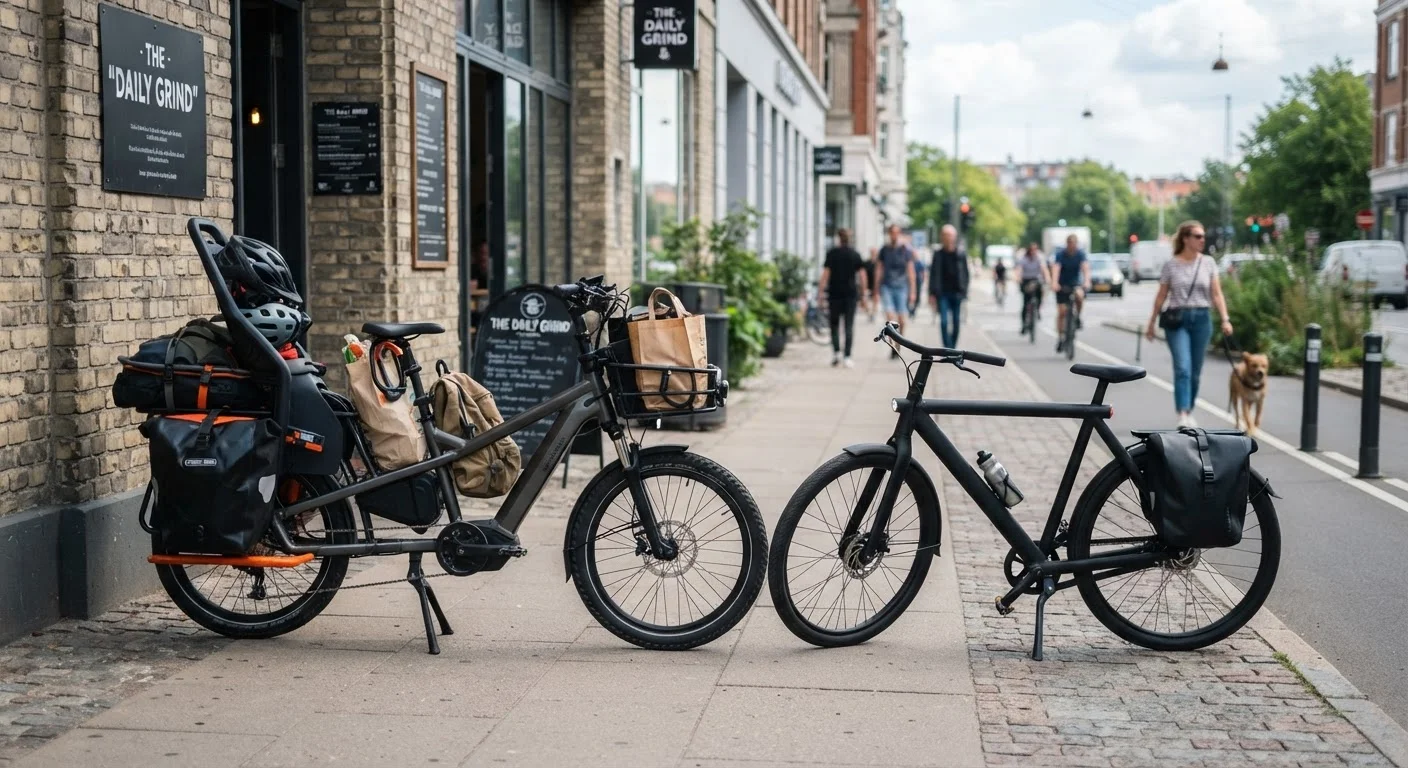
Cargo e-bikes and standard e-bikes share the same core technology - pedal-assist motor, battery, drivetrain - but diverge sharply in frame engineering. A cargo e-bike (whether a long-tail, mid-tail, or box-style front-loader) is built around a reinforced, elongated frame designed to distribute heavy loads without flexing. Wheelbases can exceed 70 inches on long-tail designs, compared to roughly 40-45 inches on a typical standard e-bike.
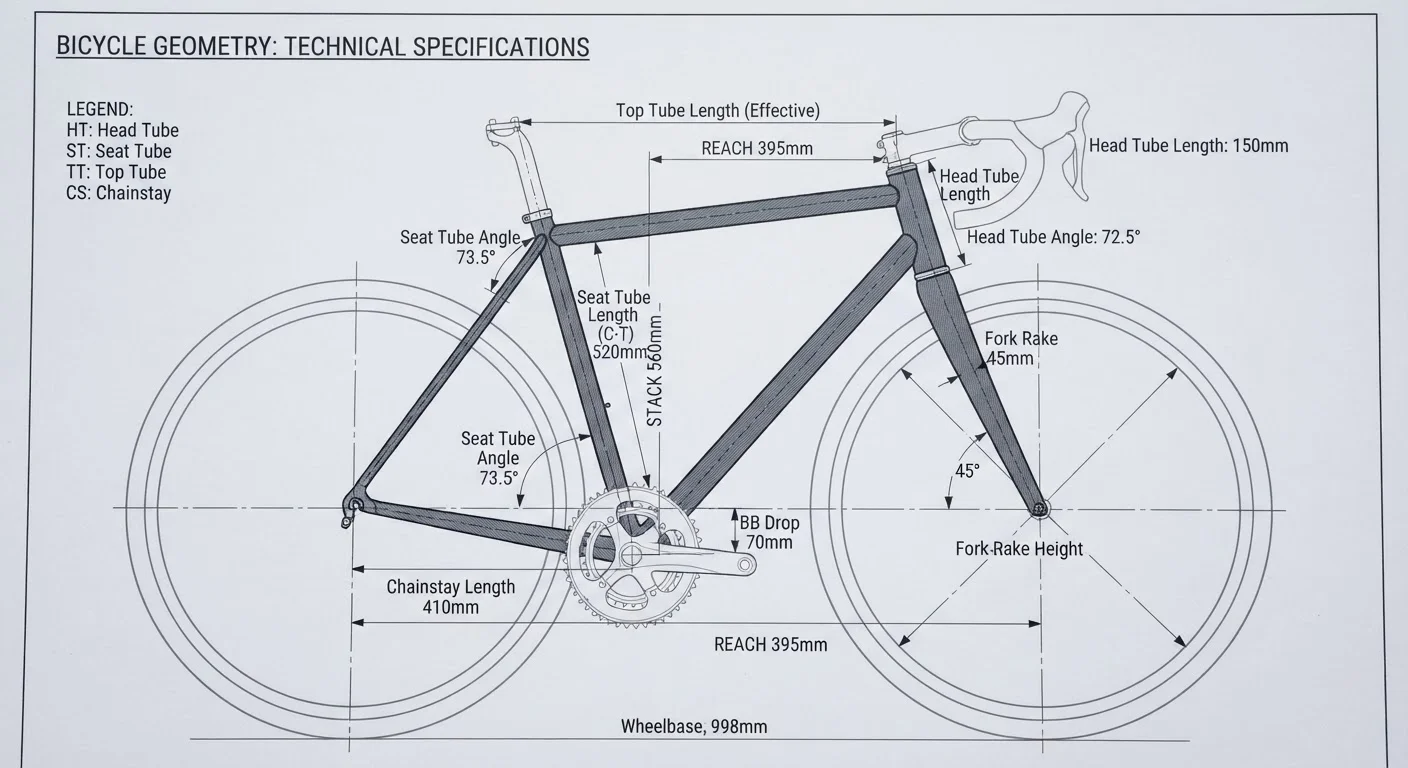
Standard e-bikes - including commuter, hybrid, and urban models - prioritize a geometry that balances efficiency with rider comfort for unloaded or lightly loaded use. Frame tubing is lighter, fork rake is optimized for nimble steering, and the overall package is engineered to stay manageable at curb lifts and tight turns. For a broader overview of how these fit into the full landscape of cycling styles, see The Bicycle Style Spectrum.
| Cargo E-Bike | Standard E-Bike | |
|---|---|---|
| Typical total payload | 350-440 lbs | 250-300 lbs |
| Rear rack capacity | Up to 150-200 lbs | 25-55 lbs |
| Common motor range | 500W-750W mid-drive | 250W-500W hub or mid-drive |
| Typical bike weight | 65-90 lbs | 45-65 lbs |
| Wheelbase | 60-80+ inches | 40-45 inches |
| Storage footprint | Large - up to 8 ft long | Compact - under 6 ft long |
| Best use case | Hauling cargo, children, heavy loads | Solo commuting, recreation, light errands |
| Maneuverability | Stable but wide turning radius | Agile, tight-space friendly |
Payload, Motors, and Range: The Numbers That Matter
Payload capacity is the most consequential spec difference. Most cargo e-bikes are rated for a combined rider-plus-load capacity of 350-440 lbs, with rear rack ratings often reaching 150-200 lbs independently. Standard e-bikes typically carry 250-300 lbs total, with rack limits of 25-55 lbs - enough for a laptop bag and light groceries, but not a child seat and a week's shopping.
To handle that extra mass, cargo e-bikes commonly use mid-drive motors in the 500W-750W range, which deliver torque more efficiently under load. Standard e-bikes frequently pair 250W-500W hub or mid-drive motors with smaller battery packs, since sustained hauling is not the design brief. Battery range is harder to compare directly: a cargo e-bike working near its payload limit will consume more energy per mile than a standard e-bike ridden solo, even if both carry nominally similar battery capacity.
350-440 lbs
Typical cargo e-bike total payload rating
Manufacturer specifications for purpose-built long-tail and box cargo e-bike platforms commonly cite these combined rider-plus-load figures.
65-90 lbs
Typical cargo e-bike unloaded weight
Reinforced frames and larger battery packs contribute to cargo e-bike weights roughly 20-40 lbs heavier than comparable standard models.
Understanding motor and battery trade-offs in depth is covered in E-Bike Ownership: Weighing the Trade-Offs.
Handling, Storage, and Practical Realities
Ride feel diverges noticeably. A cargo e-bike's longer wheelbase produces stable, planted handling at speed - reassuring with a loaded rear rack - but demands wider turning radii and deliberate maneuvering in tight spaces. Standard e-bikes respond more quickly and are easier to navigate through dense urban traffic or onto transit. Riders switching between the two platforms often note the adjustment period required.
Storage is a practical constraint that many buyers underestimate. A long-tail cargo e-bike can measure 8 feet or more in length and weigh 65-90 lbs. Apartment storage, garage clearance, and elevator dimensions all become relevant. Standard e-bikes - typically 55-70 lbs and under 6 feet long - present fewer storage challenges. For riders exploring even more compact options, Folding Bikes: The Trade-offs of Compact Cycling covers the portability end of the spectrum.
Test Ride Both Platforms Before Deciding
The handling difference between a loaded cargo e-bike and a standard model is difficult to appreciate without firsthand experience. If possible, arrange a test ride on each type - ideally with the cargo model carrying representative weight. The turning radius, acceleration feel, and low-speed balance all behave noticeably differently and should factor into your decision alongside spec sheets.
Regulations may also differ. Some cargo e-bikes, depending on motor output and class designation, face the same access rules as standard e-bikes, but their physical size can restrict use on certain paths. Consult E-Bike Regulations by Riding Context for a breakdown by environment. For a deeper dive into cargo-specific designs and how different frame styles handle loads, Cargo Bikes: How They Work and Who They're Built For provides detailed context.
Matching the Platform to Your Actual Use Case
The decision comes down to a single honest question: what is the primary job this bike will do most days? If the answer involves regularly carrying children, heavy groceries, gear, or commercial loads, a cargo e-bike's engineering exists precisely to handle that safely and reliably. If the primary use is a solo commute, recreational riding, or occasional light errands, a standard e-bike will be easier to live with - lighter to handle, simpler to store, and often adequate for panniers or a modest rear rack.
Riders who need capable daily commuting alongside occasional cargo duty may find that a well-specified standard e-bike with a quality rack and panniers covers the middle ground without the footprint of a full cargo platform. Those routinely moving 50 lbs or more of cargo - or replacing a second car - will likely find that a standard e-bike's capacity limits become a genuine daily friction point. For commuter-specific geometry and component considerations, Factors That Separate a Comfortable E-Bike Commuter is worth reading before deciding.